
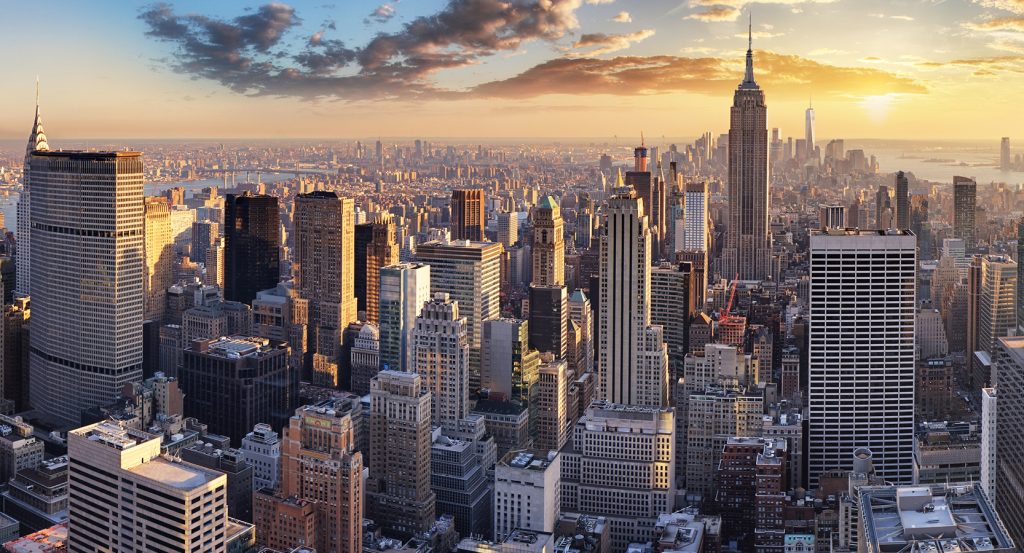
Why you should experience Omni Berkshire Place in New York, NY.
Omni Berkshire Place is a polished hotel where Midtown East's fashion pedigree, broadcasting legacy, corporate sophistication and enduring Manhattan glamour converge within a restrained address shaped by generations of prominent New Yorkers.
Set along East 52nd Street near Madison Avenue and just steps from St. Patrick's Cathedral, the hotel occupies a limestone-and-brick tower designed by Warren & Wetmore, the architectural partnership responsible for Grand Central Terminal with Reed and Stem and a substantial portfolio of New York hotels, clubs and residences. The Berkshire became closely associated with Rodgers and Hammerstein, whose long residency connected the property with the creative partnership behind Oklahoma!, Carousel, South Pacific, The King and I and The Sound of Music, while Alfred Hitchcock and other entertainment figures added another layer to its cultural mythology. The hotel's immediate blocks subsequently became synonymous with Madison Avenue fashion houses, 5th Avenue retail and the broadcasting institutions centered around Rockefeller Center, placing its quieter interiors inside one of Midtown's densest concentrations of American media and design culture. The result is a hotel where Warren & Wetmore, Rodgers and Hammerstein and generations of entertainment figures give Midtown East's polished hospitality a distinctly creative lineage.
What you should know about Omni Berkshire Place.
Omni Berkshire Place is best known for opening in 1926 as The Berkshire, a Warren & Wetmore-designed hotel whose early character became inseparable from the private dining club established by prominent figures in American publishing, broadcasting and entertainment on its upper floors. The property's Club 21 evolved into the exclusive Berkshire Room, later known as Barberry Room, where membership included newspaper publisher William Randolph Hearst, NBC president David Sarnoff, composer Irving Berlin and theatrical producer Florenz Ziegfeld. Rodgers and Hammerstein maintained a suite at the hotel for years and used it as a working base during their Broadway partnership, embedding the property within the professional geography of American musical theater. Omni Hotels acquired the property in 1992 and subsequently completed a $70 million renovation that reworked guestrooms and public spaces while preserving the hotel's longstanding association with discreet Midtown hospitality. Warren & Wetmore's architectural authorship, the Berkshire Room's extraordinary membership, Rodgers and Hammerstein's working residency and Omni's later stewardship establish Omni Berkshire Place as a hotel whose significance extends through architecture, publishing, broadcasting and Broadway.
Bob's Steak & Chop House introduced another authored chapter to the property through the Dallas-born steakhouse concept founded by Bob Sambol, bringing its Prime beef program and signature glazed carrot to the hotel's restaurant space. Omni Hotels subsequently developed Berk's Bar as a separate gathering room, while the property's culinary program maintained a direct relationship with the company's broader food-and-beverage portfolio rather than outsourcing its principal restaurant character to an unrelated operator. The Rodgers & Hammerstein Suite carries the composers' association into the contemporary accommodation program through a named suite connected to their history at the property, preserving that Broadway lineage within the hotel's present-day identity. Together, Bob Sambol, Bob's Steak & Chop House, Omni Hotels and the Rodgers & Hammerstein Suite demonstrate how the property continues to build contemporary hospitality around specific institutional and cultural inheritances rather than severing itself from the personalities that shaped The Berkshire.
How to fold Omni Berkshire Place into your trip.
Omni Berkshire Place works as the anchor for an afternoon tracing modern architecture, American broadcasting and twentieth-century design through the blocks surrounding Madison Avenue.
Begin at Paley Center for Media, where William S. Paley established the Museum of Broadcasting to preserve and interpret radio and television history, creating an institution whose collection eventually grew to encompass more than 160,000 programs, advertisements and recordings from broadcasting's development across generations of American media. Continue to Austrian Cultural Forum New York, where architect Raimund Abraham transformed an exceptionally narrow Midtown parcel into a 24-story cultural building only 25 feet wide, using a sharply articulated glass-and-metal façade to create one of Manhattan's most distinctive contemporary diplomatic buildings. Conclude at Museum of Modern Art, where the institution founded by Abby Aldrich Rockefeller, Lillie P. Bliss and Mary Quinn Sullivan developed one of the world's defining collections of modern art before Yoshio Taniguchi and later Diller Scofidio + Renfro with Gensler substantially reconfigured its Midtown campus. The progression moves from Paley's preservation of broadcasting through Abraham's rebellious architectural response to a narrow Manhattan site into MoMA's century-spanning engagement with modern creative culture, revealing the media, architecture and design institutions surrounding Omni Berkshire Place.
Where your story begins.
Foresyte Travel reveals places that feel extraordinary long before you arrive.
Experience premium editorial crafted for luxury travelers.







































































































