Why you should experience Orleans Street in Chicago, Illinois.
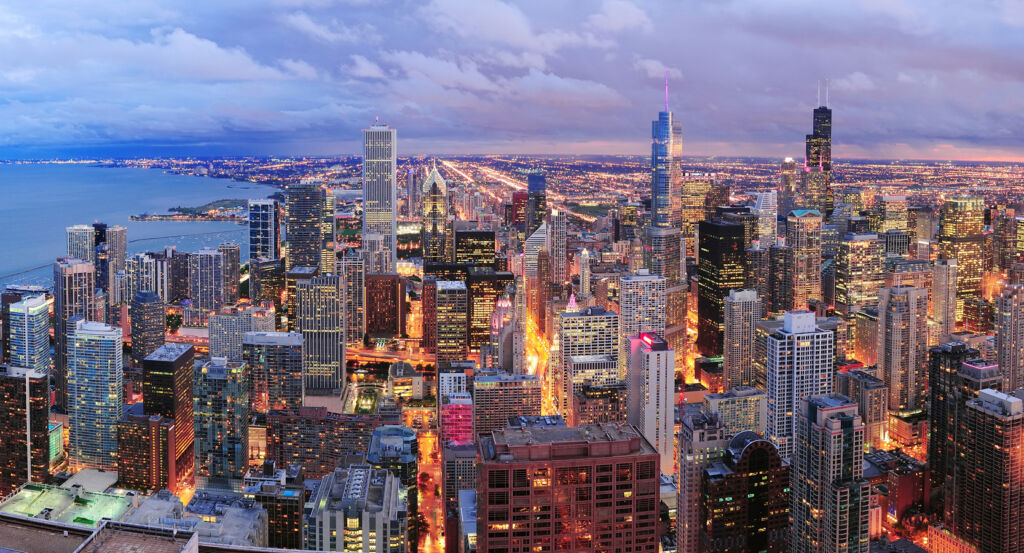
Orleans Street is a cultivated corridor where River North's commercial ambition, industrial legacy, architectural evolution, and Chicago's relationship with the Chicago River converge across one of the Near North Side's defining thoroughfares.
Running through River North between the Gold Coast and the Near North Side, Orleans Street passes former industrial blocks, converted warehouses, contemporary residential towers, civic institutions, and commercial corridors that reflect successive eras of Chicago's urban development. The corridor reveals how river commerce, manufacturing, transportation, and modern reinvestment transformed a once heavily industrial landscape into one of the city's most recognizable mixed urban environments. Historic masonry buildings, riverfront redevelopment, and contemporary infrastructure collectively preserve the corridor's connection to Chicago's commercial past while supporting its present-day vitality. The result is a corridor distinguished by enduring economic significance, architectural continuity, and a defining role within Chicago's northward expansion.
What you should know about Orleans Street.
Orleans Street is best known for paralleling the North Branch of the Chicago River through an area that developed rapidly after the opening of the Illinois and Michigan Canal in 1848 strengthened Chicago's position as the principal transfer point between the Great Lakes and the Mississippi River watershed. During the late nineteenth and early twentieth centuries, factories, lumber yards, coal dealers, freight houses, warehouses, and wholesale produce markets concentrated along the corridor, supported by nearby rail infrastructure and river docks that supplied one of the Midwest's busiest industrial districts. Construction of the Merchandise Mart in 1930 further reshaped the surrounding corridor by consolidating wholesale trade into what was then the world's largest commercial building, while successive bridge improvements along Orleans Street strengthened north-south circulation across the Chicago River. Completion of the Near North redevelopment initiatives during the second half of the twentieth century accelerated the conversion of former industrial properties into offices, residences, and commercial developments while preserving portions of the neighborhood's historic urban fabric.
River engineering fundamentally shaped Orleans Street as the 1900 reversal of the Chicago River by the Chicago Sanitary and Ship Canal permanently altered water movement, commercial navigation, and environmental conditions immediately adjoining the corridor. Operation of the nearby Chicago Avenue Pumping Station, completed in 1869 to designs by William W. Boyington, established one of the city's earliest grand waterworks while reinforcing the importance of municipal infrastructure within the surrounding district. Further south, the Montgomery Ward Complex expanded between 1908 and 1928 under architect Richard E. Schmidt, introducing reinforced-concrete construction and large-scale mail-order distribution facilities that influenced industrial architecture throughout the United States. Together, the Chicago River reversal, Boyington's engineering works, and the Montgomery Ward Complex demonstrate how Orleans Street developed within a landscape shaped equally by civil engineering, commercial innovation, and nationally significant architectural achievement.
How to fold Orleans Street into your trip.
Orleans Street works as an exploration of Chicago's riverfront history, commercial architecture, and urban reinvention.
Begin at Merchandise Mart, where grand Art Deco architecture introduces the wholesale commerce that transformed the surrounding district before following Orleans Street northward. Continue to Chicago Water Taxi Riverwalk Dock, where river transportation offers a different perspective on the corridor's longstanding relationship with the Chicago River and downtown commerce. Conclude at Holy Name Cathedral, whose Gothic Revival architecture and enduring civic presence provide a fitting finale celebrating the Near North Side's cultural and historical evolution. The progression moves naturally from commercial enterprise to river transportation before concluding within one of Chicago's most significant religious institutions, revealing why Orleans Street remains deeply connected to the city's continuing development.
Where your story begins.
Foresyte Travel reveals places that feel extraordinary long before you arrive.
Experience premium editorial crafted for luxury travelers.