Why you should experience Pearl Harbor National Memorial in Hawaii.
Pearl Harbor National Memorial is a historic memorial where Pearl Harbor's military heritage, Pacific history, remembrance, and national service preserve the events that reshaped the course of the Second World War.
Set along Arizona Memorial Place near Kamehameha Highway and just steps from the USS Arizona Memorial, this waterfront memorial unfolds through museum galleries, harbor overlooks, interpretive exhibits, historic vessels, commemorative spaces, and preserved military sites where firsthand accounts, archival collections, and wartime artifacts document one of the defining moments of twentieth-century history. Clean architectural lines, reflective waters, carefully curated exhibitions, and preserved naval infrastructure encourage thoughtful engagement with the people and events remembered here. History, remembrance, and scholarship define every gallery and shoreline.
What you should know about Pearl Harbor National Memorial.
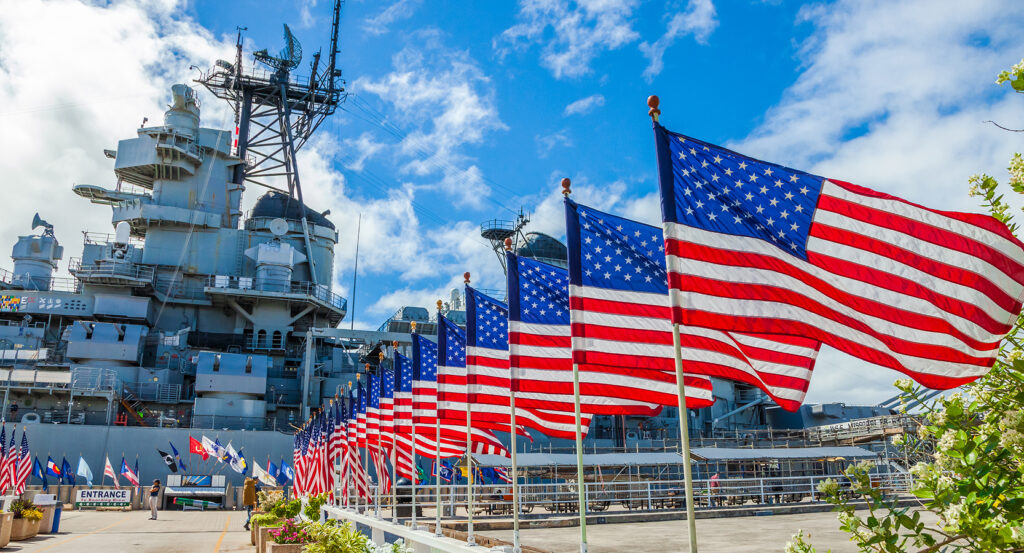
Pearl Harbor National Memorial is best known for preserving the site of the Japanese attack on 7 December 1941, when 353 aircraft launched from six Imperial Japanese Navy aircraft carriers struck the U.S. Pacific Fleet, resulting in the deaths of 2,403 Americans, the wounding of 1,178 others, the destruction or damage of 21 naval vessels, and the United States' entry into the Second World War the following day. Established as a national memorial under the National Park Service in 2019 after previously operating within World War II Valor in the Pacific National Monument, the site centers upon the remains of USS Arizona (BB-39), where more than 900 crew members remain entombed within the sunken battleship. The memorial also preserves extensive museum collections documenting diplomatic tensions preceding the attack, original photographs, military equipment, oral histories, personal correspondence, recovered ship components, and archival film presenting the broader context of the Pacific conflict. Designed by architect Alfred Preis and dedicated in 1962, the USS Arizona Memorial spans the sunken battleship without touching it, incorporating an open central section symbolizing the nation's loss and recovery while the Shrine Room bears the names of every crew member and Marine who perished aboard the vessel. Across the harbor, visitors can also explore USS Missouri (BB-63), where Japan formally signed the Instrument of Surrender on 2 September 1945, creating a powerful historical connection between the opening and conclusion of the Pacific War. Archaeologists, historians, conservators, and maritime specialists continue documenting submerged archaeological resources, preserving surviving wartime structures, stabilizing historic vessels, expanding oral history collections, and digitizing archival materials that support ongoing research into one of the most consequential military events in modern history.
Recovered artifacts, preserved harbor infrastructure, original wartime documents, survivor testimonies, and the visible remains of USS Arizona provide direct connections to events that reshaped international history within a matter of hours. Museum galleries trace diplomatic developments, naval strategy, technological innovation, individual acts of service, and the wider Pacific campaign through carefully researched exhibitions supported by archival evidence and continuing historical investigation. More than eight decades after the attack, Pearl Harbor National Memorial continues advancing historical scholarship, education, archaeological research, and public understanding while honoring those whose lives were forever changed on 7 December 1941.
How to fold Pearl Harbor National Memorial into your trip.
Pearl Harbor National Memorial works as the centerpiece of an exploration through Pearl Harbor's historic naval district.
Begin at USS Arizona Memorial, where the preserved battleship establishes the historical setting before exploring Pearl Harbor National Memorial. Continue to Battleship Missouri Memorial, where the formal surrender ending the Second World War in the Pacific broadens the historical narrative. Conclude at Pearl Harbor Aviation Museum, where restored aircraft, hangars, and aviation exhibits provide a memorable finale examining the technological and operational dimensions of the Pacific conflict. The progression moves naturally from remembrance to the conclusion of the war before concluding through aviation history, revealing why Pearl Harbor remains one of the United States' most historically significant military sites.
Where your story begins.
Foresyte Travel reveals places that feel extraordinary long before you arrive.
Experience premium editorial crafted for luxury travelers.