Why Polk Street matters.
Polk Street is a historic urban corridor where immigrant heritage, educational achievement, and civic transformation converge along one of the city's most influential streets.
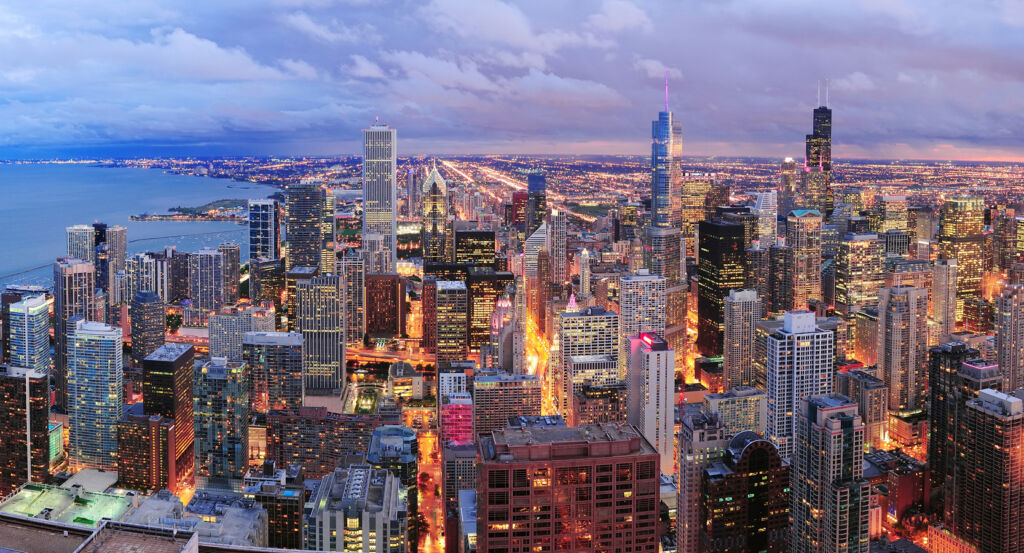
Running through Little Italy between the Loop and the Illinois Medical District, this storied avenue connects university campuses, neighborhood institutions, cultural landmarks, public parks, residential communities, and commercial districts that have shaped local life for generations. Historic brick buildings, educational facilities, neighborhood businesses, community gathering places, architectural landmarks, and evolving streetscapes create an environment defined by resilience and reinvention. The corridor developed during the nineteenth and early twentieth centuries as immigrants, entrepreneurs, educators, and civic leaders helped transform Chicago's Near West Side into one of the city's most dynamic districts. Successive waves of investment reshaped the area while preserving elements of its cultural identity. The result is a street defined by learning, community, and urban vitality.
What defines Polk Street.
Polk Street is best known for passing through the former heart of Hull House, the pioneering settlement house founded by Jane Addams that became one of the most influential social reform institutions in American history.
Established in 1889, Hull House provided education, childcare, healthcare, cultural programming, and social services to immigrant families navigating life in a rapidly industrializing city. The institution became a national model for progressive reform while influencing labor protections, public health initiatives, educational policy, and urban development across the United States. Addams and her colleagues transformed community advocacy into a powerful force for change, inspiring generations of reformers and civic leaders. The surrounding neighborhood became synonymous with innovation in social welfare and community support. Few American streets are associated with an institution that exerted such a lasting influence on modern social policy and urban reform.
How Polk Street fits.
Polk Street works as an exploration of Chicago's immigrant heritage, educational traditions, and civic legacy.
Begin at the Jane Addams Hull-House Museum, where the street's defining relationship with reform, community leadership, and social innovation immediately comes into focus. Continue toward the University of Illinois Chicago campus, whose academic presence reveals the educational forces that helped shape the district across generations. From there, make your way to Arrigo Park, where one of the neighborhood's most cherished public spaces provides a broader perspective on the civic traditions and community life that continue to define the area today. Along the route, you'll encounter historic institutions, educational landmarks, neighborhood businesses, public gathering places, architectural treasures, community destinations, and celebrated streetscapes that showcase the corridor's remarkable depth. The progression moves naturally from reform landmark to academic institution to civic gathering place, revealing the forces that transformed Polk Street into one of Chicago's most consequential urban corridors. Polk Street remains one of the city's most rewarding streets, preserving a distinctive balance between historical significance, educational influence, and community authenticity.
Where your story begins.
Foresyte Travel reveals places that feel extraordinary long before you arrive.
Enjoy editorial crafted for luxury travelers.
Foresyte may earn a commission when you book.