Why Preservation Hall matters.
In the heart of the French Quarter, tucked between weathered façades and flickering gas lamps, Preservation Hall hums with the pulse of New Orleans itself.
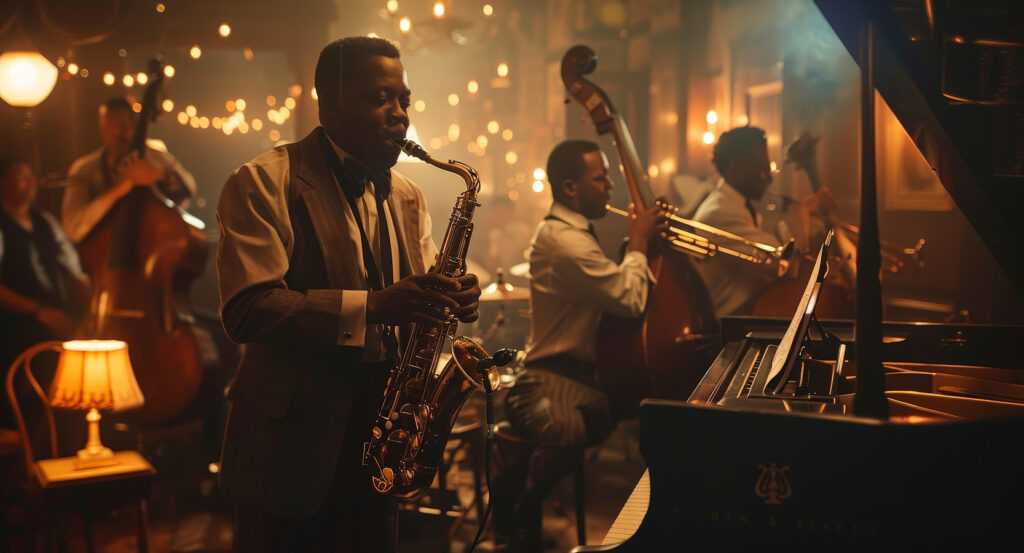
This small, unassuming venue on St. Peter Street is the living heartbeat of traditional jazz, not a museum of it, but a sanctuary where the music still breathes, sweats, and soars. Step through its creaking wooden doors, and the air changes, thick with heat, history, and the hum of anticipation. There are no flashy lights, no bar, no frills, just wooden benches, worn floors, and a single stage where legends and protégés share the same sacred space. As the band begins to play, the room transforms. Brass and rhythm intertwine, and the sound, raw, unamplified, and alive, fills every inch of the hall. This is not background music; it's a conversation between past and present, between players who've carried the tradition for decades and newcomers who've inherited its soul. Preservation Hall isn't just a venue; it's a vow, a promise that the sound of New Orleans will never fade, no matter how much the world outside changes.
What defines Preservation Hall.
Preservation Hall began as an act of rebellion, a stand against the fading of one of America's greatest art forms.
In the late 1950s, when jazz had drifted toward modernism and many of the city's traditional musicians were struggling to find work, art dealer Allan Jaffe and his wife Sandra opened their small French Quarter gallery to nightly jam sessions. Soon, the music eclipsed the art, and by 1961, Preservation Hall was born, its mission simple: to preserve and protect New Orleans jazz in its purest form. There were no microphones, no alcohol, and no segregation, a dramatic stance in the Jim Crow South. The Jaffes invited musicians who had been all but forgotten, players who had performed with the pioneers of jazz, giving them not just a stage but dignity, purpose, and community. Over the decades, Preservation Hall Jazz Band became the venue's ambassador, touring the world while still returning home to their roots each night. The hall itself has remained almost untouched by time, its cracked plaster walls and hand-painted signs are as iconic as its music. That patina is intentional: every flake of paint and scuffed floorboard is part of the atmosphere that keeps the spirit of early jazz alive. Even today, you might hear a set that blends century-old standards like “When the Saints Go Marching In” with improvisations that feel utterly spontaneous, reminding audiences that jazz, at its best, is both timeless and unpredictable. Few know that the hall's musicians range across generations; you might see a septuagenarian trumpeter trade riffs with a twenty-year-old trombonist, their shared rhythm bridging a century of sound. In a city defined by reinvention, Preservation Hall endures by staying true to what matters most, authenticity, soul, and the joyful defiance of making music the old way.
How Preservation Hall fits.
A visit to Preservation Hall is more pilgrimage than performance, a must for anyone who wants to feel New Orleans from the inside out.
You'll find it just steps from Bourbon Street, but worlds away from its neon chaos. Arrive early, there are no reservations for general admission, and lines often form an hour before showtime. Bring cash, as the hall remains proudly analog, and prepare for intimacy: the space seats fewer than 100, with standing room in the back. The best seats are the simplest, worn wooden benches where the music seems to vibrate right through the walls. As the lights dim and the first notes rise, you'll understand why people describe this as a spiritual experience. The band plays three or four sets each night, each one slightly different, some joyous, some mournful, all electric with life. If you're lucky, a veteran like Charlie Gabriel or Walter Harris might lead the band, carrying decades of history in every note. After the show, step out into the warm night air, where the sounds of the French Quarter spill through the streets like echoes of what you just witnessed. Pair your visit with a cocktail at Pat O'Brien's, a late-night beignet at Café du Monde, or a walk down Royal Street to catch street musicians continuing the legacy outside. Whether you're a lifelong jazz lover or just passing through, Preservation Hall offers something rare, not just a performance, but communion. Here, under a single bare light bulb, you don't just hear New Orleans jazz, you feel it in your bones, alive, rebellious, and eternal.
Where your story begins.
Foresyte Travel reveals places that feel extraordinary long before you arrive.
Enjoy editorial crafted for luxury travelers.
Foresyte may earn a commission when you book.