Why Royal Street matters.
Royal Street is a historic French Quarter corridor where French Quarter's architectural grandeur, artistic heritage, cultural refinement, and centuries of commerce create one of New Orleans' most distinguished streets.
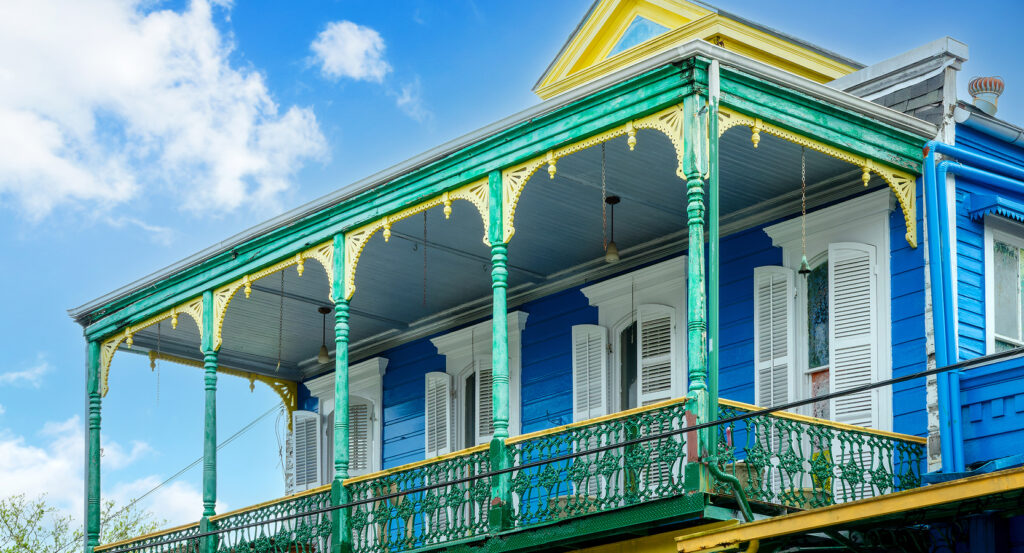
Running through French Quarter between Canal Street and Esplanade Avenue, this elegant thoroughfare showcases beautifully preserved Spanish Colonial and Creole townhouses, ornate cast-iron balconies, celebrated art galleries, antique dealers, boutique hotels, fine dining, and world-class music venues that together represent the finest expression of New Orleans' historic urban character. Meticulously restored façades, lively street performers, and generations of independent businesses create an atmosphere unlike any other street in the city. Every block reveals another masterpiece of architecture, craftsmanship, and cultural tradition. The result is an experience defined by elegance, history, and one of New Orleans' most celebrated streets.
What defines Royal Street.
Royal Street is best known for preserving the French Quarter's greatest concentration of eighteenth- and nineteenth-century historic commercial architecture, evolving from one of the original streets established under the 1718 plan of Jean-Baptiste Le Moyne de Bienville into New Orleans' premier corridor for fine art, antiques, luxury retail, and historic preservation. Named in honor of the French royal family, the street developed as one of colonial New Orleans' principal commercial arteries before much of its architecture was rebuilt following the devastating Great New Orleans Fire of 1788 and the 1794 fire, resulting in today's extraordinary collection of Spanish Colonial and Creole buildings constructed under Spanish rule. Throughout the nineteenth century, wealthy merchants, bankers, jewelers, and prominent families established elegant residences and businesses along Royal Street, while the corridor later emerged as one of the United States' foremost centers for antique dealing, attracting internationally respected galleries specializing in American, European, English, French, and Southern decorative arts. The street is also home to nationally significant landmarks including Historic New Orleans Collection, Hotel Monteleone, Court of Two Sisters, Cathedral-Basilica of Saint Louis, King of France, and numerous preserved townhouses recognized within the Vieux Carré Historic District, a National Historic Landmark designated in 1965. Weekend pedestrian closures, longstanding traditions of live classical musicians and jazz performers, and careful preservation regulations administered by the Vieux Carré Commission, established in 1936 as one of America's earliest architectural preservation agencies, have helped maintain Royal Street's exceptional historic character while supporting a spirited cultural economy. Together, unparalleled architectural preservation, exceptional artistic traditions, centuries of commercial history, and enduring cultural significance establish Royal Street as one of America's greatest historic streets.
The corridor continues demonstrating how rigorous historic preservation and locally rooted cultural institutions can sustain a thriving urban environment across more than three centuries. Grand Creole architecture, internationally respected galleries, exceptional streetscape continuity, and continual cultural activity reinforce Royal Street's standing among the world's finest historic commercial streets while illustrating the enduring legacy of New Orleans' French Quarter.
How Royal Street fits.
Royal Street works as a leisurely exploration through the architectural heart of the French Quarter.
Begin at Cathedral-Basilica of Saint Louis, King of France, where the city's most recognizable religious monument introduces the extraordinary history surrounding Royal Street before strolling its galleries and boutiques. Continue to Historic New Orleans Collection, where remarkable exhibitions provide deeper insight into the people, architecture, and traditions that shaped the corridor. Conclude at Hotel Monteleone, where generations of celebrated writers, artists, and public figures have gathered within one of New Orleans' most distinguished historic hotels. The progression moves naturally from the city's spiritual center to its historical archives before concluding with one of its most celebrated literary institutions, revealing why Royal Street remains the defining cultural corridor of the French Quarter.
Where your story begins.
Foresyte Travel reveals places that feel extraordinary long before you arrive.
Enjoy editorial crafted for luxury travelers.
Foresyte may earn a commission when you book.