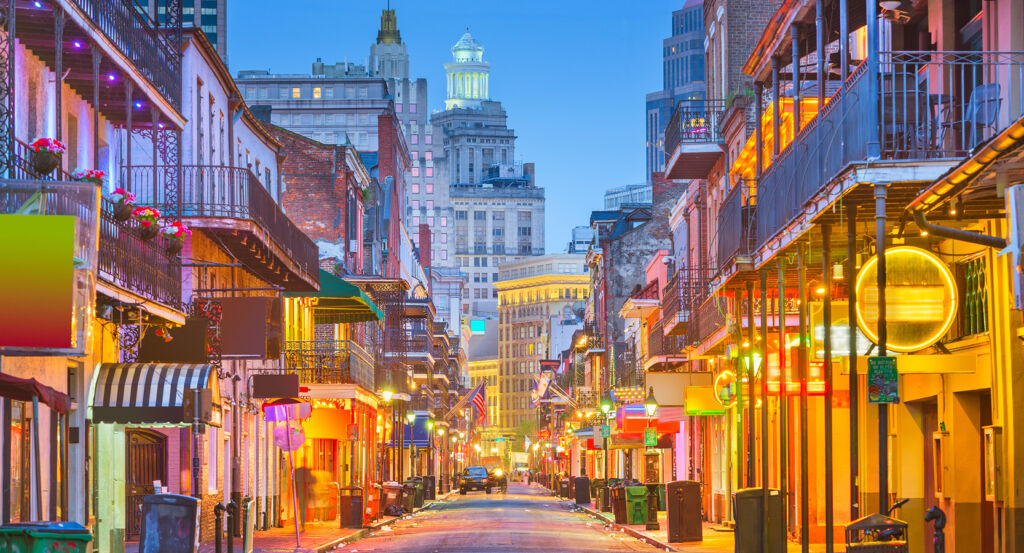
Why Frenchmen Street matters.
Frenchmen Street is a celebrated music corridor where Faubourg Marigny's Creole heritage meets the brass-band traditions of New Orleans, the improvisational brilliance of contemporary jazz and the neighborhood nightlife that sustains the city's extraordinary musical culture.
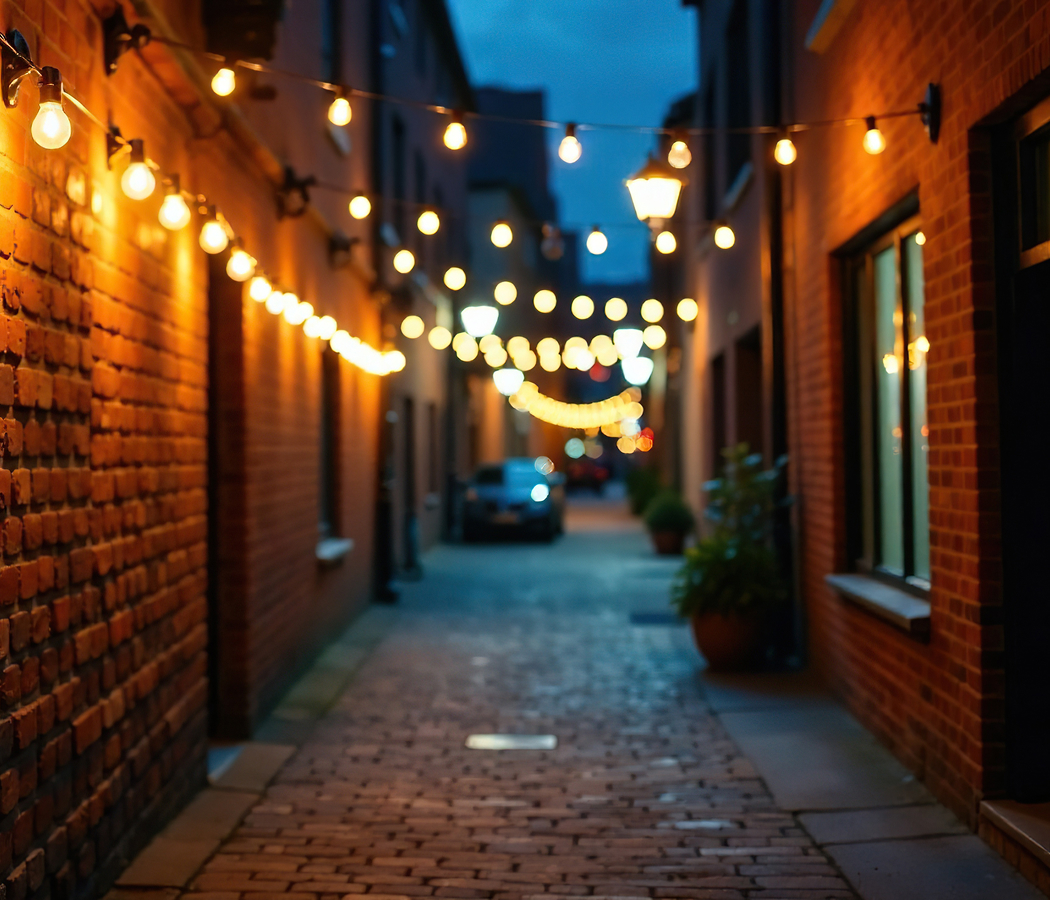
Running through Faubourg Marigny between the French Quarter and Bywater, the historic corridor follows Frenchmen Street from Esplanade Avenue toward St. Claude Avenue, crossing Royal Street, Chartres Street and Decatur Street through blocks of intimate music clubs, Creole cottages and nineteenth-century commercial buildings. Narrow sidewalks, colorful storefronts and ornamental ironwork establish a distinctive streetscape whose architectural scale encourages close interaction between musicians and audiences. Live performances spill into the surrounding blocks through open doorways, sidewalk gatherings and the sound of brass instruments carried across the neighborhood. The corridor's compact entertainment district concentrates its best-known clubs between Esplanade Avenue and Royal Street, where successive venues occupy closely spaced historic buildings. The result is an unusually concentrated musical destination whose intimate performance spaces and preserved neighborhood architecture sustain a living connection with New Orleans jazz.
What defines Frenchmen Street.
Frenchmen Street is best known for its concentration of live music venues and its development into one of New Orleans' most important centers for contemporary jazz, brass bands and traditional local performance. The street takes its name from the Frenchmen associated with resistance to Spanish colonial rule during the eighteenth century, connecting its origins with the political tensions of colonial Louisiana. Its surrounding neighborhood developed during the early nineteenth century as the city expanded beyond the boundaries of the original French Quarter. Bernard de Marigny, a prominent Creole landowner, subdivided his family's plantation beginning in 1805, establishing the street grid that shaped the emerging Faubourg Marigny. The development attracted a diverse population of Creole families, artisans, merchants and free people of color, contributing to the neighborhood's distinctive social and architectural character. Its residential streets subsequently developed through closely spaced cottages, townhouses and neighborhood commercial establishments that supported a substantial local population. New Orleans' musical culture expanded through African American brass bands, dance halls, social aid and pleasure clubs, and the improvisational practices that contributed to the emergence of jazz. During the twentieth century, musicians developed performance traditions that connected neighborhood celebrations with professional entertainment venues across the city. Frenchmen Street's contemporary musical character accelerated during the late twentieth century as artists and club operators established intimate performance spaces within former neighborhood businesses. The corridor attracted musicians seeking regular engagements and audiences interested in the city's traditional and contemporary musical styles. Its development became especially significant as live music activity expanded beyond the French Quarter's established entertainment districts. The concentration of clubs subsequently established Frenchmen Street as a major destination for performances spanning traditional jazz, funk, blues, brass-band music and contemporary improvisation.
Snug Harbor Jazz Bistro occupies a historic Frenchmen Street building and has served as one of the city's most respected jazz venues since its establishment in 1983. Its intimate performance room and seated concert format provide an important setting for musicians whose work extends across traditional and contemporary jazz. Ellis Marsalis, the influential pianist and educator whose family became central to modern American jazz, maintained a longstanding performance association with the club. His appearances connected the venue with generations of New Orleans musicians and the development of the city's contemporary jazz education. The Spotted Cat Music Club presents a contrasting environment through a compact performance room associated with traditional jazz, swing and local ensemble music. Its informal atmosphere and close proximity between performers and audiences reflect the social character of neighborhood jazz clubs. The Maison contributes a broader musical program through multiple performance spaces accommodating jazz ensembles, brass bands and other regional styles. Three Muses combines live performances with a small-plates restaurant, establishing a setting that connects New Orleans' culinary culture with its contemporary music community. d.b.a. has developed a reputation for presenting established and emerging musicians across jazz, blues and roots music, contributing to the corridor's diversity of performances. The Blue Nile occupies another important position within the neighborhood's music scene, hosting funk, brass-band and contemporary New Orleans ensembles. Its upstairs performance area provides a distinctive setting for energetic concerts and dance-oriented programming. Frenchmen Art Bazaar introduces an additional cultural dimension through evening displays of handmade jewelry, painting, illustration and other work by local artists. The concentration of these establishments creates a musical district whose significance depends on the continued participation of working performers, independent venue operators and neighborhood audiences.
How Frenchmen Street fits.
Frenchmen Street works as the cultural anchor for a New Orleans outing connecting the city's jazz heritage, the architectural history of its original settlement and the preserved riverfront landscapes of the Mississippi.
Begin at New Orleans Jazz Museum, housed within the historic Old U.S. Mint near the eastern boundary of the French Quarter. The Greek Revival building was completed in 1838 and subsequently served as an important federal coin-production facility. Its formal colonnade and substantial masonry construction preserve the architectural ambitions of the early American republic. The museum's collections examine the development of jazz through instruments, recordings, photographs and artifacts associated with influential New Orleans musicians. Louis Armstrong's first cornet occupies an important place within the institution's interpretation of the city's musical heritage. Exhibitions connect jazz with African American cultural institutions, brass-band traditions and the performance environments of early twentieth-century New Orleans. Continue to Washington Square Park, the historic public green space occupying a substantial block within Faubourg Marigny. Its shaded lawns, mature trees and ornamental iron fencing establish a distinctive neighborhood gathering place surrounded by nineteenth-century residential architecture. The park developed as part of the area's early urban expansion, providing an important recreational landscape within the dense residential district. Its pathways and open spaces accommodate informal gatherings, community activities and occasional musical performances. The surrounding blocks preserve substantial examples of Creole cottages and townhouses, introducing the architectural character of the neighborhood's historic residential streets. Conclude at Crescent Park, the contemporary riverfront landscape extending along the Mississippi River between Faubourg Marigny and Bywater. The park opened in 2014 as part of a major waterfront redevelopment initiative, transforming former industrial land into public recreational space. Its elevated pathways, landscaped gardens and broad riverfront promenades provide expansive views of commercial shipping and the surrounding waterfront. The distinctive Piety Street Bridge introduces a dramatic pedestrian connection between the neighborhood and the riverfront, rising above the former industrial corridor. The park's adaptive reuse of historic maritime infrastructure preserves a physical connection with the city's working waterfront. The progression moves from New Orleans Jazz Museum's musical history through Washington Square Park's neighborhood landscape and culminates at Crescent Park's restored riverfront, connecting three dimensions of the city's cultural and urban development.
Where your story begins.
Foresyte Travel reveals places that feel extraordinary long before you arrive.
Enjoy editorial crafted for luxury travelers.
Foresyte may earn a commission when you book.