
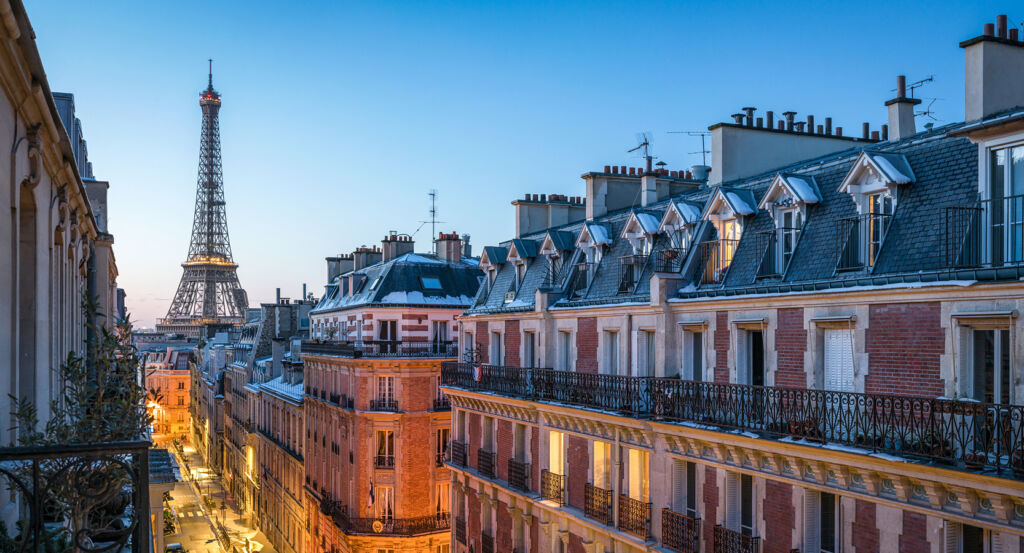
Why you should experience Renaissance Paris Republique Hotel in Paris, France.
Renaissance Paris Republique Hotel is an art-driven luxury hotel where République's bohemian heritage, postwar design culture, contemporary street art, and cosmopolitan hospitality create one of northeastern Paris' most creatively layered places to stay.
Set along Rue René Boulanger near Rue du Château d'Eau and just steps from Place de la République, the hotel combines 121 rooms and suites, Didier Gomez interiors, Martin restaurant and bar, a Sothys spa, courtyard terrace, rotating exhibitions, and panoramic upper-floor accommodations within a former office building subsequently occupied by artists. Oversized windows, bespoke sofas, atelier-inspired bathrooms, African woods, Asian shadow patterns, Middle Eastern copper, and midcentury references establish a visual style shaped by Gomez's interpretation of the district's international creative culture. Six accommodation categories progressively expand that design language from compact Paris Style rooms through Artist's Studio and Skyline suites to the rooftop Penthouse. The result is a hotel where architecture, international decorative traditions, postwar French design, and contemporary artistic production remain closely connected.
What you should know about Renaissance Paris Republique Hotel.
Renaissance Paris Republique Hotel is best known for opening in May 2016 as Renaissance Hotels' sixth Paris property, transforming a former office building and later artist squat associated with street artist Kouka into a five-star hotel developed behind architecture by Eric Haour and interiors by Didier Gomez. Gomez conceived the 121 accommodations through the art and design of the 1950s and 1960s, Jean-Luc Godard's cinema, Pierre Guariche's furniture, and Le Corbusier's postwar work, then expanded those references through African woods, Asian-inspired shadow effects, Middle Eastern copper, reference furniture, bespoke sofas, prestigious Parisian bedding, walnut-shaped Tom Dixon lighting, and atelier-style bathrooms. The inventory divides into six principal categories, Paris Style, Bobo, Urban, Artist's Studio, Skyline, and Penthouse, with 19 suites distinguished by circular porthole windows and elevated city views, while the broader property incorporates nine floors, Martin restaurant and bar, an interior terrace, parking, meeting facilities, and a dedicated wellness level. Renaissance Hotels positioned the opening around République's creative character from the beginning, explicitly describing the former artists' building and Gomez's bohemian design as central to the property rather than treating art as decorative programming added after completion.
Didier Gomez carried the artist-studio concept into individual guestrooms through curated furniture and oversized glazing, while Tom Dixon lighting and design references to Pierre Guariche and Le Corbusier connect the hotel's contemporary interiors to a documented lineage of twentieth-century European design. Sothys Paris anchors the wellness program through treatment rooms, sauna, hot tub, physical facilities, fitness space, massages, facials, and body treatments, extending a French professional cosmetics house founded in 1946 into a dedicated hospitality environment beneath the guestrooms. Martin develops the property's culinary character through a monthly changing seasonal menu, while local producers appear elsewhere through Caron coffee, Le Chocolat des Français, Michel et Augustin, and Sassy cider, creating a food and beverage program with unusually specific connections to contemporary French makers. Renaissance Hotels continues the building's artistic lineage through quarterly exhibitions by changing artists, allowing the former squat associated with Kouka to retain an active exhibition function and connecting Eric Haour's architecture, Didier Gomez's interiors, Sothys wellness, and rotating contemporary art within the same 121-room property.
How to fold Renaissance Paris Republique Hotel into your trip.
Renaissance Paris Republique Hotel works as an afternoon and evening exploring the independent creative culture of République.
Begin at Carreau du Temple, where a nineteenth-century iron-and-glass market structure now hosts contemporary art, fashion, performance, sport, and cultural programming, establishing the district's ability to continuously reinvent historic spaces around contemporary creative life. Continue to Renaissance Paris Republique Hotel, where Didier Gomez's postwar references, rotating exhibitions, artist-studio guestrooms, Martin, and the courtyard terrace turn that creative continuum into the central hospitality experience. Continue to Point Éphémère, where exhibitions, concerts, artist studios, and multidisciplinary programming inside a former industrial building carry the outing toward the independent artistic communities that continue shaping northeastern Paris. Conclude at Canal Saint-Martin, where iron footbridges, tree-lined quays, locks, cafés, and evening reflections on the water provide the atmospheric payoff after a day tracing the district's art and design culture. The progression moves from cultural reinvention through design-driven hospitality and independent artistic production before settling beside the canal, revealing the creative rhythm that defines République.
Where your story begins.
Foresyte Travel reveals places that feel extraordinary long before you arrive.
Experience premium editorial crafted for luxury travelers.














































































































