Why Restaurant JAN matters.
Restaurant JAN is a MICHELIN-starred fine-dining restaurant where Le Port's evolving gastronomic culture meets South African culinary heritage, French haute cuisine and the creative ambitions of chef Jan Hendrik van der Westhuizen, whose cooking brought a distinctive African perspective to the French Riviera.
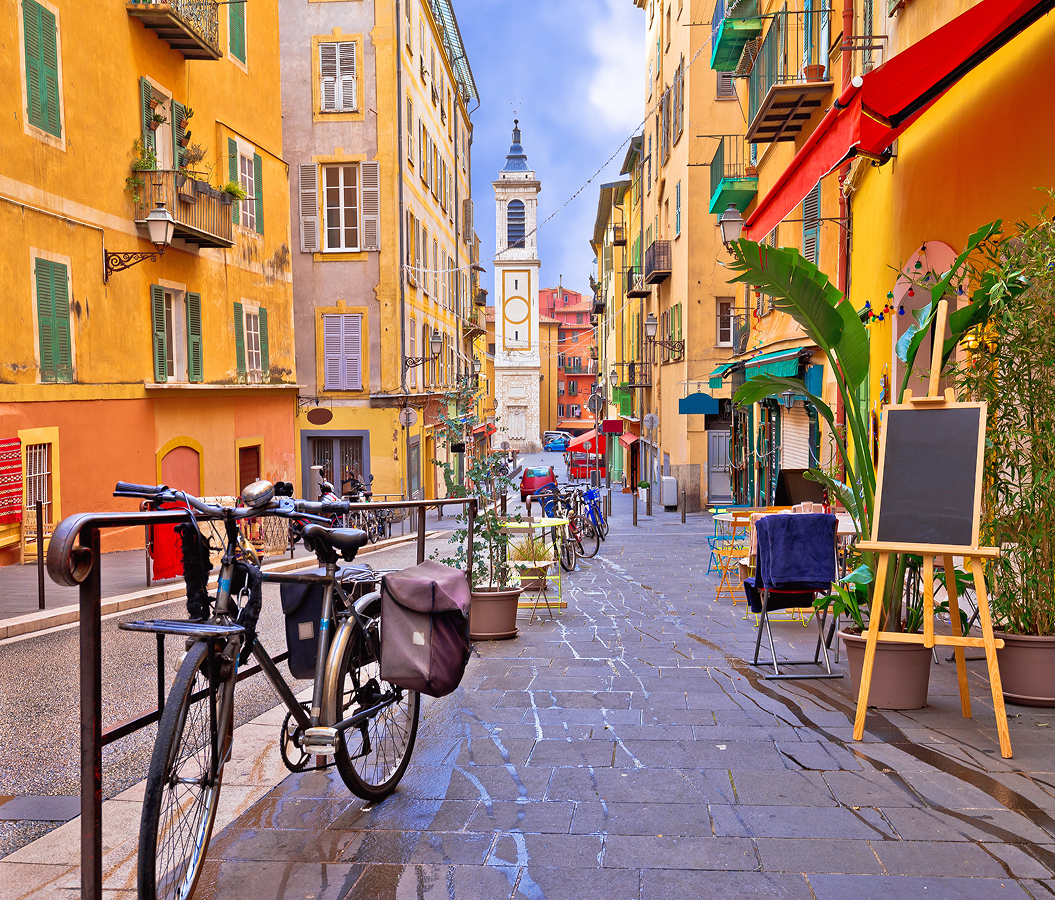
Occupying a converted ground-floor premises on Rue Lascaris, between Rue Arson and Rue Cassini, the restaurant stands within the compact nineteenth-century street network of Nice's harbor district, a short distance from the commercial frontage surrounding Port Lympia. Its intimate dining room incorporates exposed stonework, decorative wall moldings, muted blue-gray tones and crystal lighting, creating a residential atmosphere within the former commercial building. Carefully arranged tables, upholstered seating and restrained decorative details give the interior the proportions of a private dining salon, with the open relationship between service staff and diners supporting an unusually personal style of hospitality. An additional room across the street extends the restaurant's physical composition into a separate setting devoted to a distinctive part of the meal, creating a spatial arrangement that carries dining activity between two historic neighborhood premises. The result is an intimate gastronomic destination whose converted architecture, carefully composed interiors and unusual two-part dining arrangement support one of Nice's most internationally recognized contemporary restaurants.
What defines Restaurant JAN.
Restaurant JAN is best known for bringing South African culinary traditions into the French MICHELIN system through the career of Jan Hendrik van der Westhuizen, whose development as a chef combined rural family cooking, professional photography, international hospitality and an enduring fascination with French gastronomy. Born in Middelburg, Mpumalanga, in 1982, van der Westhuizen grew up on a South African farm where seasonal ingredients, family recipes and the preparation of meals for communal gatherings became fundamental influences on his culinary imagination. His earliest experiment with restaurant ownership came in 1991, when he arranged a makeshift dining establishment in the woods of the family property, decorating the setting with paintings and a Persian rug for an inaugural meal attended by his parents and sister. The childhood undertaking anticipated his later interest in coordinating food, visual presentation and domestic hospitality within a single creative project. During his teenage years, he founded a school food society called the Green Peppers in 1996, extending his interest in cooking into organized culinary activity. Professional experience followed through a Johannesburg catering company, where he participated in more than 200 functions spanning informal preparations and corporate fine dining. Formal culinary education at Stellenbosch introduced technical training in cooking and pastry, followed by work in hotels and restaurants around Cape Town. Van der Westhuizen subsequently pursued applied design and photography, completing a Bachelor of Arts degree and developing a parallel career in visual communication. In 2004, he founded the Jan Hendrik Group as a creative and photography studio, beginning the commercial development of the artistic enterprise that would eventually support his restaurant businesses. An internship at Elle magazine combined food photography, recipe development and styling, strengthening his understanding of the relationship between culinary composition and editorial imagery. After spending a year in Paris, he relocated to Monaco in 2009 and worked as a private yacht chef, gaining direct familiarity with the culinary expectations of international luxury hospitality. His Mediterranean years also provided the setting for The French Affair, his first cookbook, which combined recipes, photography and observations from his life in France. The publication became a bestseller and received recognition at the Gourmand World Cookbook Awards, advancing his reputation as both a chef and a visual storyteller. In 2012, his creative business adopted the JAN name, consolidating its activities around a personal culinary brand. The following year, van der Westhuizen transformed a former garage in Nice's Old Port district into Restaurant JAN, opening in September 2013 with two chefs and two front-of-house employees. The restaurant's early concept united traditional South African preparations with the techniques and seasonal ingredients of southern France, giving the establishment a distinctive position within the region's established fine-dining culture. Its opening attracted rapid international attention, including recognition in The New York Times during the restaurant's first days of operation. Van der Westhuizen published JAN, A Breath of French Air in 2015, extending the relationship between his restaurant, photography and the culinary traditions of his adopted country. In 2016, Restaurant JAN received its first MICHELIN star, making van der Westhuizen the first South African chef to earn the distinction. The achievement carried significance beyond the restaurant itself, demonstrating the international relevance of South African culinary traditions within one of Europe's most established gastronomic institutions. In 2017, the restaurant expanded its dining concept through the creation of MARIA, a dedicated cheese room named for the chef's grandmother, whose death at the age of ninety-one inspired a distinctive tribute. The following year brought the first edition of JAN the Journal, a self-published culinary and lifestyle periodical that extended the restaurant's creative philosophy into long-form photography, recipes and editorial production. JAN Innovation Studio also opened in Cape Town in 2018, creating a center for culinary development and assembling an extensive collection of South African cookbooks. The chef's television career expanded through JAN, whose first season received a South African Film and Television Award in 2019. Another major undertaking followed in 2021 with the opening of Klein JAN at Tswalu Kalahari, a remote restaurant developed around the ingredients, food preservation practices and agricultural traditions of South Africa's Northern Cape. Klein JAN received the International Hidden Gem distinction at the La Liste awards in Paris, strengthening the international reputation of the expanding restaurant group. Restaurant JAN and Klein JAN entered the World's 50 Best Discovery selection in 2022, connecting the original Nice establishment with the chef's subsequent work in southern Africa. The opening of JAN Franschhoek at La Motte Wine Estate extended the group into South Africa's Cape Winelands through a seasonal dining project. In 2024, Le Bistrot de JAN opened beside the original Nice restaurant, creating a complementary establishment devoted to the traditions of French bistro cooking. The expansion continued through additional culinary projects in South Africa, including a Cape Town location of Le Bistrot de JAN inaugurated in December 2025. Restaurant JAN received its tenth consecutive MICHELIN-star recognition in 2025, confirming the sustained international standing of a business that began as a small independent restaurant in a converted neighborhood garage. Its importance derives from van der Westhuizen's development of a distinctive gastronomic institution whose culinary achievements, publishing projects and international expansion brought South African food heritage into sustained conversation with French fine dining.
Jan Hendrik van der Westhuizen's culinary approach begins with the relationship between South African family cooking and the precision of French restaurant technique, creating a tasting-menu format organized around seasonal ingredients, concentrated flavors and carefully controlled presentation. The kitchen draws on produce from the Côte d'Azur, allowing Mediterranean vegetables, herbs, seafood and fruit to provide the foundation for preparations shaped by the chef's childhood food traditions. Traditional South African recipes contribute recognizable combinations of sweetness, acidity, spice and preserved ingredients, establishing a culinary language whose complexity develops through successive courses. Bobotie provides an important historical reference through its combination of seasoned meat, aromatic spices and a baked egg custard, a preparation associated with the Cape Malay culinary tradition. The restaurant's interpretation of this heritage concentrates on the relationship between warm spices, savory richness and contrasting textures, translating familiar domestic flavors into the proportions of a fine-dining composition. Biltong introduces another characteristic element through the South African practice of curing and drying seasoned meat, whose concentrated flavor contributes depth to contemporary preparations. The technique connects preservation traditions developed under southern African climatic conditions with the precise handling of texture and seasoning required in a professional tasting kitchen. Melktert contributes a complementary reference through its delicate milk custard, pastry foundation and cinnamon seasoning, preserving the association between family baking and the concluding stages of a formal meal. The restaurant's culinary direction develops these traditions through French techniques associated with reductions, emulsions, controlled cooking temperatures and the construction of balanced sauces. Seasonal Mediterranean ingredients supply freshness and acidity, creating contrasts with the richer flavors associated with preserved meats, dairy preparations and aromatic spices. The kitchen's treatment of sweetness extends beyond dessert, using fruit, vegetables and carefully balanced sauces to develop complex relationships between savory and sweet components. Smoked elements contribute another dimension, with controlled exposure to wood smoke adding depth to preparations built around seafood, meat and vegetables. Fermentation and preservation techniques support the restaurant's broader commitment to ingredient utilization, allowing seasonal abundance to contribute to preparations served across different periods of the year. The tasting menu develops through a coordinated sequence in which temperature, texture and flavor intensity are carefully adjusted between courses. Wine pairings extend the restaurant's geographical character through selections from France and South Africa, connecting established European wine regions with the viticultural heritage of the Cape. The service structure incorporates detailed explanations of ingredients and culinary references, giving the meal a personal connection to the chef's cultural background. MARIA introduces the most distinctive departure from conventional restaurant service through a dedicated cheese interlude in a separate dining room across the street. Named for van der Westhuizen's grandmother, the room incorporates ninety-one plates of cheese, condiments and homemade preserves, connecting the numerical arrangement to the age she reached. The extensive selection develops the French tradition of the cheese course into a separate ceremonial occasion, incorporating regional cheeses, dried fruit, preserves and complementary beverages. The transition between dining spaces gives the meal an unusual architectural structure, creating a deliberate interruption between the principal savory preparations and the concluding desserts. The restaurant's pastry program continues the relationship between South African culinary memory and French technical discipline through carefully balanced custards, fruit preparations, delicate pastry and restrained sweetness. The dining room's intimate proportions support close coordination between kitchen and service staff, preserving the sense of a carefully orchestrated private dinner. Restaurant JAN's culinary distinction rests on the sustained development of South African heritage through French gastronomic technique, with seasonal Mediterranean produce and the ceremonial cheese interlude contributing to a coherent, highly personal style of fine dining.
How Restaurant JAN fits.
Restaurant JAN works as the anchor for an evening connecting Nice's Savoyard urban planning, the architectural development of its historic harbor and the cultural transformation of a former maritime prison into an exhibition center.
Begin at Place Garibaldi, the eighteenth-century public square developed as a ceremonial entrance to Nice during the city's incorporation into the territories of the House of Savoy. Architect Antonio Spinelli designed the formal urban composition, and construction between 1773 and 1792 created a substantial rectangular space surrounded by arcaded buildings inspired by the royal squares of Turin. The project strengthened the relationship between Nice and the overland commercial route connecting the Mediterranean coast with Piedmont, giving the square a prominent position within the movement of merchandise and travelers. Its uniform façades, painted architectural decoration and continuous porticoes preserve the influence of Italian urban planning on the city's late eighteenth-century development. The square subsequently acquired the name of Giuseppe Garibaldi, the Italian nationalist born in Nice in 1807, connecting its architectural history to the political movements that transformed nineteenth-century Europe. Continue to Église Notre-Dame-du-Port, the neoclassical church developed during the expansion of Nice's maritime district under the Kingdom of Sardinia. King Charles-Félix authorized its construction in 1830, and architect Joseph Vernier directed the principal building campaign between 1840 and 1853. The project encountered a substantial setback when the almost completed structure collapsed in 1845, requiring reconstruction before the church's inauguration. Architect Jules Fèbvre subsequently designed the imposing colonnaded façade added in 1896, establishing a formal architectural composition oriented toward the harbor. The church entered the French register of historic monuments in 1991, recognizing its significance within the nineteenth-century development of the port district. Conclude at Espace culturel départemental Lympia, the exhibition institution occupying the former maritime prison and adjoining clock pavilion on the eastern side of the harbor. The building originated during the construction of Port Lympia, initiated by King Charles-Emmanuel III of Sardinia in 1749, when substantial engineering works transformed a marshy coastal inlet into a commercial maritime basin. Its vaulted stone structure was constructed between 1750 and 1752 as part of the harbor's defensive and commercial infrastructure, subsequently becoming a military prison during the French occupation of Nice. Under restored Sardinian administration, the complex operated as an annex of the Villefranche penal establishment, with prisoners contributing labor to the expansion and maintenance of the harbor. The construction of the Pavillon de l'Horloge in 1826 introduced a neoclassical architectural element, and successive modifications adapted the building to changing penitentiary requirements. Following the end of its prison functions in 1887, the complex accommodated administrative activities before a major restoration completed in 2017 transformed the historic structures into a public exhibition institution. The progression moves from Place Garibaldi's Savoyard commercial planning through Église Notre-Dame-du-Port's maritime religious architecture and culminates in Espace culturel départemental Lympia's transformation from harbor infrastructure and penal institution into a center for contemporary cultural exhibitions, connecting the successive political, religious and artistic developments of Nice's historic port district.
Where your story begins.
Foresyte Travel reveals places that feel extraordinary long before you arrive.
Enjoy editorial crafted for luxury travelers.
Foresyte may earn a commission when you book.