
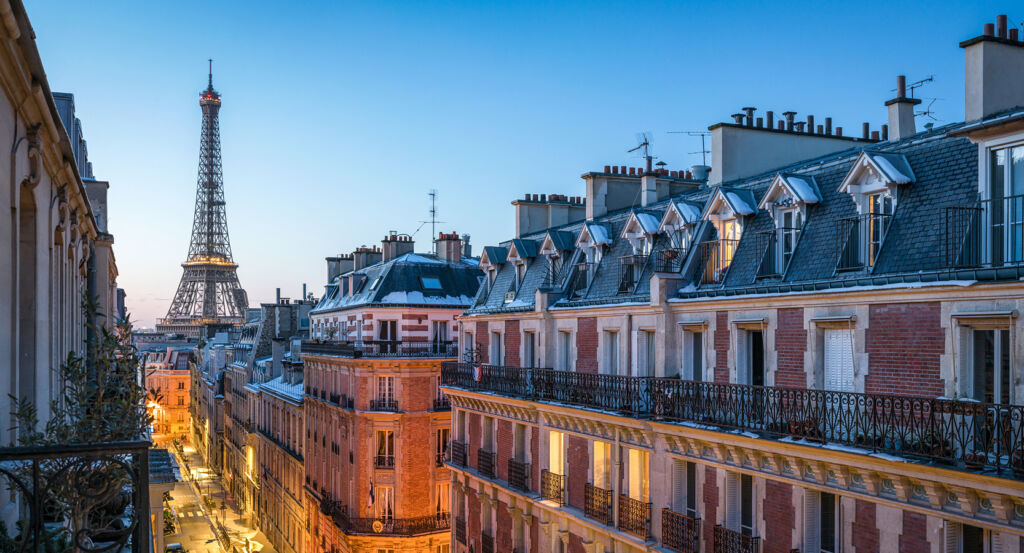
Why Rue Berger matters.
Rue Berger is a spirited Les Halles corridor where medieval commerce, architectural innovation, urban renewal, and contemporary Parisian life converge along one of the capital's most dynamic central streets.
Running through Les Halles between Rue du Louvre and Place Marguerite-de-Navarre, this lively corridor unfolds through landmark retail destinations, celebrated public spaces, elegant modern architecture, historic streets, independent cafés, and thriving cultural venues that reflect the continual reinvention of Paris' historic commercial heart. Expansive pedestrian plazas, contemporary storefronts, restored urban spaces, and a constant rhythm of neighborhood activity create a streetscape where centuries of trade and civic life continue evolving within one of the city's busiest districts. Every section of the corridor reveals the remarkable transformation of Les Halles while preserving its historic role as the commercial center of Paris. The result is a corridor defined by urban innovation, commercial vitality, and one of Central Paris' most significant streets.
What defines Rue Berger.
Rue Berger is best known for occupying the historic site of the former Les Halles, the renowned central food market established by King Philippe II Augustus in the late twelfth century before architect Victor Baltard's revolutionary iron-and-glass market pavilions transformed it into one of the greatest feats of nineteenth century market architecture. Named after engineer Pierre-Charles Berger, the corridor became the focal point of one of Europe's largest urban redevelopment projects after the wholesale markets relocated to Rungis in 1969, culminating in the construction of Forum des Halles and, later, La Canopée, the sweeping glass-and-steel structure designed by Patrick Berger and Jacques Anziutti that opened in 2016. The avenue now connects one of the world's largest underground transport interchanges at Châtelet, Les Halles, serving hundreds of millions of passengers annually through five RER lines and multiple Métro connections, with an extensive cultural and commercial district that includes Europe's largest underground shopping complex. Beneath the modern streetscape lie archaeological remains uncovered during successive excavations, preserving evidence of medieval Paris while illustrating nearly nine centuries of uninterrupted commercial activity at the heart of the capital. The corridor captures one of the most ambitious examples of urban reinvention in modern Europe, where medieval markets, industrial engineering, contemporary architecture, and public space coexist within a single continuous landscape.
The remarkable evolution of Rue Berger demonstrates how Paris successfully transformed its historic marketplace into a twenty-first century civic center without erasing the commercial character that first defined the district. Contemporary architecture, expansive pedestrian spaces, transportation infrastructure, and cultural institutions now occupy ground once filled with Baltard's iconic pavilions, while archaeological discoveries and preserved street patterns continue revealing the deep historical foundations beneath modern Les Halles. Few Parisian streets demonstrate the city's ability to balance preservation, innovation, engineering, and public life with such extraordinary scale and ambition.
How Rue Berger fits.
Rue Berger works as an exploration through Les Halles' celebrated architecture, historic landmarks, and energetic public spaces.
Begin at La Canopée des Halles, where Patrick Berger and Jacques Anziutti's landmark architectural masterpiece introduces the remarkable transformation of the district before following Rue Berger through the heart of modern Les Halles. Continue to Église Saint-Eustache, whose grand Gothic and Renaissance architecture preserves the historic character of the neighborhood that flourished beside the old central markets. Conclude at Bourse de Commerce - Pinault Collection, where Tadao Ando's acclaimed adaptive reuse of the historic commodity exchange provides a memorable finale celebrating the remarkable evolution of commerce, architecture, and culture in Central Paris. The progression moves naturally from contemporary urban design to historic architecture before culminating in one of Europe's finest adaptive reuse projects, revealing why Rue Berger remains one of Paris' most compelling urban corridors.
Where your story begins.
Foresyte Travel reveals places that feel extraordinary long before you arrive.
Experience premium editorial crafted for luxury travelers.
Foresyte Travel may earn a commission when you book through the link on this page.














































































































