
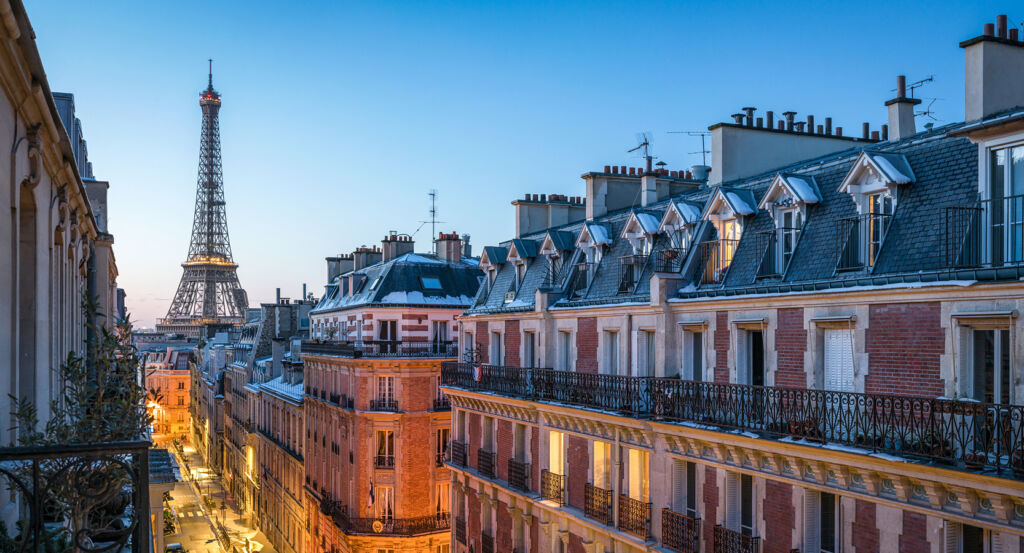
Why Rue Montorgueil matters.
Rue Montorgueil is a renowned Les Halles corridor where market tradition, culinary excellence, neighborhood vitality, and centuries of Parisian commerce converge along one of the capital's most celebrated pedestrian streets.
Running through Les Halles between Sentier and Étienne Marcel, this energetic historic corridor unfolds through renowned pâtisseries, celebrated cheesemongers, traditional fishmongers, artisan bakeries, thriving cafés, and beautifully preserved historic façades that embody the enduring spirit of everyday Paris. Elegant stone buildings, colorful market displays, lively terraces, and independent specialty shops create an atmosphere where generations of merchants and neighborhood families have sustained one of the city's richest gastronomic traditions. Every block celebrates craftsmanship, conviviality, and the remarkable continuity of a street whose commercial character has flourished for centuries. The result is a corridor defined by culinary distinction, neighborhood authenticity, and one of Paris' finest market streets.
What defines Rue Montorgueil.
Rue Montorgueil is best known for serving as the historic commercial extension of Les Halles, the former central food market of Paris, where generations of specialist food merchants supplied the capital through one of Europe's greatest wholesale marketplaces while preserving an uninterrupted tradition of artisan commerce that continues defining the corridor today. The street also occupies an important place in French cultural history through Au Rocher de Cancale, the celebrated oyster restaurant immortalized by Honoré de Balzac and numerous nineteenth century artists, while Stohrer, founded here in 1730 by Nicolas Stohrer, pastry chef to King Louis XV and Marie Leszczyńska, remains the oldest continuously operating pâtisserie in Paris and the birthplace of several iconic French pastries.
Rue Montorgueil continues expressing that extraordinary gastronomic legacy through family-owned specialty food shops, historic restaurants, neighborhood cafés, artisan chocolatiers, and thriving produce merchants that preserve one of the city's most authentic culinary landscapes. Carefully restored historic façades, a fully pedestrianized streetscape, and an enduring culture of independent commerce demonstrate how centuries of neighborhood tradition continue shaping one of Paris' most beloved destinations for food, culture, and everyday life.
How Rue Montorgueil fits.
Rue Montorgueil works as a culinary exploration through Les Halles' celebrated food traditions and historic landmarks.
Begin at Église Saint-Eustache, where one of Paris' greatest Gothic and Renaissance churches establishes the remarkable heritage of historic Les Halles before wandering along Rue Montorgueil through its extraordinary collection of artisan food merchants. Continue to Stohrer, where Paris' oldest pâtisserie preserves nearly three centuries of exceptional pastry craftsmanship through creations that have delighted generations of visitors and locals alike. Conclude at Bourse de Commerce Pinault Collection, where one of the capital's most remarkable architectural transformations provides a memorable finale celebrating commerce, history, and contemporary culture. The progression moves naturally from grand heritage to renowned gastronomy before concluding through one of Paris' defining cultural landmarks, revealing why Rue Montorgueil remains the city's quintessential culinary corridor.
Where your story begins.
Foresyte Travel reveals places that feel extraordinary long before you arrive.
Experience premium editorial crafted for luxury travelers.
Foresyte Travel may earn a commission when you book through the link on this page.














































































































