
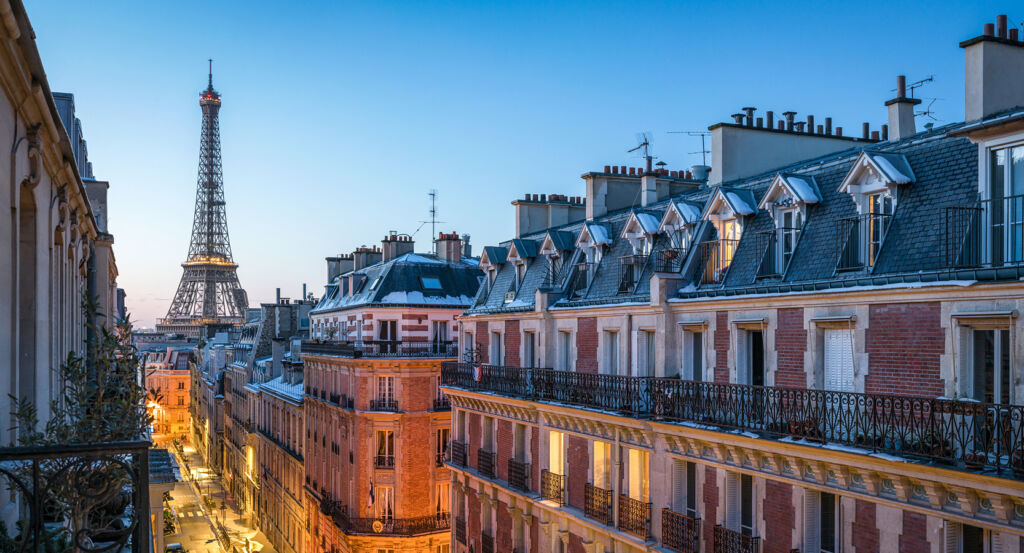
Why Rue Saint-Denis matters.
Rue Saint-Denis is a renowned Bonne-Nouvelle corridor where Roman origins, medieval commerce, royal ceremony, and centuries of urban transformation converge along one of the oldest and most influential streets in the French capital.
Running through Bonne-Nouvelle between Les Halles and Porte Saint-Denis, this remarkable historic corridor unfolds through medieval street alignments, celebrated market buildings, independent boutiques, historic cafés, energetic neighborhood institutions, and architectural landmarks that reveal nearly two thousand years of uninterrupted city life. Ancient stone façades, sculpted portals, narrow passages, and richly layered streetscapes preserve the physical evolution of Paris while reflecting the commercial energy that has animated the corridor since antiquity. Every block reveals another chapter of the capital's extraordinary development, creating an experience where history, commerce, and contemporary neighborhood life remain inseparably connected. The result is a corridor defined by historical continuity, commercial significance, and one of Paris' most remarkable urban journeys.
What defines Rue Saint-Denis.
Rue Saint-Denis is best known for preserving the route of the ancient Roman road leading north from Lutetia before becoming the medieval processional road followed by generations of French kings traveling between the royal palace and the Basilica of Saint-Denis, the burial place of nearly every French monarch from the tenth through the nineteenth centuries. The corridor also evolved into one of medieval Paris' foremost commercial streets through the thriving markets of Les Halles, while grand landmarks including Porte Saint-Denis, completed in 1672 by François Blondel to celebrate the military victories of Louis XIV, transformed the street into one of the capital's great ceremonial avenues and enduring symbols of royal ambition.
Centuries of commercial activity continue shaping Rue Saint-Denis through neighborhood businesses, cafés, independent retailers, historic buildings, and lively public spaces that preserve the street's longstanding role as one of Central Paris' principal arteries. Medieval street patterns, classical architecture, and remarkable urban continuity demonstrate how the corridor has continually adapted to successive eras while maintaining its importance within the evolving fabric of the city, creating one of Paris' richest expressions of historical resilience.
How Rue Saint-Denis fits.
Rue Saint-Denis works as an exploration through Bonne-Nouvelle's remarkable history, grand architecture, and historic marketplaces.
Begin at Porte Saint-Denis, where Louis XIV's grand triumphal arch establishes the corridor's extraordinary ceremonial legacy before following Rue Saint-Denis toward the historic heart of Paris. Continue to Bourse de Commerce Pinault Collection, whose remarkable transformation into one of the world's leading contemporary art museums highlights the enduring evolution of the former Les Halles district. Conclude at Église Saint-Eustache, where one of France's greatest Gothic and Renaissance churches provides a grand finale celebrating architecture, history, and the remarkable legacy of medieval Paris. The progression moves naturally from royal monument to contemporary cultural landmark before concluding through one of the city's defining historic churches, revealing why Rue Saint-Denis remains one of the capital's most historically significant streets.
Where your story begins.
Foresyte Travel reveals places that feel extraordinary long before you arrive.
Experience premium editorial crafted for luxury travelers.
Foresyte Travel may earn a commission when you book through the link on this page.














































































































