
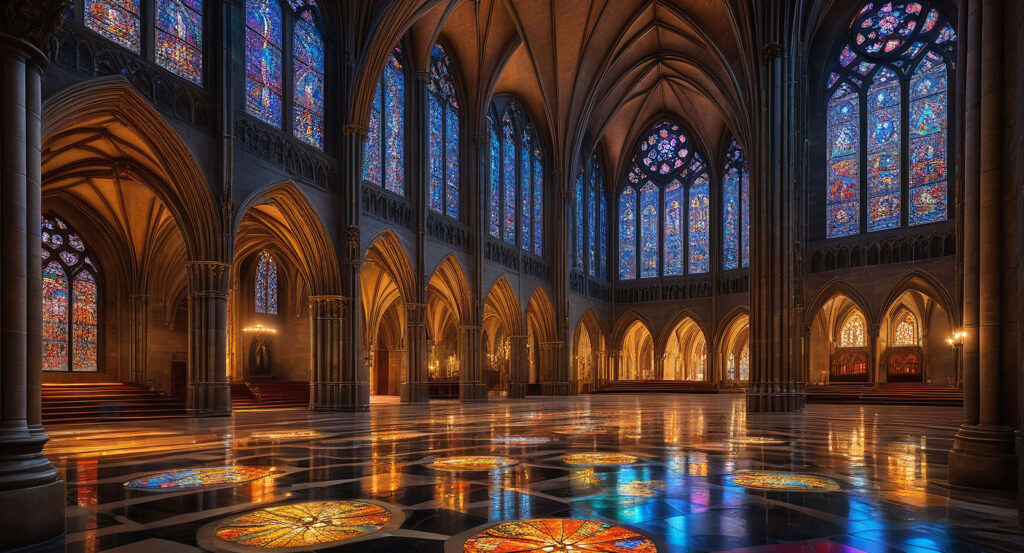
Why St. Patrick's Park matters.
The St. Patrick's Park is Dublin's green heartbeat, a tranquil sanctuary set against the Gothic splendor of St. Patrick's Cathedral, where the hum of the city dissolves into birdsong and bell chimes.
Unlike many urban parks, this one was conceived not just as a retreat, but as a living extension of the cathedral's spirit, a garden of reflection wrapped around Ireland's most sacred ground. Beneath the towering spire and flying buttresses, winding paths lead past manicured lawns, stone fountains, and benches shaded by elms and cherry trees. The scent of grass and rain drifts through the air, mingling with the faint echo of organ music from the cathedral. Every corner feels purposeful, a place to pause, to think, to breathe. It's one of Dublin's most photogenic scenes: the cathedral rising like a guardian over flowerbeds that blaze with color in spring and glow golden in autumn. Yet what makes St. Patrick's Park truly unforgettable is its atmosphere, contemplative but never somber, alive with history but open to everyone. It's where faith meets fresh air, and where Dublin's oldest stories feel suddenly new again.
What defines St. Patrick's Park.
The St. Patrick's Park you see today was once one of the city's most chaotic corners, a transformation that mirrors Dublin's own evolution.
In the 18th and 19th centuries, the land surrounding St. Patrick's Cathedral was densely packed with tenements and workshops. The area fell into severe decline, its narrow lanes echoing with poverty and industrial noise. It wasn't until the late 1800s that Sir Benjamin Guinness, the same philanthropist who restored the cathedral, purchased the surrounding property and cleared it to create a fitting green space for the church. His grandson, Lord Iveagh (Edward Guinness), later formalized the park's layout and gifted it to the city in 1901, ensuring that the cathedral would forever stand within a frame of peace. The park's design follows the ideals of late-Victorian landscape architecture, symmetrical flowerbeds, ornate railings, and Gothic-inspired statues honoring Irish saints and scholars. Look closely near the fountain: a bronze plaque commemorates the site where St. Patrick is said to have baptized converts in the 5th century, marking this place as the mythic cradle of Irish Christianity. The granite paving and stone seating walls incorporate fragments of medieval masonry uncovered during the cathedral's restorations, weaving history directly into the landscape. Today, its pathways are lined with dedications to writers, deans, and civic reformers, turning every stroll into a walk through Dublin's conscience.
How St. Patrick's Park fits.
A visit to St. Patrick's Park offers a moment of serenity at the center of Dublin's historical and cultural axis.
Enter through the main gates on Kevin Street or Patrick Street, where the view of the cathedral's west façade is most dramatic, perfect for early-morning photography when the light touches the spire. Wander slowly toward the central fountain, whose gentle arc of water catches the sunlight like glass. The benches along the perimeter are ideal spots to linger with a coffee, sketchbook, or simply the sound of the bells marking the hour. In spring and summer, the lawns become a social haven for locals reading beneath the trees; in winter, the park takes on a solemn beauty, its bare branches framing the cathedral's silhouette against gray skies. Be sure to look for the bronze statue of Benjamin Guinness, placed in quiet gratitude for his restoration of the cathedral and gift of the park. If you visit around midday, step inside St. Patrick's Cathedral afterward to hear the choir rehearsal drifting faintly through the open doors, a perfect complement to the park's calm. Whether you come to rest, reflect, or reconnect, St. Patrick's Park is Dublin at its most soulful: a meeting place of history and stillness, where the sacred breathes in sunlight.
MAKE IT REAL
Where your story begins.
Foresyte Travel reveals places that feel extraordinary long before you arrive.
Enjoy editorial crafted for luxury travelers.
Foresyte may earn a commission when you book.














































































































