
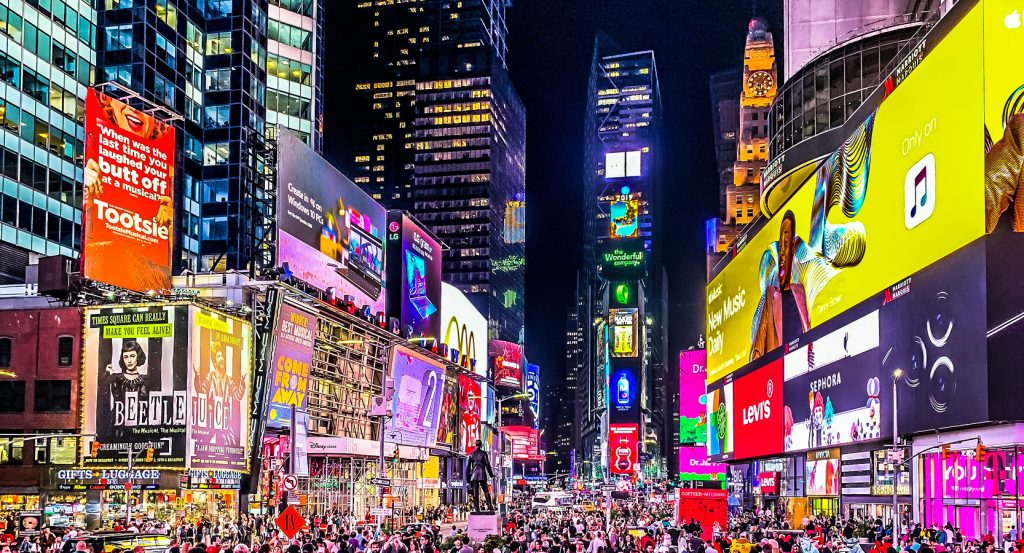
Why you should experience The Knickerbocker Hotel in New York, NY.
The Knickerbocker Hotel is where Manhattan's pulse sharpens into something im crisp, where Times Square's electricity rises to meet you without ever overwhelming you, and where the city's frenetic rhythm softens into a sleek, cinematic hush the moment you cross the threshold.
Here, amid one of the most hyperactive intersections on Earth, the hotel stands like a polished, modern temple to New York sophistication, clean architectural lines, sculptural lighting, muted palettes, and a serene, almost aerodynamic elegance that feels engineered to counterbalance the velocity of the streets below. The kill shot is the building's energy: a perfect collision of history, glamour, and contemporary restraint. Once known as the “hotel that opened Times Square,” The Knickerbocker carries a century of lore in its bones, the birthplace of the martini, the original haunt of Rockefeller and Fitzgerald, yet today its interiors move with the quiet, confident rhythm of a luxury hideaway. Suites glow with diffused sunlight through oversized windows, soundproofing cushions the chaos outside, and soft fabrics, cashmere throws, crisp linens, charcoal accents, build a cocoon-like calm high above the roar. Then there's the rooftop: St. Cloud, where the skyline expands in panoramic arcs, the neon haze of Times Square rising below like a living mural and the Empire State Building glowing just beyond. The Knickerbocker isn't just a hotel; it's a vantage point into New York's present, past, and pulse, an elevated view that shows the city exactly as it wants to be seen.
What you should know about The Knickerbocker Hotel.
The Knickerbocker occupies one of the most historically and architecturally significant footprints in Midtown, a place where century-old craftsmanship intersects with modern precision to create an experience that feels unusually calm, grounded, and atmospheric for such a high-density location.
The building dates back to 1906, designed by the renowned architect Marvin & Davis with Beaux-Arts grandeur that masked advanced sound insulation techniques far ahead of their time, techniques that still influence the hotel's uncanny quiet today. Its limestone façade sits atop a unique structural podium engineered to dampen vibrations from subway lines running directly beneath Times Square; this is why rooms feel remarkably still despite being perched atop the busiest transit center in the city. The rooftop's dramatic setback wasn't originally for aesthetics but to meet early 20th-century fire code requirements, yet today it creates one of the most unobstructed skyline planes in Midtown. Inside, the grand staircase retains sections of the original marble, veined from decades of environmental shifts that subtly alter color tone depending on humidity and light. The Knickerbocker also sits on a rare patch of Manhattan schist that juts upward unusually close to the surface, offering natural stabilizing properties that reduce structural sway in high winds, an invisible benefit guests feel as a sense of deep, grounding stillness even on stormy nights. The building's vertical orientation captures three distinct light corridors, bouncing illumination from the south-facing towers, amber-toned evenings from the west, and cool reflections from the north, which is why suites seem to transform in character throughout the day. Even the scent inside the hotel is curated to echo its legacy: warm woods, subtle spice, and mineral brightness reminiscent of old stone meeting modern design. Everything about The Knickerbocker is intentional, precise, and shaped by layers of history woven directly into the structure.
How to fold The Knickerbocker Hotel into your trip.
The Knickerbocker becomes your elevated gateway to Manhattan, a sleek, luminous retreat where each day begins with skyline brilliance and ends with the city glowing beneath your feet.
Start the morning by opening the blackout curtains to watch Times Square rebirth itself, first in soft silver light as the billboards sleep, then in gradual illumination as the city stirs, commuters flood the streets, and the neon glow returns like a slow-building overture. Enjoy breakfast at Charlie Palmer's refined dining space, where morning light filters in at sharp angles and the air feels calm despite the vibrancy waiting outside. Step directly into Broadway's current: wander to Bryant Park for coffee, explore 5th Avenue's boutiques, drift up toward Rockefeller Center, or head down toward the MoMA, each destination weaving its own thread into the day's rhythm. Return to your suite for a midday reset, letting the soundproofed quiet settle over you like a weighted blanket. Spend your afternoon exploring the city's extremes, stroll Central Park's wooded paths or dive into Midtown's architectural canyon, before returning to the hotel as golden hour ignites the skyline. As the sun drops, make your way to St. Cloud Rooftop, where cocktails meet city vistas, the Empire State rises luminous, and the lights of Times Square pulse in a hypnotic glow far below. Stay until the sky shifts fully into indigo, the rooftop breeze cools, and the city's nighttime symphony builds. End your evening wrapped in crisp linens, windows cracked just enough to feel the faint hum of Manhattan's heartbeat beneath you. By the time your stay ends, one truth becomes undeniable: The Knickerbocker Hotel doesn't just put you in New York, it gives you a heightened, cinematic version of it, a city distilled into light, luxury, and perfectly controlled chaos.
Where your story begins.
Foresyte Travel reveals places that feel extraordinary long before you arrive.
Experience premium editorial crafted for luxury travelers.







































































































