Why The Ritz-Carlton matters.
The Ritz-Carlton is neoclassical gravity translated into contemporary composure, a hotel that does not imitate luxury, but inherits it, occupying one of the city's most symbolically charged buildings and transforming architectural authority into an experience of calm, clarity, and measured grandeur.
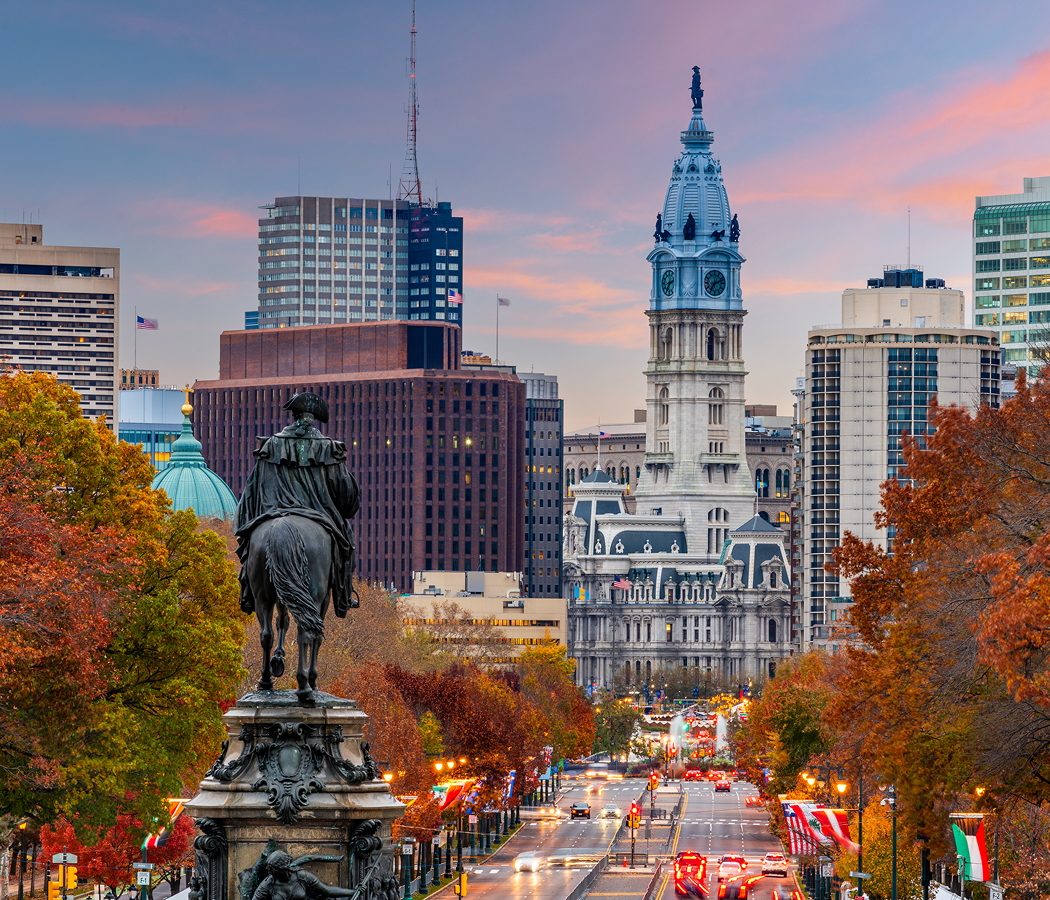
Housed within the former Girard Trust Company building directly across from City Hall, the hotel announces its presence the moment you approach. The façade is monumental, unapologetically civic, and rooted in permanence. Tall columns rise with ceremonial confidence, stone surfaces carry the weight of institutional history, and the scale of the structure reframes Center City. Arrival does not feel transactional; it feels declarative. You are not slipping into a hotel tucked between storefronts, you are entering a building that has always expected importance to pass through its doors. Stepping inside produces a controlled shift. The vast banking hall, now the lobby, opens upward with cathedral-like volume, marble floors, soaring ceilings, and a sense of order that quiets the city. Light moves deliberately through the space, and sound dissipates naturally, creating an atmosphere that feels grounded. The design language respects the building's classical bones while integrating contemporary refinement, allowing the space to feel timeless. Public areas maintain this balance. They are formal without being stiff, elegant without being precious, and scaled to encourage stillness rather than movement for movement's sake. There is a subtle psychological effect at play here: the building slows you down. Guest rooms extend this sense of calm authority into private space with comfort that feels deliberate. Layouts are generous and composed, designed to support rest, work, and reflection. Beds are substantial and deeply restorative, positioned to reinforce a sense of retreat after long days navigating the city's density. Lighting is layered and warm, shifting naturally from day to night. Windows are a defining asset. Many rooms frame City Hall directly, offering a rare, almost theatrical view of Philadelphia's civic heart, not as noise, but as form. Watching the city's rhythms from this vantage point creates a sense of orientation. Bathrooms are refined and well-proportioned, emphasizing stone, water, and space. Everything feels intentional, calibrated, and quietly luxurious. Sound insulation reinforces this composure, allowing the hotel to feel insulated. Service at The Ritz-Carlton reflects the brand at its most disciplined. Interactions are polished, anticipatory, and respectful of pace. Nothing feels rushed, nothing feels performative. The experience communicates confidence through consistency. Staying here feels like choosing gravitas over trend, structure over performance, and a hotel that allows Philadelphia's civic character to be felt rather than explained, making it among the most grounding and symbolically powerful places to stay in the city.
What defines The Ritz-Carlton.
The Ritz-Carlton draws its resonant power from institutional memory, not from decorative storytelling, and that distinction is central to its character.
The Girard Trust Building was designed as a temple of finance at a time when banks were meant to project stability, trust, and permanence through architecture alone. Its neoclassical form was not ornamental; it was ideological. Columns, symmetry, and grand scale were tools meant to reassure the public that order would endure. When the building was reimagined as a hotel, the challenge was not to soften that authority, but to translate it into hospitality. The Ritz-Carlton centers on allowing the architecture to remain dominant while refining how it is inhabited. Rather than layering in excessive décor or narrative references, the hotel emphasizes proportion, material integrity, and spatial clarity. This approach preserves the building's original purpose, to inspire confidence, while making it human-scaled. Renovations and updates have consistently focused on performance. Climate control, acoustics, lighting calibration, and room functionality receive priority, ensuring that the building's grandeur never comes at the expense of comfort. The lobby's former banking hall remains one of the most impressive hotel spaces in the city precisely because it is not over-programmed. It invites pause. The hotel's location reinforces this sense of institutional alignment. Positioned directly across from City Hall, it sits at the literal and symbolic center of Philadelphia's grid. This is not a leisure district or a nightlife corridor; it is the city's civic core. Courts, government offices, historic institutions, and transit arteries converge here, and the hotel mirrors that seriousness. Guests often include diplomats, executives, academics, and repeat visitors who value discretion and consistency over novelty. Staff culture reflects this orientation. Service is delivered with restraint and precision, guided by situational awareness. Preferences are remembered, timing is respected, and assistance feels quietly assured. In a hospitality landscape increasingly dominated by experiential branding and visual theatrics, The Ritz-Carlton stands apart by committing to architectural authority as experience, proving that dignity, when preserved and inhabited thoughtfully, can be deeply comforting.
How The Ritz-Carlton fits.
The Ritz-Carlton works as a ceremonial anchor, especially for travelers who want the city to feel coherent, dignified, and intentionally paced.
Begin your days early, when City Hall stands in relative calm and the surrounding streets feel measured. From this location, Philadelphia reveals itself logically. Historic Old City lies to the east, cultural institutions line the Parkway to the west, and Center City's business corridors radiate outward. Morning walks feel purposeful, framed by architecture. Midday returns to the hotel are especially powerful. Stepping back into the former banking hall after navigating the city's movement creates a psychological reset, experiences settle, conversations linger, and the day regains structure. Afternoons can unfold deliberately: a museum visit, a long lunch, a meeting, or a walk that traces the city's grid from its center outward. Evenings at The Ritz-Carlton feel composed. After dinner or an event, returning to the hotel feels like re-entering a space of order. The scale of the lobby, the calm of the corridors, and the controlled quiet of the rooms encourage reflection. Over multiple nights, the hotel's rhythm becomes a stabilizing force. You begin to experience Philadelphia not as a sequence of attractions, but as a civic organism with a clear center and meaningful edges. Extended stays reveal another layer: how the building subtly influences your internal pace. Mornings feel anchored, decisions feel cleaner, and the pressure to over-schedule dissipates. By the time you depart, The Ritz-Carlton will not feel like a hotel you merely stayed in, but like a civic vantage point that organized the city around you, offering gravity, clarity, and calm in a metropolis where history, power, and daily life intersect continuously. In choosing this hotel, you choose not just luxury, but alignment, with the city's architecture, its rhythm, and its enduring sense of order.
Where your story begins.
Foresyte Travel reveals places that feel extraordinary long before you arrive.
Enjoy editorial crafted for luxury travelers.
Foresyte may earn a commission when you book.