
Why you should experience The Shelburne Sonesta New York in New York, NY.
The Shelburne Sonesta New York is a literary four-star hotel where Murray Hill's brownstone intimacy, Manhattan residential tradition, poetic imagination and skyline romance converge within an address conceived around the experience of living in New York.
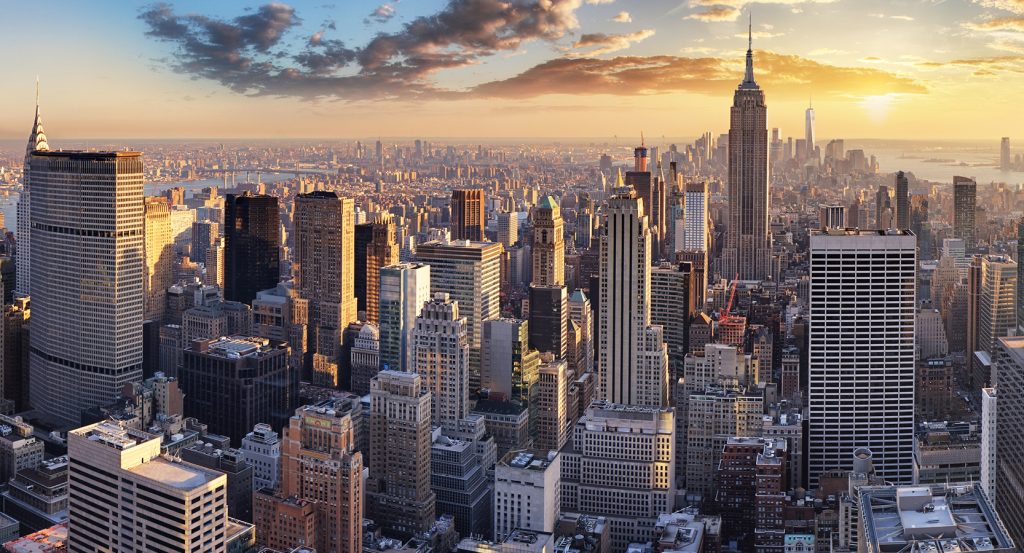
Set along Lexington Avenue near East 37th Street and just steps from Sniffen Court, the 325-room property carries designer Andrea Dawson's contemporary interpretation of urban residence through interiors subtly inspired by Walt Whitman and his enduring fascination with New York. Dawson Design Associates developed warm, layered rooms around the neighborhood's domestic character, while the building's longstanding apartment-style accommodation tradition allows the design premise to extend beyond decoration into genuine residential scale. The property's elevated western exposures frame the Empire State Building against Midtown, giving Whitman's celebration of Manhattan another expression through the skyline itself. The result is a hotel where literature, residential design and Murray Hill's quieter streets shape an unusually intimate interpretation of Midtown.
What you should know about The Shelburne Sonesta New York.
The Shelburne Sonesta New York is best known for evolving through several distinct chapters of New York hospitality at 303 Lexington Avenue, operating for years as the Shelburne Murray before becoming Shelburne Hotel & Suites by Affinia and eventually joining Sonesta, while retaining a residential accommodation model unusually suited to Murray Hill. A major Affinia renovation in 2009 repositioned the former Shelburne Murray, and another extensive redesign completed in 2019 introduced newly conceived guestrooms and apartments before Andrea Dawson of Dawson Design Associates established the property's current aesthetic around an interpretation of Manhattan urban living. Dawson's concept draws subtle inspiration from Walt Whitman, whose poetry repeatedly treated New York's crowds, streets, ferries and human variety as subjects worthy of literature, giving the interiors an intellectual reference considerably deeper than a conventional decorative theme. The contemporary hotel contains 325 guestrooms and suites, including apartment-style configurations and private-terrace accommodations whose residential proportions preserve a lineage established under earlier iterations of the property. That continuity across the Shelburne Murray, Affinia and Sonesta eras makes The Shelburne Sonesta New York a hotel shaped through successive reinterpretations of the same essential concept: creating a temporary Manhattan residence within one of Midtown's most enduringly domestic neighborhoods.
The property's newest authored chapter rises above that history through Vintage Green, a 9,600-square-foot indoor-outdoor rooftop conceived by Marin Architects beneath a retractable glass atrium and positioned to capture simultaneous sightlines toward the Empire State Building and Chrysler Building. Time Out subsequently named The Shelburne Sonesta New York its choice for New York's best hotel view, specifically recognizing the west-facing perspectives shared between Vintage Green and the property's Terrace Suites. The rooftop has also become part of the city's tennis calendar through a US Open professional players meet-and-greet, while Forbes incorporated Vintage Green into its examination of New York's growing sober-curious hospitality culture. Marin Architects' intervention develops the Shelburne beyond Dawson's literary residential interiors, using architecture and Manhattan's two great Art Deco towers to turn the building's uppermost level into a contemporary expression of the city celebrated throughout Whitman's work.
How to fold The Shelburne Sonesta New York into your trip.
The Shelburne Sonesta New York works as the anchor for an afternoon tracing the literary, architectural and domestic culture that gives Murray Hill its unusually layered sense of New York history.
Begin at The Morgan Library & Museum, where financier J. Pierpont Morgan commissioned Charles Follen McKim to create his private library, completed in 1906 as an Italian Renaissance-inspired setting for rare manuscripts, drawings and books that transforms collecting into an intensely personal architectural experience. Continue to Scandinavia House, where the American-Scandinavian Foundation occupies James Stewart Polshek's purpose-designed cultural center, bringing Nordic art, design, film and intellectual life into a contemporary building whose restraint provides a compelling counterpoint to McKim's opulence. Conclude at Grand Central Terminal, where Reed & Stem and Warren & Wetmore's 1913 transportation palace culminates beneath the celestial ceiling of the Main Concourse, turning the movement of millions through Midtown into the grand urban theater that Whitman's fascination with crowds seems almost to anticipate. The progression moves from Morgan's private world of books through Scandinavian cultural exchange into Grand Central's immense choreography of human movement, revealing the intersection of literature, design and metropolitan life that gives The Shelburne Sonesta New York its deeper context.
Where your story begins.
Foresyte Travel reveals places that feel extraordinary long before you arrive.
Experience premium editorial crafted for luxury travelers.







































































































