Why you should experience Trinity Street in Austin, Texas.
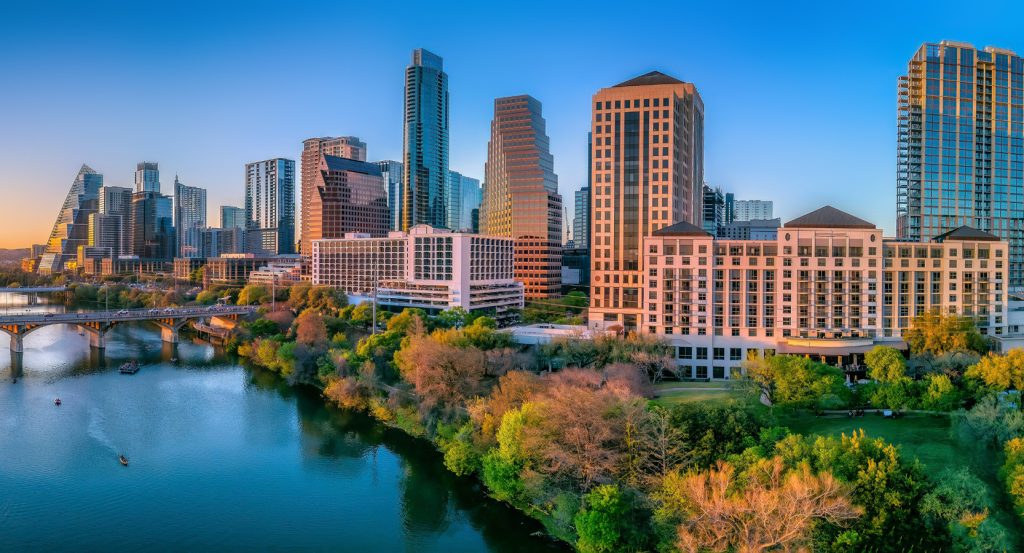
Trinity Street is a distinguished Downtown corridor where government, music, and architectural innovation converge along one of the city's most influential streets.
Running through Downtown between the Capitol Complex, the Red River Cultural District, Rainey Street, and Lady Bird Lake, this dynamic corridor connects landmark government buildings, architecturally significant museums, celebrated performance venues, thriving hotels, welcoming public plazas, and enduring civic institutions that collectively showcase Austin's remarkable evolution from state capital to internationally recognized cultural destination. Historic civic architecture, thoughtfully integrated contemporary development, energetic pedestrian activity, celebrated entertainment destinations, flourishing business districts, and enduring public spaces create an urban landscape where generations of legislators, musicians, entrepreneurs, residents, and visitors have experienced one of Central Texas's defining downtown corridors. Trinity Street continues to unite Austin's governmental, cultural, and entertainment districts while preserving its central role in the city's civic life. The result is a corridor defined by architectural distinction, cultural vitality, and lasting metropolitan significance.
What you should know about Trinity Street.
Trinity Street is best known for housing the Bullock Texas State History Museum, whose original 35-foot-tall French shipwreck recovered from La Salle's La Belle represents one of the most significant archaeological discoveries ever made in North America, providing an unparalleled window into seventeenth-century European exploration of Texas.
Excavated from Matagorda Bay after lying underwater for more than three centuries, the remarkably preserved vessel yielded over one million artifacts that transformed historians' understanding of France's colonial ambitions in the Gulf of Mexico. The painstaking conservation and reconstruction of La Belle established the museum as one of the nation's foremost interpreters of Texas history while preserving one of the continent's most important maritime archaeological treasures. Today, the ship remains the museum's defining centerpiece and one of the rarest surviving seventeenth-century French shipwrecks on public display anywhere in the world. That extraordinary archaeological achievement has established Trinity Street as one of Texas's most historically significant civic corridors.
How to fold Trinity Street into your trip.
Trinity Street works as an exploration of Austin's history, civic landmarks, and downtown culture.
Begin along Trinity Street, where the energetic downtown streetscape immediately establishes the corridor's defining identity. Continue toward the Bullock Texas State History Museum, where one of Texas's premier history museums provides broader perspective on the street's extraordinary historical legacy. From there, make your way to the Texas State Capitol, where one of the nation's most distinguished state capitol buildings provides a memorable conclusion while celebrating Austin's enduring blend of history, government, and architectural excellence. Along the way, you'll encounter architecturally significant civic buildings, welcoming public spaces, thriving cultural destinations, beautifully maintained streetscapes, celebrated museums, and energetic gathering places that reveal Downtown's exceptional depth. The progression moves naturally from a defining downtown corridor to a world-class history museum to the seat of Texas government, demonstrating how Trinity Street connects archaeological discovery, community life, and historical exploration.
Where your story begins.
Foresyte Travel reveals places that feel extraordinary long before you arrive.
Experience premium editorial crafted for luxury travelers.