Why Van Buren Street matters.
Van Buren Street is a foundational downtown corridor where transportation history, architectural innovation, and civic growth converge along one of the city's most important streets.
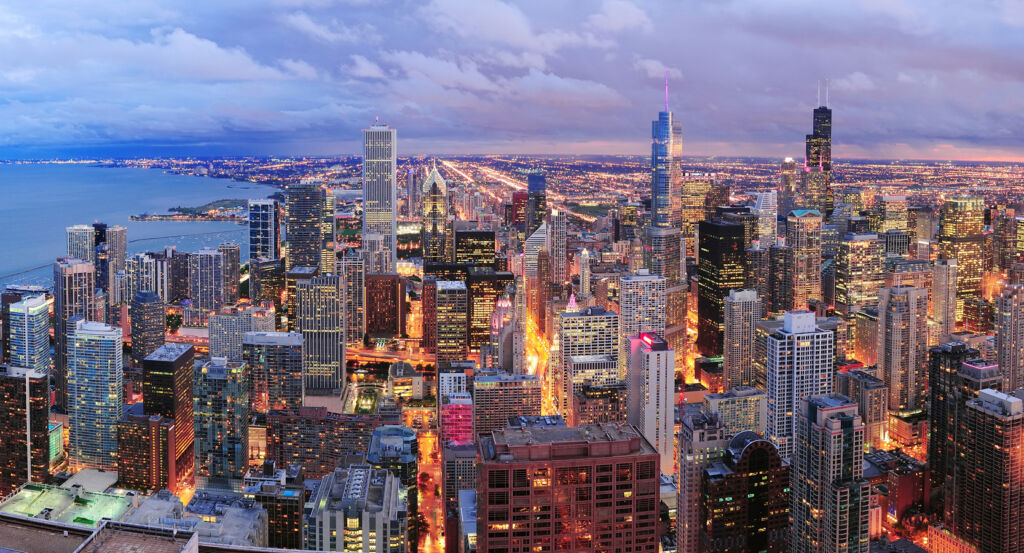
Running through the Loop between the Near West Side and Grant Park, this historic avenue connects transportation hubs, landmark skyscrapers, university campuses, cultural institutions, public spaces, and commercial districts that have shaped Chicago life for generations. Early high-rises, historic rail infrastructure, academic buildings, civic landmarks, thriving intersections, and celebrated streetscapes create an environment defined by ambition and connectivity. The corridor emerged as a critical artery during Chicago's transformation into a national center of commerce and transportation, attracting architects, educators, entrepreneurs, railroad operators, and civic leaders who helped shape the city's identity. To the east, Grant Park extends naturally from Van Buren Street through a network of cultural destinations, civic landmarks, and public spaces that reinforce the avenue's enduring significance. The result is a street defined by innovation, mobility, and urban vitality.
What defines Van Buren Street.
Van Buren Street is best known for housing the Manhattan Building, the pioneering 1891 skyscraper widely recognized as the oldest surviving steel-frame skyscraper in the world.
Designed by William Le Baron Jenney, the building represented a breakthrough in architectural engineering by demonstrating the viability of steel-frame construction for tall commercial structures. Its innovative design helped establish the foundation for modern skyscraper development and reinforced Chicago's position as the birthplace of the skyscraper. Architects and engineers around the world studied the building's structural innovations as cities entered a new era of vertical construction. More than a century later, the landmark remains a tangible link to one of the most transformative periods in urban architectural history. Few streets in America are associated with a building that so profoundly influenced the future of city skylines worldwide.
How Van Buren Street fits.
Van Buren Street works as an exploration of the Loop's architectural heritage, transportation history, and civic landmarks.
Begin at the Manhattan Building, where the avenue's defining relationship with innovation, engineering, and city-building immediately comes into focus. Continue toward Harold Washington Library Center, whose expansive presence reveals the educational and civic forces that helped shape the district across generations. From there, make your way to Grant Park, where one of Chicago's most celebrated public spaces provides a broader perspective on the cultural investment and urban planning traditions that continue to define downtown today. Along the route, you'll encounter historic skyscrapers, transportation landmarks, academic institutions, public gathering places, architectural treasures, civic destinations, and celebrated streetscapes that showcase the avenue's remarkable depth. The progression moves naturally from pioneering skyscraper to civic landmark to world-renowned urban park, revealing the forces that transformed Van Buren Street into one of Chicago's most consequential corridors. Van Buren Street remains one of the city's most rewarding streets, preserving a distinctive balance between architectural achievement, transportation legacy, and civic significance.
Where your story begins.
Foresyte Travel reveals places that feel extraordinary long before you arrive.
Enjoy editorial crafted for luxury travelers.
Foresyte may earn a commission when you book.