
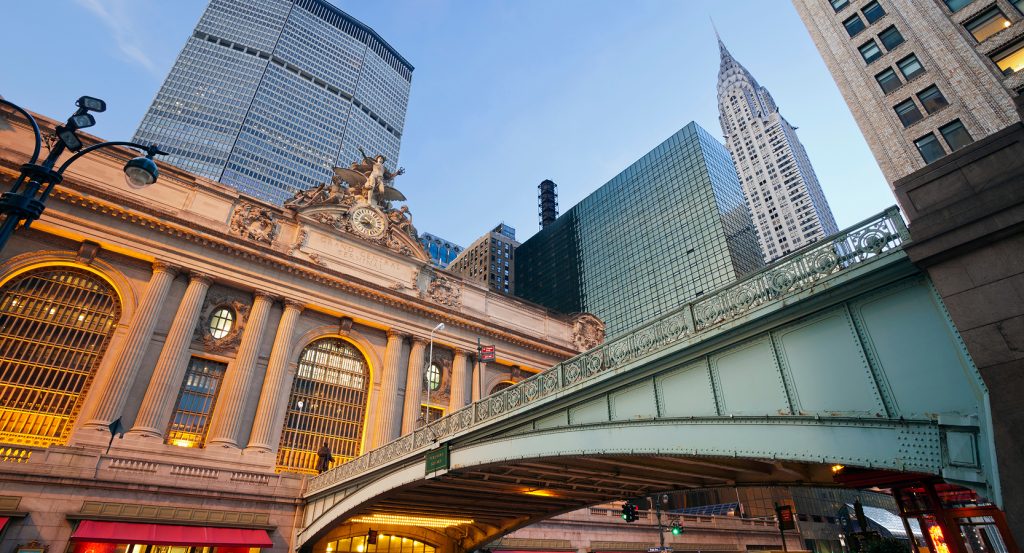
Why you should experience Grand Central Terminal Vanderbilt Hall in New York, NY.
Grand Central Terminal Vanderbilt Hall is a distinguished Beaux-Arts civic hall where Midtown East's transportation heritage, architectural grandeur, public life, and cultural programming create one of New York City's most celebrated interior gathering spaces.
Set along East 42nd Street near Vanderbilt Avenue and just steps from the Grand Central Terminal Main Concourse, this soaring public hall welcomes visitors beneath grand Guastavino vaults, Tennessee marble walls, expansive limestone detailing, and an uninterrupted ceremonial volume originally conceived as the terminal's principal waiting room. Refined Beaux-Arts proportions, luminous natural light, and meticulously restored historic finishes establish a civic interior that has continually adapted to exhibitions, seasonal markets, public celebrations, and major cultural events while preserving the elegance envisioned by the terminal's original designers. The result is a space defined by architectural excellence, historic continuity, and exceptional civic presence.
What you should know about Grand Central Terminal Vanderbilt Hall.
Grand Central Terminal Vanderbilt Hall is best known for serving as the terminal's original Main Waiting Room when Grand Central Terminal opened on February 2, 1913, occupying 12,000 square feet beneath soaring Guastavino tile vaults before evolving into one of New York City's foremost event spaces following the terminal's landmark restoration completed in the 1990s, where internationally recognized exhibitions, the annual Holiday Fair, art installations, concerts, public performances, transportation initiatives, and civic gatherings continue activating one of Manhattan's most distinguished Beaux-Arts interiors. Designed by the architectural firms Reed & Stem and Warren & Wetmore as part of the grand terminal commissioned by the New York Central Railroad, Vanderbilt Hall reflected the City Beautiful movement through grand classical proportions, premium Tennessee marble, Indiana limestone, bronze ornamentation, and exceptional craftsmanship intended to elevate rail travel into a grand civic experience. Following decades of alteration and declining conditions during the mid-twentieth century, the hall underwent meticulous restoration after Grand Central Terminal received National Historic Landmark designation in 1976 and its preservation was secured through the landmark 1978 United States Supreme Court decision Penn Central Transportation Co. v. New York City, among the most influential preservation rulings in American legal history. Restoration specialists carefully conserved historic masonry, vaulted ceilings, ornamental finishes, lighting, and architectural detailing while adapting the hall to accommodate contemporary public programming.
Seasonal installations, cultural exhibitions, public art, transportation campaigns, charitable events, and New York City's celebrated Holiday Fair continually reinterpret the hall while preserving its role as one of Manhattan's great civic interiors. Monumental spatial proportions, exceptional acoustics, masterful Beaux-Arts detailing, and direct connections to the terminal's circulation network reinforce Vanderbilt Hall's enduring function as both a transportation landmark and a dynamic public gathering place. Architectural preservation, adaptive reuse, and thoughtful cultural programming collectively demonstrate how one of New York's greatest railroad spaces continues serving the city more than a century after its opening.
How to fold Grand Central Terminal Vanderbilt Hall into your trip.
Grand Central Terminal Vanderbilt Hall works as the centerpiece of an exploration through Midtown East's celebrated transportation and architectural treasures.
Begin at Grand Central Terminal Main Concourse, where one of the world's most celebrated railroad interiors introduces the terminal's extraordinary architectural legacy before continuing into Grand Central Terminal Vanderbilt Hall. Continue to Whispering Gallery at Grand Central Terminal, whose celebrated acoustic phenomenon reveals another ingenious feature hidden within the terminal's Beaux-Arts design. Conclude at Chrysler Building, where one of New York City's defining Art Deco skyscrapers provides a memorable finale celebrating the architectural ambition that transformed Midtown East into one of the world's greatest urban ensembles. The progression moves naturally from grand concourse to historic civic hall before concluding through one of Manhattan's defining skyscrapers, revealing why Vanderbilt Hall remains an essential expression of Grand Central Terminal's enduring architectural legacy.
Where your story begins.
Foresyte Travel reveals places that feel extraordinary long before you arrive.
Experience premium editorial crafted for luxury travelers.







































































































