Why you should experience W.G. Creole House 1850 in New Orleans, Louisiana.
W.G. Creole House 1850 is New Orleans experienced as architectural memory made livable, where the city's layered history is not preserved behind glass but transformed into a place you can inhabit, breathe, and return to again and again.
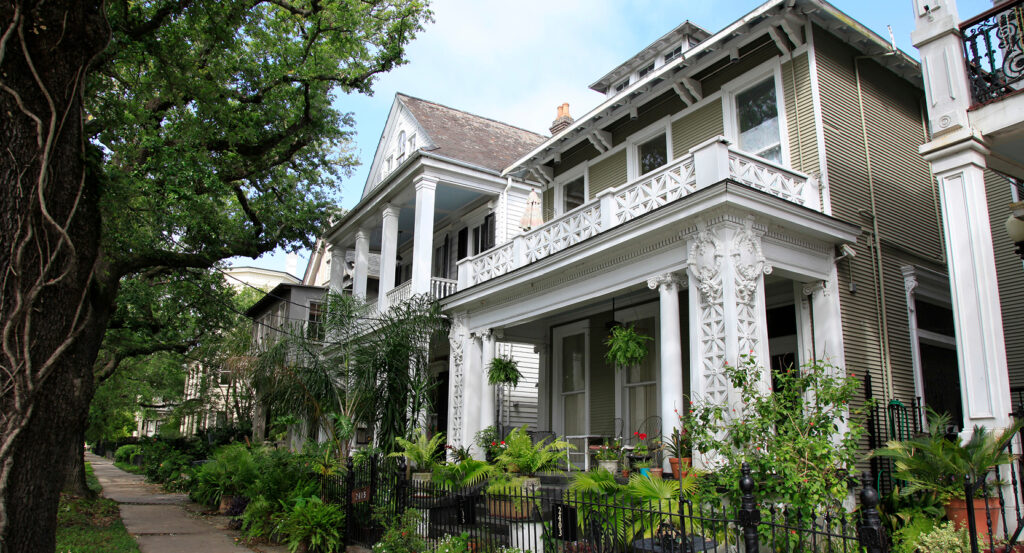
New Orleans is a city built on accumulation, ideas, cultures, music, and architecture folding into one another over centuries, and W.G. Creole House 1850 stands as one of its most enduring translations of that pattern. Situated on Royal Street in the French Quarter, this guesthouse is not a hotel that announces itself with spectacle; it reveals itself quietly, like a detail you notice only because you slowed down. Arrival feels like crossing a threshold into a different tempo. There is no sharp break from the city's pulse, but rather a seamless integration into something calmer, more measured, and unquestionably rooted. Check-in is personal and unhurried, shaped by human awareness. From the moment you enter, the space communicates something rare in New Orleans: history that is lived, not performed. The Creole House's architecture is itself the first narrative. Built in 1850, the building's proportions, balconies, and spatial logic reflect a time when domestic life was public in its material but private in its experience. Stepping inside feels like entering a structure that has breathed the city's air for generations, and that continuity sets the tone for the entire stay. Public spaces are intimate. The layout favors human scale, and there is a distinct absence of theatrical staging. Instead of a singular grand lobby, circulation moves through rooms, nooks, and courtyards that feel collected over time rather than designed in a single gesture. This spatial layering encourages mindfulness, pay attention to light, shadow, texture, and the way air moves through thresholds, because the architecture itself is part of the experience rather than just a container for it. Courtyards function as pocket landscapes, shaded and quiet, offering moments of pause that feel earned. These are spaces where you can sit before stepping back into the Quarter, allowing the city's sound and motion to be something you enter after a moment of stillness. Guest rooms continue this architectural logic with a focus on substance over performance. Rooms are thoughtfully proportioned, neither cavernous nor cramped, and they sit in balance with the building's original scale. Beds are comfortable and supportive, encouraging restful sleep after days of walking, exploration, and discovery. Furnishings are carefully chosen to complement the historic fabric rather than compete with it, and lighting is warm and layered, allowing each room to feel calm and grounded in its own right. Many rooms face inward toward courtyards, reinforcing the sense of quiet separation from the city's constant motion. Sound from Royal Street becomes context rather than intrusion, ambient presence rather than demand. There is no attempt to isolate you entirely from the city; instead, the house modulates the experience so that you can choose your level of connection.
What you should know about W.G. Creole House 1850.
W.G. Creole House 1850 is best known for a philosophy of architectural continuity, where the building's historic fabric forms the foundation of the experience.
Unlike properties that mask age behind restoration sheen, this house reveals its material history, plastered walls, timber structure, ironwork, and spatial proportion, as active elements of the stay. Public areas are arranged to emphasize depth of experience. Courtyards, thresholds, and transitional spaces are not afterthoughts; they are structural tools for how you inhabit the property. Guest rooms respect the building's original geometry, allowing each space to feel both specific and generative. Materials emphasize texture and patina, creating an environment that feels settled. Service culture aligns with this architectural logic. Hospitality here is relational, attentive, and context-aware. Staff operate with awareness of the property's history and guests' desire to inhabit it, offering guidance that supports exploration. The result is a hotel environment that feels coherent and architecturally grounded, offering a way to experience New Orleans that honors depth over moment.
How to fold W.G. Creole House 1850 into your trip.
W.G. Creole House 1850 works best when you treat it as your architectural anchor, the place that gives New Orleans shape and calm between active exploration.
Begin your stay by settling into the house's rhythm, linger in courtyards, observe transitions between rooms, and let the spatial layering set the tone before heading out. Use mornings for reflective wandering, walk Royal Street, absorb façades and galleries during quieter hours, and let the city unfold at a measured pace. Midday returns to the house feel restorative, offering quiet separation that recalibrates. Afternoons can extend into long lunches, museum visits, or wandering. Evenings are best approached with intention, choose one experience then return when energy begins to accumulate. On your final morning, departure feels thoughtful and complete, shaped by the sense that you did not simply visit New Orleans, but inhabited one of its living architectural narratives for a time. W.G. Creole House 1850 reframes the city not as a series of highlights to absorb, but as a continuum you can move through with presence, clarity, and continuity.
Where your story begins.
Foresyte Travel reveals places that feel extraordinary long before you arrive.
Experience premium editorial crafted for luxury travelers.