Why Forbidden Drive matters.
Forbidden Drive at Wissahickon Valley Park in Philadelphia is a living poem carved into stone and soil, where the forest whispers the city's oldest stories.
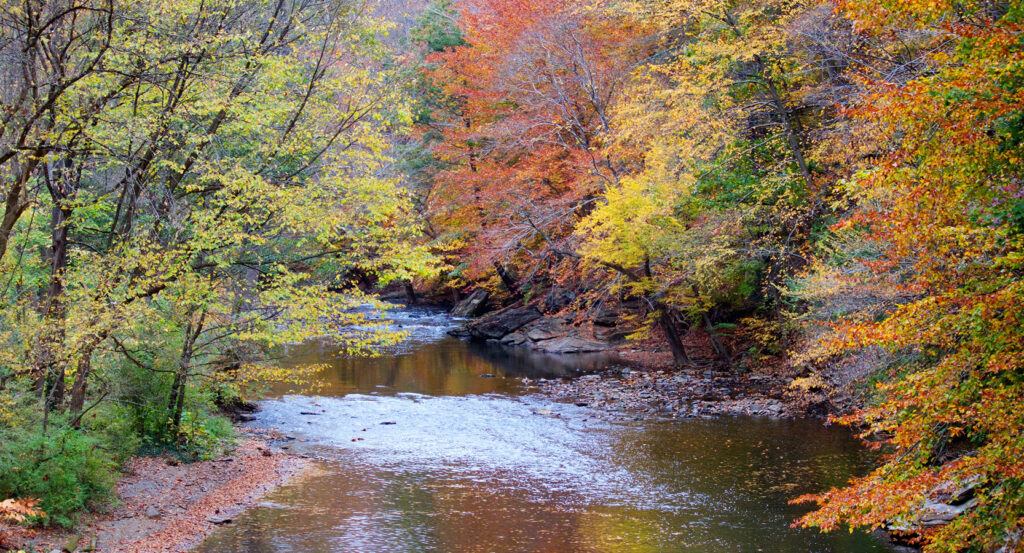
Stretching for nearly seven miles along the Wissahickon Creek, this broad, tree-lined path follows the course of an old carriage road, winding through deep ravines and beneath the graceful arches of historic bridges. The road's surface, part gravel, part packed earth, crunches softly underfoot as you walk, run, or cycle alongside the creek's tumbling current. Overhead, light filters through canopies of oak, hemlock, and beech, dappling the water with shifting color. The stillness here feels extraordinary, birdsong replacing traffic, wind replacing noise. Whether you come at sunrise when mist rolls low across the creek or in the golden hour when the last light hits the stone bridges, Forbidden Drive captures something rare: the sensation of being far from everything, while standing right in the heart of Philadelphia.
What defines Forbidden Drive.
The origins of Forbidden Drive are rooted in both civic progress and quiet rebellion.
In the 19th century, it was known as Wissahickon Turnpike, a toll road used by carriages delivering goods to mills that once lined the creek. When automobiles began using it in the early 1900s, park advocates and conservationists protested the noise and pollution disrupting the valley's tranquility. In 1920, they succeeded in banning cars entirely, earning the road its evocative new name: Forbidden Drive. The decision wasn't just environmental; it reflected Philadelphia's early embrace of nature as civic identity. The Friends of the Wissahickon, founded around the same time, helped maintain the drive and preserve the park's trails and waterways, a stewardship that continues today. Along the route, remnants of the valley's industrial past remain visible: stone foundations of mills, small dams, and even forgotten roads leading into the hills. Landmarks like Valley Green Inn, Thomas Mill Covered Bridge, and Ten Box Bridge stand as both historical markers and works of functional art. In 2018, Forbidden Drive was named the Best Urban Trail in America by USA Today, a tribute to its enduring magic and careful preservation.
How Forbidden Drive fits.
To experience Forbidden Drive in full, start at the Valley Green Inn, the park's unofficial center, and follow the trail north or south depending on your mood and pace.
For a relaxed stroll, head south toward Lincoln Drive, where the path stays close to the water and passes through shaded groves ideal for reflection. If you're seeking solitude, venture north toward Northwestern Avenue, where the terrain opens into wide clearings and the creek bends through mossy stone outcroppings. Cyclists and joggers share the path, yet it never feels crowded, the park's vastness absorbs sound and movement alike. Bring water, good shoes, and time to linger at the bridges, where you can watch sunlight break across the surface of the creek. In autumn, the trail becomes a corridor of fire-colored leaves; in spring, wildflowers fringe the edges like embroidery. For the perfect loop, cross Thomas Mill Covered Bridge midway through your route and continue along one of the side trails, the Orange or White, that weave back into the valley's higher ridges. After the walk, stop by Valley Green Inn for a quiet meal or simply sit beside the water with your shoes off. Forbidden Drive isn't just a path through nature, it's a passage through time, a gift of peace left for the city to rediscover, generation after generation.
Where your story begins.
Foresyte Travel reveals places that feel extraordinary long before you arrive.
Enjoy editorial crafted for luxury travelers.
Foresyte may earn a commission when you book.