Why Wissahickon Valley Park matters.
Wissahickon Valley Park in Philadelphia is an entire world folded into the city's edge, where nature and history meet beneath a canopy of green.
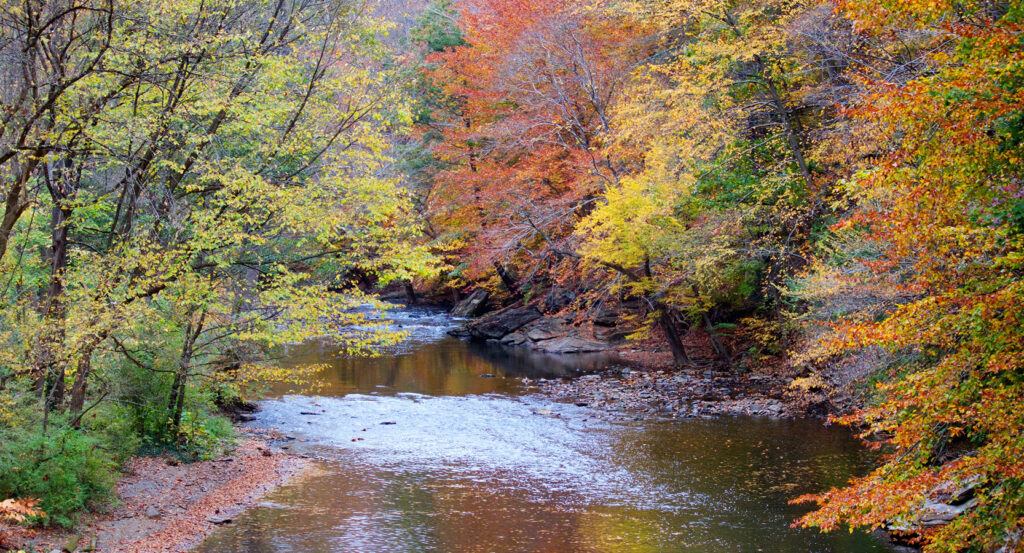
Stretching over 1,800 acres along the Wissahickon Creek, this sprawling woodland feels untouched by time, as though you've stepped through a portal from urban life into something ancient and wild. The sound of rushing water replaces the hum of traffic; stone bridges and moss-covered trails wind through forests once painted by the Hudson River School artists. The park's beauty isn't polished, it's rugged, layered, and real. Towering oaks and tulip poplars cast long shadows across the winding creek, and every bend reveals a new kind of stillness. Locals come to hike, bike, or ride horseback along Forbidden Drive, a 5.5-mile gravel trail that traces the water's path, while birdwatchers and photographers quietly chase moments of morning mist and golden light. Wissahickon isn't just the lungs of Philadelphia, it's the city's soul in disguise, a place where solitude feels sacred and where nature reminds you that healing is often just a walk away.
What defines Wissahickon Valley Park.
Beneath the quiet beauty of Wissahickon Valley Park lies a story woven with centuries of imagination, resilience, and renewal.
The park takes its name from the Lenape word wisameckham, meaning “catfish creek,” and its waters once sustained Indigenous peoples long before European settlers arrived. During the 1600s, German and Quaker communities established mills and farms along its banks, drawn by the power of the creek, remnants of those stone structures still stand today, ghostly but proud. By the 19th century, the Wissahickon had become one of America's earliest conservation triumphs. Alarmed by the damage caused by industrialization, city leaders moved to protect the watershed that fed Philadelphia's drinking supply. Their foresight gave birth to what is now Fairmount Park, a model for urban preservation across the nation. Beyond its environmental significance, Wissahickon Valley Park became a muse for artists, poets, and philosophers. Thomas Moran and members of the Hudson River School painted its cascades and cliffs; Edgar Allan Poe is said to have wandered its paths while writing “Morning on the Wissahiccon.” The park's landscape reflects that same Romantic ideal, a wild beauty untouched by artifice. Hidden throughout are relics of Philadelphia's layered history: the dramatic stone arch of the Henry Avenue Bridge, the rustic Valley Green Inn still serving travelers since 1850, and the striking Fingerspan Bridge by artist Jody Pinto, a modern sculpture of steel and light that blends seamlessly into the forest. Each path in Wissahickon holds a trace of both past and present, a reminder that this is not just parkland but a living chronicle of the city's relationship with nature.
How Wissahickon Valley Park fits.
To experience Wissahickon Valley Park is to uncover Philadelphia's quieter heartbeat, a place of reflection, movement, and wonder.
Begin your journey at Valley Green Inn, the park's most iconic landmark and a perfect starting point for exploration. From here, Forbidden Drive stretches in both directions, a wide, tree-shaded path ideal for walking, running, or biking. Follow it along the creek and listen for the rhythmic splash of trout jumping in the shallows. For more adventurous travelers, side trails branch into the woods, leading to dramatic overlooks like the Toleration Statue and the Fingerspan Bridge, where art and wilderness intertwine. Bring sturdy shoes, some paths are steep and rocky, rewarding effort with panoramic views that make you forget you're still within city limits. Early morning and late afternoon are the park's most magnetic hours, when sunlight filters through the leaves and the air feels almost cinematic. In autumn, the canopy bursts into gold and crimson; in spring, dogwoods and mountain laurels light up the ravines. If you visit in summer, pack a picnic and find a quiet spot along the creek, or stop at Valley Green for lunch, its porch feels suspended in another century. Wissahickon Valley Park is accessible by car or bus, but those who walk in from the city often say the transition feels symbolic, a slow shedding of noise, replaced by birdsong and running water. Whether you're an artist seeking inspiration, a runner chasing stillness, or a traveler craving authenticity beyond Philadelphia's historic squares, Wissahickon offers something elemental. It's not just a green escape, it's a sanctuary that reminds you that even in a modern city, nature still has the final word.
Where your story begins.
Foresyte Travel reveals places that feel extraordinary long before you arrive.
Enjoy editorial crafted for luxury travelers.
Foresyte may earn a commission when you book.