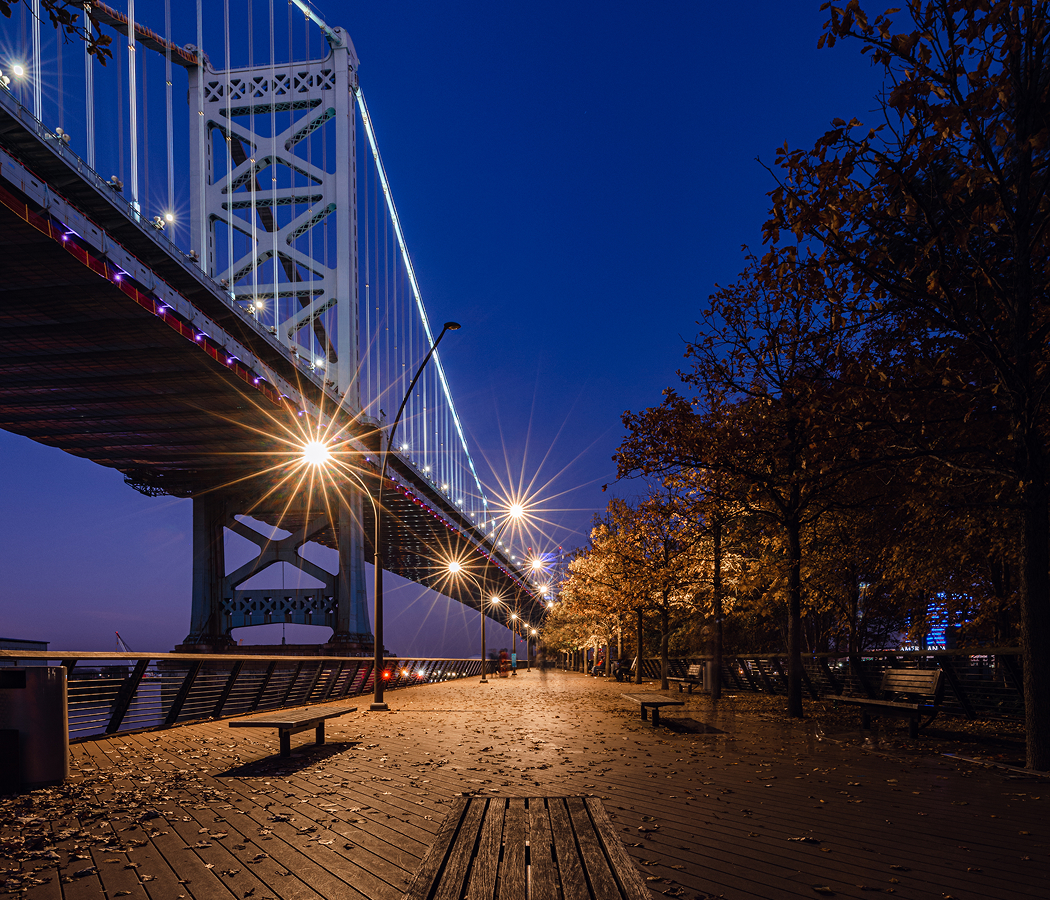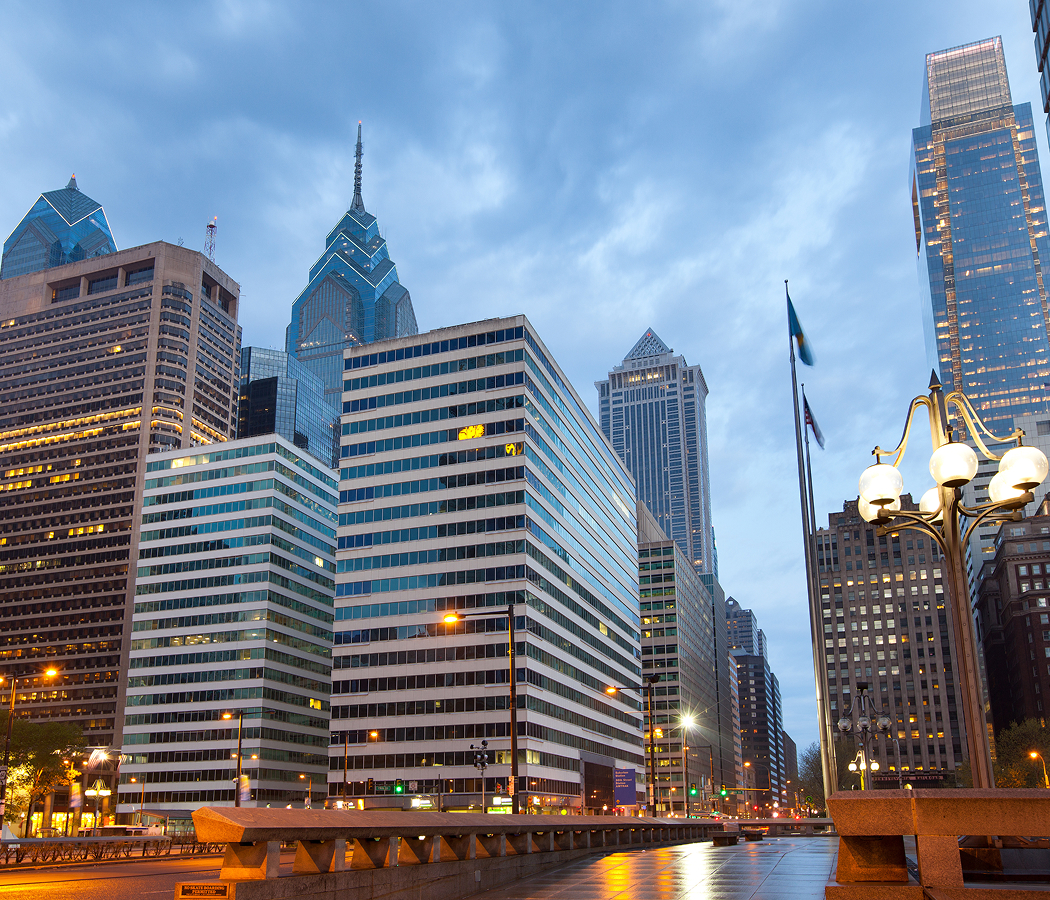
Why you should experience 15th Street in Philadelphia, Pennsylvania.
15th Street is a spirited corridor where Center City's civic ambition, commercial prominence, architectural distinction, and cultural energy define one of Philadelphia's most influential north-south streets.
Running through Center City between Logan Square and Graduate Hospital, the corridor connects government buildings, prominent office towers, historic commercial blocks, and longstanding residential neighborhoods that collectively reflect Philadelphia's evolution through transportation, municipal planning, business expansion, and architectural innovation. Successive blocks reveal how nineteenth-century growth, transit investment, and commercial development established an avenue whose historic fabric continues shaping the city's urban core. Limestone office buildings, masonry rowhouses, civic plazas, and early skyscrapers document more than a century of metropolitan development. The result is an experience defined by continuity, civic purpose, and one of Philadelphia's most consequential corridors.
What you should know about 15th Street.
15th Street is best known for developing into one of Philadelphia's principal commercial and governmental corridors following the Act of Consolidation of 1854, which unified the city and accelerated administrative, financial, and residential expansion throughout Center City. Horse-drawn streetcars, followed by electric service operated by the Union Traction Company and later the Philadelphia Rapid Transit Company, established the avenue as a major north-south transportation spine while strengthening connections between Market Street, Broad Street, and the surrounding neighborhoods. Construction of substantial Beaux-Arts, Classical Revival, Art Deco, and International Style office buildings introduced limestone cladding, granite bases, steel framing, ornamental bronze detailing, decorative cornices, and large window bays that reflected successive eras of commercial architecture and engineering. Banks, insurance companies, legal offices, publishing firms, and municipal agencies concentrated along the corridor, reinforcing its longstanding importance within Philadelphia's financial and governmental landscape. Together, transportation investment, commercial expansion, architectural craftsmanship, institutional growth, and municipal development established 15th Street as one of Center City's defining corridors.
Completion of the Suburban Station commuter rail complex in 1930 and subsequent integration with the Center City Commuter Connection in 1984 strengthened regional rail connectivity while reinforcing the corridor's role within one of the nation's busiest urban transit networks. Designation of nearby portions of the Market Street East Historic District and continued preservation of significant early twentieth-century commercial buildings protected an important collection of office architecture representing Philadelphia's emergence as a modern business center. Ongoing rehabilitation has preserved limestone façades, granite storefronts, ornamental metalwork, historic lobby finishes, masonry detailing, and early steel-frame construction that continue expressing the craftsmanship established during the corridor's principal era of growth. Together, transportation modernization, preservation initiatives, and sustained commercial investment demonstrate how 15th Street continues expressing the civic, architectural, and economic legacy that distinguishes the heart of Center City.
How to fold 15th Street into your trip.
15th Street works as an exploration of Philadelphia's civic identity, commercial heritage, and architectural evolution.
Begin at City Hall Visitor Center, where exhibits on John McArthur Jr.'s civic masterpiece establish the historical context for Philadelphia's municipal development before naturally directing the walk into the surrounding government and business district. Continue to Masonic Temple, where richly decorated interiors and nineteenth-century craftsmanship deepen appreciation for the city's architectural ambition before leading naturally toward Center City's cultural core. Conclude at Reading Terminal Market, where generations of merchants, regional food traditions, and thriving market culture provide the experiential payoff while bringing together the civic, commercial, and social threads encountered throughout the journey. Together, the sequence reveals how government, architecture, and commerce collectively shaped the enduring character of Central Philadelphia.
Where your story begins.
Foresyte Travel reveals places that feel extraordinary long before you arrive.
Experience premium editorial crafted for luxury travelers.