Why 18th Street matters.
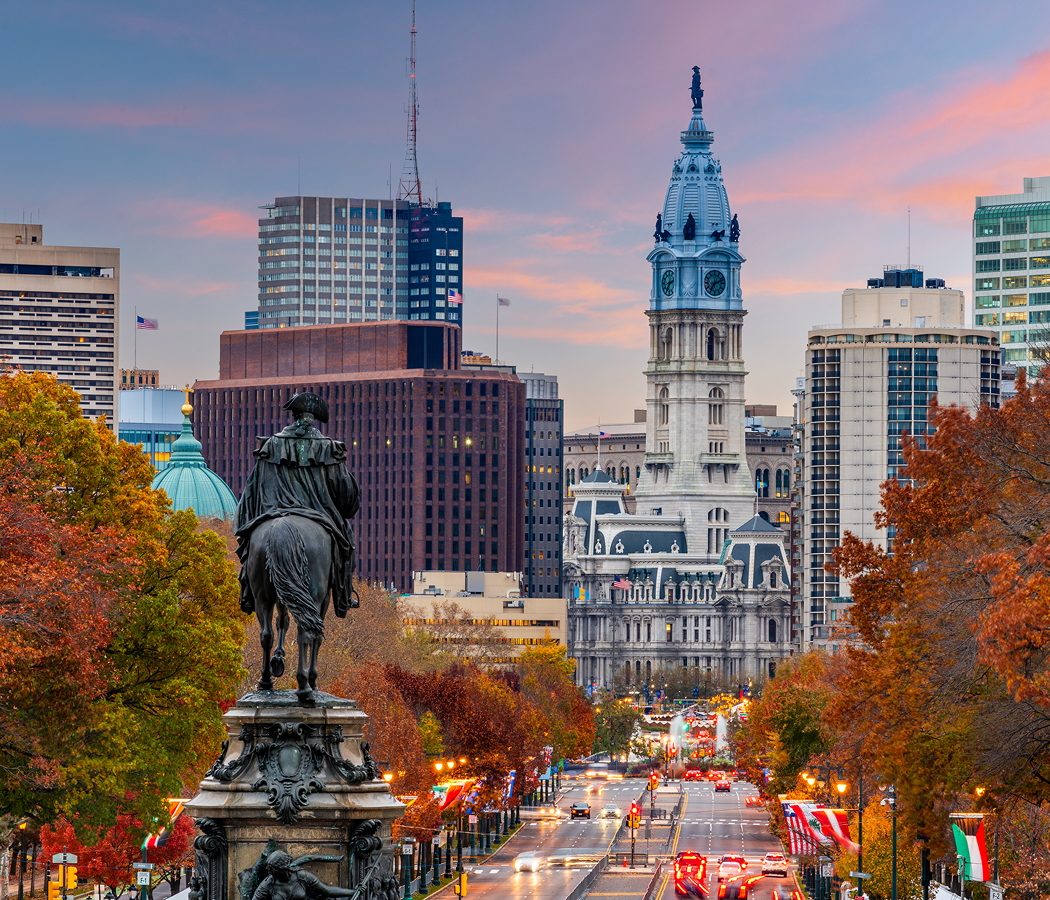
18th Street is a refined corridor where Rittenhouse Square's cultural sophistication, architectural distinction, commercial vitality, and civic heritage define one of Center City's most celebrated north-south streets.
Running through Rittenhouse Square between Logan Square and Graduate Hospital, the corridor connects distinguished residential blocks, acclaimed cultural institutions, established shopping corridors, and historic public spaces that collectively reflect Philadelphia's evolution through nineteenth-century expansion, transportation investment, and architectural excellence. Successive blocks reveal how streetcar service, residential development, and civic planning established an avenue whose historic fabric continues shaping the western edge of Center City. Brick rowhouses, limestone façades, mature street trees, and carefully preserved streetscapes document more than a century of urban development. The result is an experience defined by elegance, continuity, and one of Philadelphia's most distinguished corridors.
What you should know 18th Street.
18th Street is best known for developing during Philadelphia's westward expansion following the Act of Consolidation of 1854, when transportation improvements and sustained residential investment transformed western Center City into one of the city's foremost residential and commercial districts. Horse-drawn streetcars and later electric service operated by the Union Traction Company and Philadelphia Rapid Transit Company connected the corridor directly with Market Street, Broad Street, and surrounding neighborhoods, encouraging residential construction while supporting retail establishments, professional offices, hotels, and neighborhood commerce. Builders introduced distinguished collections of Italianate, Second Empire, Queen Anne, Beaux-Arts, and Colonial Revival architecture characterized by red brick masonry, limestone trim, granite foundations, bay windows, ornamental cornices, carved lintels, wrought-iron balconies, and finely crafted wood interiors that reflected Philadelphia's exceptional late nineteenth- and early twentieth-century building traditions. Growth surrounding Rittenhouse Square, among William Penn's five original public squares established in 1682, reinforced the avenue's importance through continued residential investment, commercial expansion, and civic improvements that elevated the neighborhood into one of Philadelphia's premier urban districts. Together, transportation investment, architectural craftsmanship, civic planning, residential expansion, and commercial prosperity established 18th Street as one of Rittenhouse Square's defining corridors.
Creation of the Rittenhouse-Fitler Historic District on the Philadelphia Register of Historic Places strengthened long-term preservation of one of Center City's finest collections of nineteenth-century residential architecture while encouraging continued stewardship of historic streetscapes. Streetscape enhancements, expanded pedestrian amenities, mature tree planting, and sustained investment by nearby cultural institutions and businesses have reinforced the corridor's role as a principal connection between Logan Square, Rittenhouse Square, and Graduate Hospital. Continued rehabilitation has preserved original brick façades, limestone detailing, slate roofing, ornamental ironwork, decorative masonry, and historic residential buildings that continue expressing the craftsmanship established during the corridor's principal era of development. Together, historic preservation, coordinated public investment, and sustained architectural stewardship demonstrate how 18th Street continues expressing the residential, cultural, and architectural legacy that distinguishes Rittenhouse Square today.
How 18th Street fits.
18th Street works as an exploration of Philadelphia's architectural heritage, public spaces, and cultural vitality.
Begin at The Franklin Institute, where nationally recognized science exhibitions introduce Philadelphia's longstanding commitment to research, engineering, and public education before naturally leading toward Center City's historic residential districts. Continue to Rittenhouse Square, where William Penn's original public square expands the experience through distinguished landscape design, public sculpture, and centuries of civic history before guiding the journey farther south. Conclude at Mütter Museum, where internationally respected medical collections provide the historical payoff through the history of anatomy, surgery, and scientific inquiry that helped establish Philadelphia as a center of medical education. Together, the sequence traces the city's evolution through scientific discovery, civic planning, and medical scholarship.
Where your story begins.
Foresyte Travel reveals places that feel extraordinary long before you arrive.
Enjoy editorial crafted for luxury travelers.
Foresyte may earn a commission when you book.