Why 25th Street matters.
25th Street is a graceful corridor where Fairmount's civic ambition, riverfront legacy, architectural craftsmanship, and cultural character define one of Philadelphia's most distinctive north-south streets.
Running through Fairmount between Brewerytown and Graduate Hospital, the corridor connects historic residential blocks, Schuylkill River infrastructure, celebrated cultural institutions, and expansive parkland that collectively reflect Philadelphia's evolution through landscape planning, transportation engineering, and nineteenth-century urban growth. Successive blocks reveal how Fairmount Park, industrial expansion, and civic investment established an avenue whose historic fabric continues shaping Philadelphia's western edge. Stone rowhouses, mature tree canopies, masonry churches, and riverfront infrastructure document more than a century of urban development. The result is an experience defined by continuity, craftsmanship, and one of Fairmount's most enduring corridors.
What you should know 25th Street.
25th Street is best known for developing alongside Philadelphia's nineteenth-century expansion toward the Schuylkill River, where creation of Fairmount Park following the 1855 acquisition of Lemon Hill encouraged residential construction bordering one of the nation's earliest large municipal park systems. Streetcar service operated by the Union Traction Company and later the Philadelphia Rapid Transit Company strengthened connections with Center City, supporting sustained residential growth while reinforcing neighborhood commerce throughout Fairmount. Builders introduced substantial collections of Italianate, Second Empire, Romanesque Revival, and Colonial Revival architecture distinguished by brick masonry, brownstone trim, slate mansard roofs, ornamental cornices, carved lintels, cast-iron details, and finely crafted woodwork that reflected Philadelphia's vigorous late nineteenth-century building traditions. Investment surrounding nearby civic institutions, breweries, manufacturing districts, and expanding residential neighborhoods established a durable urban landscape where architecture, transportation, and public infrastructure evolved together. Together, landscape planning, transportation investment, architectural craftsmanship, industrial prosperity, and residential expansion established 25th Street as one of Fairmount's defining corridors.
Completion of successive phases of the Schuylkill River Trail created a continuous multi-use corridor connecting Fairmount with Center City, West Philadelphia, and regional trail networks while expanding public access to the riverfront landscape. Designation of surrounding portions of Fairmount Park and adjacent historic resources on the National Register of Historic Places reinforced long-term stewardship of nationally significant cultural landscapes, civic infrastructure, and nineteenth-century architecture associated with Philadelphia's park system. Continued rehabilitation has preserved original brick façades, brownstone detailing, slate roofing, ornamental ironwork, masonry retaining walls, and mature streetscapes that continue expressing the craftsmanship established during the corridor's principal era of growth. Together, regional trail expansion, historic preservation, and sustained architectural stewardship demonstrate how 25th Street continues expressing the landscape, civic, and architectural legacy that distinguishes Fairmount today.
How 25th Street fits.
25th Street works as an exploration of Fairmount's parkland heritage, civic architecture, and riverfront landscape.
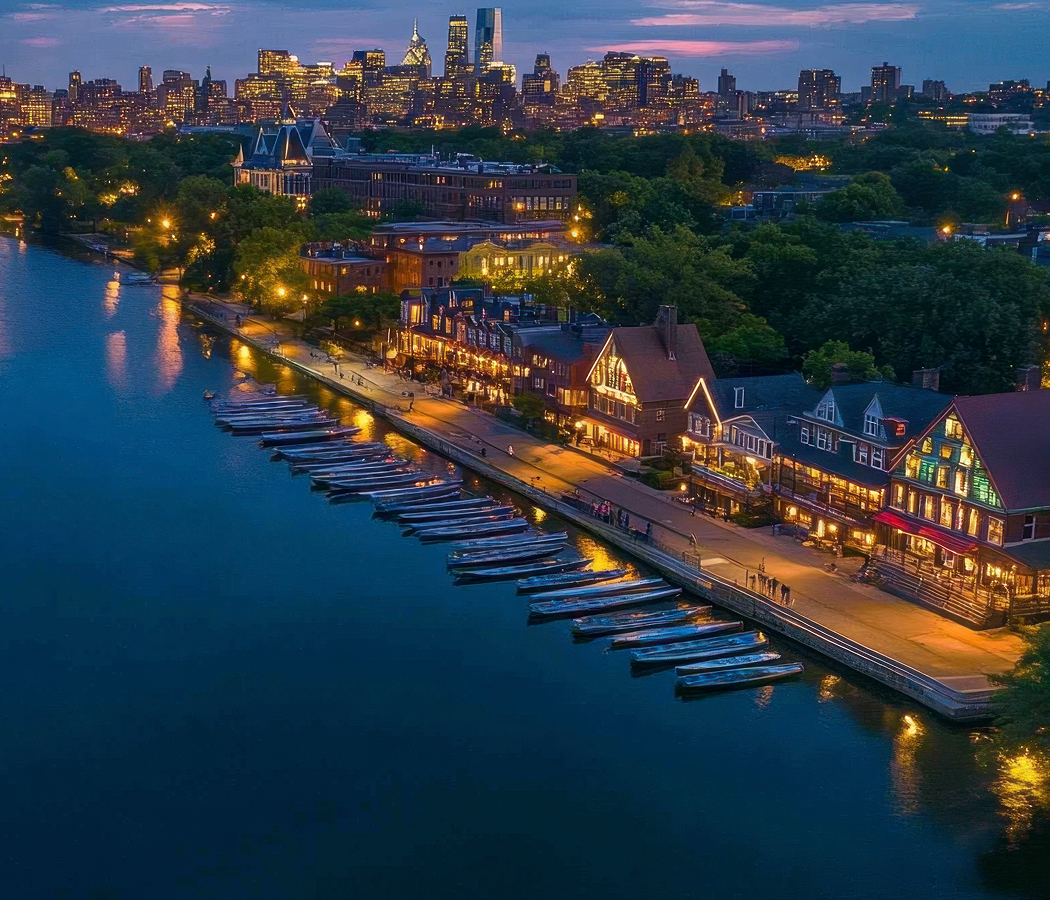
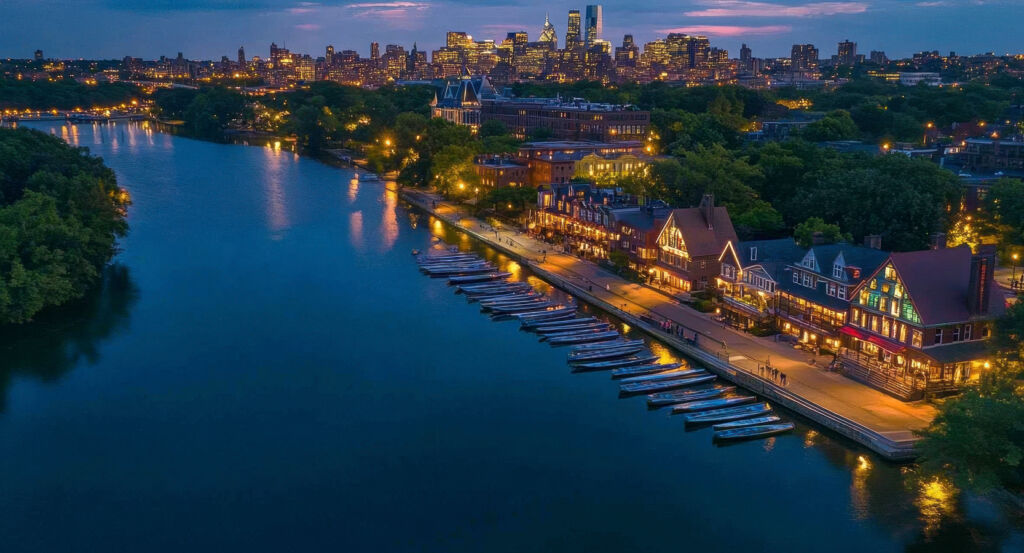
Begin at Eastern State Penitentiary, where one of the world's most influential prison designs introduces Fairmount's nineteenth-century civic ambition before naturally leading toward the surrounding residential streets. Continue to Fairmount Water Works, where pioneering hydraulic engineering and riverfront design deepen appreciation for Philadelphia's relationship with the Schuylkill River before guiding the experience farther into the park landscape. Conclude at Boathouse Row, where the celebrated collection of historic rowing houses provides the historical payoff by illustrating how recreation, engineering, and the Schuylkill River became enduring elements of Philadelphia's civic identity. Together, the sequence traces Fairmount's evolution from institutional innovation to riverfront stewardship before concluding within one of the city's most recognizable cultural landscapes.
Where your story begins.
Foresyte Travel reveals places that feel extraordinary long before you arrive.
Enjoy editorial crafted for luxury travelers.
Foresyte may earn a commission when you book.