Why 4th Street matters.
4th Street is a sophisticated corridor where Downtown's cultural energy, architectural heritage, commercial traditions, and enduring capital-city character converge across one of the city's defining east-west streets.
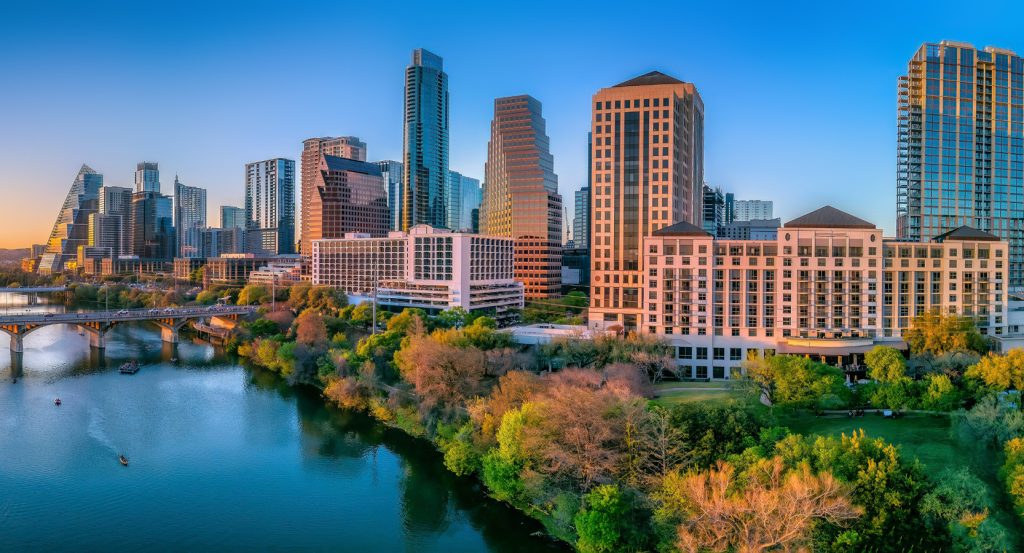
Running through Downtown between West Downtown and East Cesar Chavez, the corridor connects historic commercial blocks, arts venues, civic institutions, and contemporary gathering spaces that collectively demonstrate Austin's evolution from a nineteenth-century capital into a nationally recognized cultural center. Restored masonry buildings, early twentieth-century storefronts, modern towers, and pedestrian-friendly streets create an urban landscape where successive generations of development remain visible within a remarkably compact setting. Decades of preservation and reinvestment have reinforced the corridor's distinctive character while maintaining its role within Austin's civic and cultural fabric. The result is an experience defined by architectural depth, creative vitality, and one of Downtown's most engaging corridors.
What you should know 4th Street.
4th Street is best known for following one of the principal east-west alignments established by the 1839 Edwin Waller Plan, prepared by surveyor Edwin Waller under the direction of Republic of Texas President Mirabeau B. Lamar, creating part of the original street structure that continues organizing Downtown today. During the late nineteenth and early twentieth centuries the corridor developed into an important commercial address as wholesale merchants, banks, warehouses, hotels, and professional offices expanded alongside Austin's emergence as the governmental and economic center of Texas. Surrounding blocks preserve an exceptional collection of Victorian, Chicago School, Classical Revival, Art Deco, Mid-Century Modern, and contemporary architecture, while numerous contributing properties form part of the Warehouse Historic District, listed on the National Register of Historic Places in 1983, recognizing one of Austin's most significant concentrations of historic warehouse and commercial buildings. The corridor also reflects Austin's long-standing commercial evolution through surviving masonry construction, historic mercantile architecture, and institutions that document more than a century of downtown business activity. Collectively, the corridor's Republic-era planning, commercial expansion, National Register recognition, architectural diversity, and institutional continuity establish 4th Street as one of Downtown's defining historic corridors.
The nearby Shoal Creek watershed influenced early western expansion by shaping limestone crossings, drainage patterns, and the physical limits of nineteenth-century urban development beyond the original city grid. The Downtown Alliance, established in 1993, continues supporting preservation initiatives, streetscape improvements, economic development, and historical interpretation that reinforce the district's architectural character. Archaeological investigations throughout Downtown have documented Indigenous cultural materials together with Republic of Texas and nineteenth-century commercial deposits that continue expanding scholarly understanding of human occupation within the Colorado River valley. Together, these environmental systems, civic organizations, and archaeological discoveries demonstrate how 4th Street reflects a corridor where urban planning, environmental history, and cultural preservation remain closely connected.
How 4th Street fits.
4th Street works as an exploration of Austin's commercial heritage, visual arts, and performing culture.
Begin at Republic Square, where one of Austin's original public squares introduces the city's nineteenth-century planning traditions through mature trees, open gathering space, and enduring civic importance. Continue to The Contemporary Austin - Jones Center, where internationally recognized exhibitions and innovative installations reveal Austin's commitment to contemporary visual arts within a historic downtown setting. Conclude at Austin Central Library, where award-winning architecture, extensive regional collections, and panoramic views across Lady Bird Lake provide the historical payoff by illustrating Austin's continuing investment in education, design, and public life. The progression moves naturally from the city's original civic planning to contemporary artistic expression before culminating in one of Austin's most celebrated public institutions.
Where your story begins.
Foresyte Travel reveals places that feel extraordinary long before you arrive.
Enjoy editorial crafted for luxury travelers.
Foresyte may earn a commission when you book.