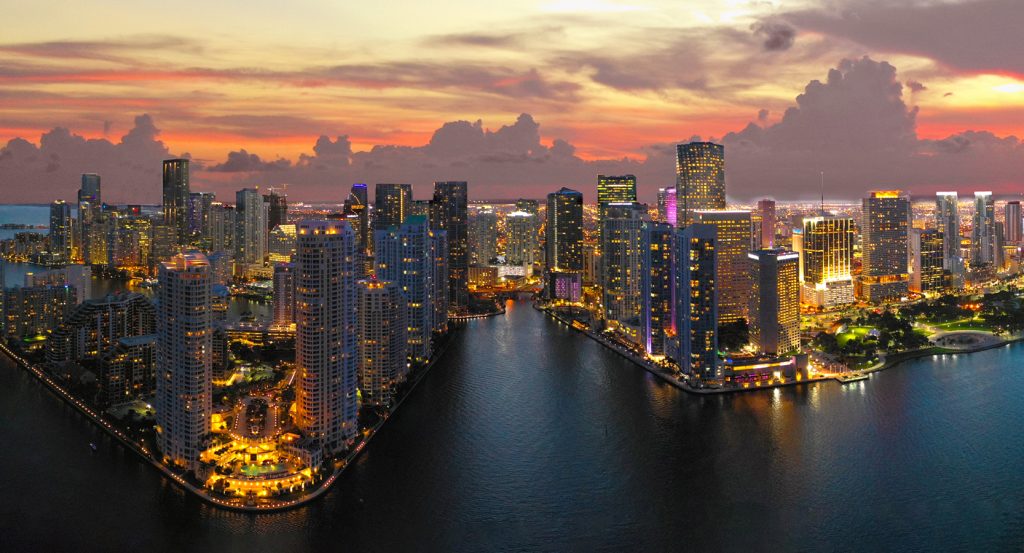
Why you should experience 88th Street in Miami, Florida.
88th Street is a refined corridor where Kendall's suburban maturity, educational institutions, neighborhood commerce, and tropical landscape create one of southern Miami's defining east-west thoroughfares.
Running through Kendall between Sunset and West Kendall, the corridor extends across established residential communities, neighborhood shopping districts, medical campuses, parks, and locally owned businesses that collectively reflect Miami-Dade County's westward expansion during the second half of the twentieth century. Broad landscaped medians, mature royal palms, shaded sidewalks, and carefully planned commercial centers create a streetscape where suburban development and community life remain closely connected. Throughout the corridor, longstanding neighborhood institutions, independent businesses, and flourishing subtropical vegetation reinforce an environment shaped by sustained residential growth and Miami's multicultural character. The result is an experience defined by neighborhood vitality, accessibility, and one of Kendall's most enduring corridors.
What you should know about 88th Street.
88th Street is best known as Southwest 88th Street, officially designated Kendall Drive, a principal east-west arterial extending more than 20 miles from U.S. Route 1 westward to Krome Avenue while serving as one of Miami-Dade County's primary transportation corridors. The roadway derives its modern character from the historic Kendall settlement established after Henry John Broughton Kendall acquired extensive landholdings during the late nineteenth century, with subsequent agricultural development centered on citrus groves, avocado orchards, tomato fields, and pine rocklands before large-scale suburban expansion accelerated after World War II. Construction of the Snapper Creek Expressway, now State Road 878, together with the widening of Kendall Drive during the 1960s and 1970s strengthened regional connectivity and supported the rapid development of residential communities, commercial centers, healthcare campuses, and educational institutions throughout southern Miami-Dade County. Reinforced concrete overpasses, multilane intersections, hurricane-resistant utility corridors, engineered drainage canals, adaptive traffic management systems, and landscaped medians demonstrate successive infrastructure investments that accommodated sustained population growth across western Miami. Royal palms, live oaks, gumbo limbo, sabal palms, green buttonwood, white ibis, great egrets, red-shouldered hawks, and native pollinator species remain closely associated with canal corridors and roadside landscapes, preserving ecological diversity despite extensive urbanization.
Baptist Hospital of Miami, opened in 1960, established one of South Florida's largest healthcare campuses along the corridor, reinforcing Kendall Drive's evolution into a destination serving far more than residential neighborhoods alone. Dadeland Mall, completed in 1962 as one of Florida's earliest enclosed regional shopping centers, accelerated commercial investment throughout the surrounding corridor while influencing decades of architectural and economic development across Kendall. Miami-Dade Transit strengthened the avenue's regional importance through Metrobus corridors and nearby Dadeland North and Dadeland South Metrorail stations, expanding multimodal access while supporting continued commercial and residential growth. Together, these institutional anchors, commercial milestones, and transportation investments demonstrate how 88th Street evolved from an agricultural route into one of Miami-Dade County's defining suburban corridors while preserving its longstanding role as Kendall's principal east-west spine.
How to fold 88th Street into your trip.
88th Street works as an exploration of Kendall's parks, cultural destinations, and tropical landscapes.
Begin at Pinecrest Gardens, where historic landscapes, native plant collections, and winding garden paths introduce one of South Florida's most celebrated botanical environments before following 88th Street westward. Continue to The Falls, whose open-air architecture, tropical landscaping, and public gathering spaces broaden the appreciation for Kendall's evolution as one of Miami's premier suburban destinations. Conclude at Tropical Park, where freshwater lakes, equestrian facilities, and expansive green spaces provide the culminating reward by revealing the recreational landscapes that have long defined southern Miami-Dade County. The progression moves naturally from historic botanical landscapes through contemporary commercial design before concluding amid one of Miami's most beloved public parks, revealing how 88th Street connects community life, suburban growth, and South Florida's enduring natural character.
Where your story begins.
Foresyte Travel reveals places that feel extraordinary long before you arrive.
Experience premium editorial crafted for luxury travelers.