
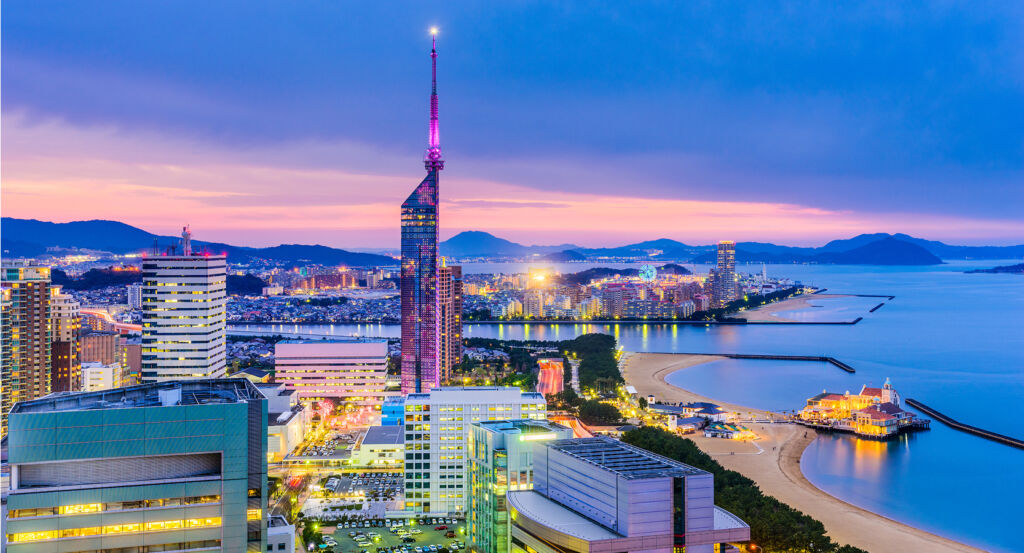
Why you should experience Hakata Green Hotel 1 in Fukuoka, Japan.
Hakata Green Hotel 1 is a disciplined, transit-anchored refuge that turns Fukuoka into a city of efficiency, repetition, and quiet confidence, where proximity replaces planning and routine becomes freedom.
Set directly beside Hakata Station, this hotel does not romanticize arrival, it streamlines it. You move from train platform to threshold with almost no friction, and that immediacy reshapes how the city feels from the first moment. There is no ceremonial entry, no architectural performance meant to slow you down. Instead, the interior greets you with clarity and order, a space that understands its role as infrastructure. Public areas are compact, legible, and purpose-built for travelers who are moving with intent. Seating is practical, circulation is obvious, and lighting favors visibility over mood. The atmosphere is calm but alert, a place that supports transition. Guest rooms continue this logic with disciplined efficiency. Layouts are compact but intelligently arranged, allowing everything to exist exactly where it should. Beds are supportive and dependable, designed for real recovery after early departures, late arrivals, or long days navigating the city. Furnishings are straightforward and functional, avoiding visual noise in favor of usability. Windows frame streets, rail lines, and dense urban movement, reinforcing the sense that you are embedded in Fukuoka's operational core. Bathrooms are clean, modern, and efficient, supporting routine. Across the property, the experience feels grounded, predictable, and quietly empowering. Hakata Green Hotel 1 is ideal for travelers who want Fukuoka to feel usable, navigable, and immediately intelligible, a city experienced through rhythm.
What you should know about Hakata Green Hotel 1.
Hakata Green Hotel 1 is best known for infrastructure-first hospitality, the belief that a hotel near a major transit hub should function as an extension of the city's logistics rather than a separate world, and this principle governs every decision in the building.
Unlike hotels that treat proximity to transit as a marketing feature, this property treats it as its organizing logic. Movement is anticipated. Circulation paths are short and intuitive; elevators, corridors, and exits are positioned to minimize hesitation or backtracking. You learn the layout almost instantly, and then it disappears from conscious thought, a sign of design that respects cognitive bandwidth. Public spaces are intentionally modest in scale, discouraging congestion while supporting brief pauses, itinerary checks, or quiet regrouping. Materials throughout the hotel emphasize durability and neutrality. Surfaces are matte and familiar, finishes resist glare and wear, and textures are chosen to absorb sound. Acoustic control is especially important here. Despite the hotel's adjacency to one of Japan's busiest rail hubs, exterior noise settles into background context rather than intrusion, and interior sound dissipates quickly, allowing rooms to function as genuine spaces for rest. Lighting strategy reinforces predictability. Daylight enters rooms and shared spaces where possible, while artificial lighting remains even and warm, avoiding dramatic contrasts that could disrupt circadian rhythm. This consistency supports travelers arriving from different time zones or managing demanding schedules. Service culture mirrors this efficiency-forward mindset. Interactions are polite, concise, and respectful of autonomy. Staff focus on logistics and clarity rather than performance, offering assistance when needed without imposing presence. There is an implicit trust here: the hotel assumes you know where you're going and simply ensures nothing gets in your way. Another understated strength of Hakata Green Hotel 1 is how it reframes Hakata Station itself. Instead of feeling overwhelming, the station becomes an extension of your daily routine. Departures feel effortless. Returns feel immediate. Over multiple nights, this proximity reduces mental overhead, you stop budgeting time for transit and start moving instinctively. The hotel does not lean on cultural symbolism, design narratives, or experiential layering. It captures a distinctly modern value: reliability as liberation.
How to fold Hakata Green Hotel 1 into your trip.
Hakata Green Hotel 1 works as a high-efficiency base of operations, a place that allows you to move through Fukuoka with speed, confidence, and minimal friction.
Begin your mornings. Step out of the hotel and directly into Hakata Station's network of trains, subways, buses, and walkable corridors. Use this adjacency strategically. Take early departures. Plan spontaneous day trips. Return midday for a reset that feels seamless. The hotel absorbs short pauses naturally, a shower, a rest, a change, without breaking the flow of your day. Afternoons are ideal for layered exploration. Visit museums, markets, and neighborhoods knowing that return is always close and uncomplicated. Evenings unfold with flexibility. Dine nearby, explore Nakasu's nightlife, or return early and let the hotel's calm, utilitarian environment support decompression. For longer stays, the effect compounds. Fukuoka begins to feel compact and repeatable. Routes become familiar. Confidence replaces calculation. Business travelers benefit from the hotel's proximity to transit, dependable rest, and no-nonsense environment that preserves focus between commitments. Leisure travelers gain freedom, the ability to explore deeply without the drag of planning or commuting. Anchoring your stay at Hakata Green Hotel 1 allows Fukuoka to be encountered as a city of systems that work, not a destination that demands constant effort. The hotel does not compete with luxury towers, boutique storytelling, or resort-style escape. It offers something quieter and more powerful: control over time and movement. In doing so, it delivers a stay that feels efficient, stabilizing, and unmistakably urban, where rest supports momentum, proximity supports intuition, and the city reveals itself through repetition.
Where your story begins.
Foresyte Travel reveals places that feel extraordinary long before you arrive.
Experience premium editorial crafted for luxury travelers.

















































































































