
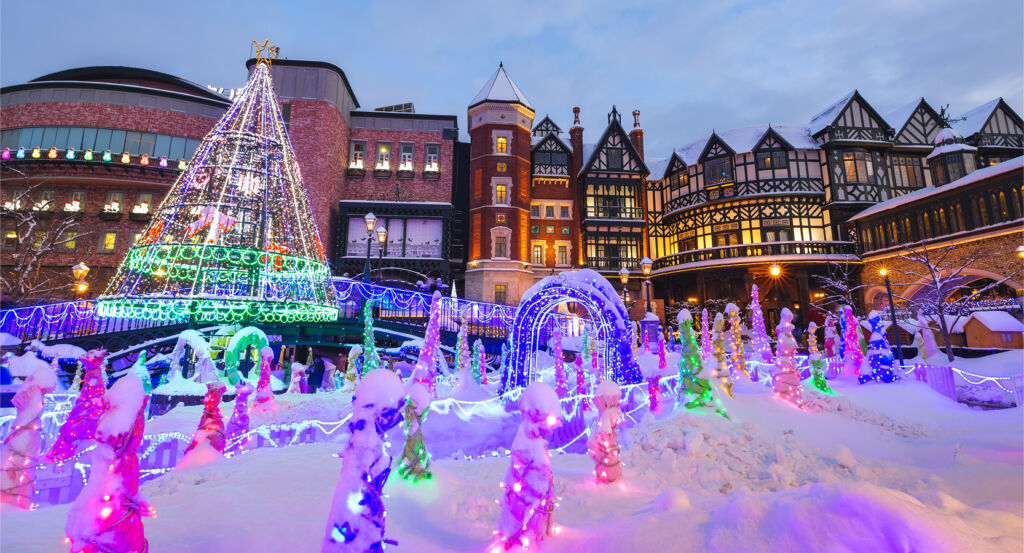
Why you should experience Hotel Resol Trinity Sapporo in Sapporo, Japan.
Hotel Resol Trinity Sapporo is a city-facing retreat that is defined by observational calm and deliberate perspective, positioning you beside Odori Park where Sapporo reveals itself through rhythm, season, and daily continuity.
This hotel occupies one of the most telling edges of Sapporo's urban experience. Facing Odori Park, it sits at the line where the city pauses to breathe. Arrival immediately feels different from station-adjacent or nightlife-driven properties. Streets open, sightlines stretch, and the pace softens. Entering the hotel feels less like stepping into a shelter and more like stepping into a vantage point. The lobby reinforces this sensation through restraint. Proportions are measured, circulation is intuitive, and materials are calm and tactile. Lighting is balanced and steady, encouraging orientation. The atmosphere communicates composure, a sense that this is a place meant for observation, not acceleration. Shared spaces are intentionally understated, offering room for pause, reflection, and planning. Guest rooms extend this observational quality inward. Layouts are efficient yet thoughtfully composed, giving you enough space to settle. Beds are supportive and designed for consistent, restorative rest. Furnishings are modern, restrained, and practical, allowing the room to function as a quiet frame. Windows often look directly onto Odori Park, where seasonal change, snow cover, spring green, summer shade, autumn color, becomes part of the room's resonant texture. Bathrooms are clean and functional, supporting routine. Across the property, the experience feels composed, reflective, and gently grounding. Hotel Resol Trinity Sapporo is ideal for travelers who want Sapporo to feel legible and human-scaled, a city experienced through continuity and presence.
What you should know about Hotel Resol Trinity Sapporo.
Hotel Resol Trinity Sapporo is best known for park-oriented urban sensibility, a hospitality philosophy that treats adjacency to open civic space as a perceptual advantage.
Odori Park is not simply a view here; it is a regulating force. The park absorbs sound, stretches visual distance, and introduces seasonal rhythm into daily experience. This fundamentally alters how the hotel behaves. Exterior noise arrives softened and dispersed, interior sound dissipates quickly, and the boundary between city and rest feels porous. Architectural choices support this continuity. Shared spaces are proportioned to allow visual extension rather than enclosure, and materials are selected for neutrality and endurance. There is no attempt to overwhelm with texture or theme. Instead, surfaces invite calm familiarity. Lighting strategy reinforces temporal awareness. Daylight enters rooms and corridors clearly, reflecting weather and seasonal shifts across Odori Park. Artificial lighting remains warm and steady, avoiding dramatic contrasts that would disrupt circadian rhythm or mental ease. Service culture aligns with this observational posture. Interactions are polite, efficient, and low-pressure, focused on practical guidance. Staff assist with clarity, walking routes, nearby dining, transit access. Another understated strength of the hotel is how it supports repetition. Because the environment is stable and visually calm, it does not fatigue attention over time. Over multiple nights, familiarity deepens. Routes across the park become ritualized. The city begins to feel navigable. The hotel does not rely on decorative symbolism or cultural shorthand to define itself. Its character emerges from a quieter truth: when a hotel aligns itself with civic space and seasonal rhythm, presence becomes effortless.
How to fold Hotel Resol Trinity Sapporo into your trip.
Hotel Resol Trinity Sapporo works best when you treat it as a city-facing observatory, a place that allows you to engage with Sapporo deliberately.
Begin your mornings with the park. Step outside and walk Odori Park before entering denser districts. Let light, weather, and movement set your internal pace. From here, the city opens naturally, museums, shopping streets, and transit nodes are all accessible. Midday returns feel restorative here because the environment does not compress you. A short pause, a shower, or time spent looking out across the park resets energy. Afternoons can unfold in layers. Move through cultural sites, markets, or side streets, then return briefly to recalibrate before heading out again. This rhythm preserves stamina and sharpens attention. Evenings benefit from the hotel's position as well. After dining or events, returning to a park-facing environment feels like decompression. Over longer stays, this pattern compounds. The city begins to feel familiar and intelligible. Landmarks anchor memory. Presence deepens. Business travelers benefit from the hotel's calm orientation, finding that proximity to open space supports focus and recovery between obligations. Leisure travelers gain endurance, allowing exploration. Anchoring your stay at Hotel Resol Trinity Sapporo allows Sapporo to be experienced as a continuous urban field shaped by space and season, not a sequence of disconnected attractions. The hotel does not attempt to dominate the experience or narrate the city for you. It offers something more durable: a steady frame from which the city can be seen clearly. In doing so, it delivers a stay that feels grounded, observant, and quietly immersive, where rest and engagement coexist through alignment with the city's natural and civic rhythm.
Where your story begins.
Foresyte Travel reveals places that feel extraordinary long before you arrive.
Experience premium editorial crafted for luxury travelers.

















































































































