
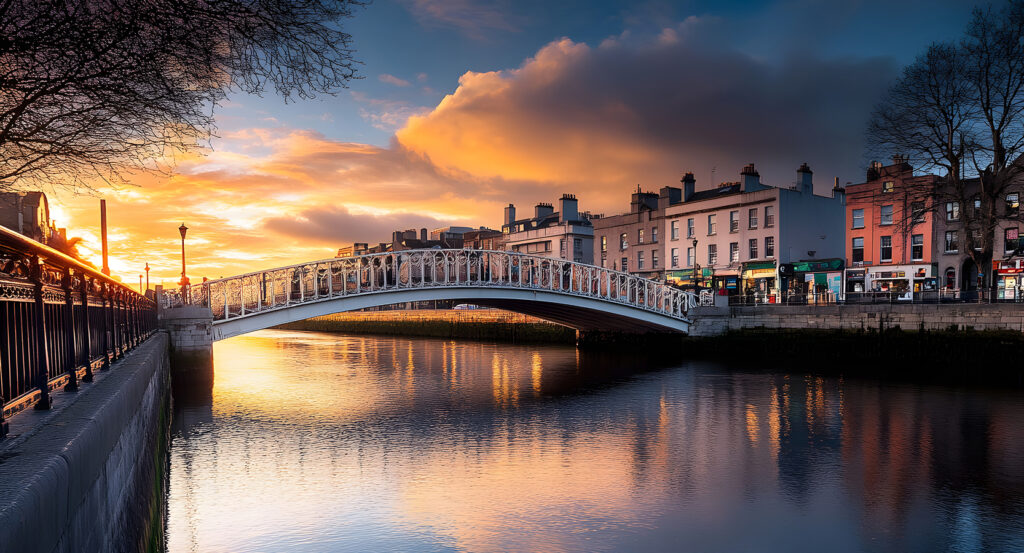
Why you should experience Wynn's Hotel Dublin in Dublin, Ireland.
Wynn's Hotel Dublin is where sophisticated history, human-scaled charm, and timeless Irish hospitality come together, a stay that feels polished yet personal, richly embedded in Dublin's cultural fabric, and unmistakably alive with enduring character.
Tucked on Lower Abbey Street just steps from O'Connell Street, Wynn's occupies a location that feels deeply rooted in the city's everyday rhythm. From the moment you arrive, there's an unpretentious warmth, a sense that this is a place shaped by decades of real stays. The exterior is elegant without demanding attention; step inside and the atmosphere settles into something composed and welcoming. Interiors feel refined yet lived-in, with furniture and finishes that balance comfort, weight, and tactility. Public spaces invite gathering, quiet reading, conversation, or simply pause. There's a sense of calm order here, seating arranged for natural conversation flows, lighting that feels warm rather than theatrical, and material choices that feel comfortable rather than conspicuous. Guest rooms extend this sense of grounded elegance into private space. Layouts are generous and intuitive, designed for rest and clarity. Beds are deeply comfortable, wrapped in linens that balance softness with structure, creating an environment that feels convivial and steady. Furnishings are timeless and comfortable, chosen for function and warmth. Color palettes are muted and composed, allowing light and proportion to shape mood. Windows often frame city streets or glimpses of historic rooftops, reinforcing a sense of being in Dublin. Bathrooms are practically refined, clean lines, quality fixtures, and lighting that supports daily routine. Everything feels purposeful, reliable, and quietly thoughtful. What defines Wynn's Hotel Dublin is its timeless composure and human presence. This is not a hotel that chases trends or theatrical identity. It is rooted in how people actually live in a city, through movement, pause, conversation, and layered experience. Public spaces feel sociable without noise; corridors feel calm without emptiness; evening lounges feel settled rather than staged. Breakfast and dining experiences reflect a grounded commitment to quality and ease. Service throughout the hotel is attentive, warm, and genuinely responsive. Staff interactions feel human, confident without stiffness, helpful without intrusion, giving guidance rooted in local nuance rather than generic itineraries. Whether suggesting quieter lanes to explore near the Liffey, the best café for a slow afternoon coffee, or the museum that feels most rewarding at a particular hour, recommendations feel situated. Step outside and Dublin's layered character unfolds. The River Liffey's walkways, historic streets, lively social corridors, independent cafés, and cultural institutions are all just moments away, making exploration feel fluid and intuitive. Returning to Wynn's never feels like retreating from the city; it feels like stepping back into a familiar, welcoming pulse.
What you should know about Wynn's Hotel Dublin.
Wynn's Hotel Dublin represents a strand of Irish hospitality grounded in continuity, resilience, and civic presence, a character shaped by decades of evolving city life.
Rather than anchoring its character in thematic narrative or performance, Wynn's draws meaning from its place and persistence. Its location on Lower Abbey Street situates it within Dublin's historic spine, where daily life, transport corridors, and social interaction converge. This positioning informs not just physical movement through the space, but also the hotel's relationship to the city's rhythm over time. Interiors reflect this grounding. Instead of dramatic gestures, the emphasis is on proportion, texture, and comfort that ages well. Public areas feel coherent and calm, circulation is intuitive, and sightlines are composed so that movement feels effortless. This creates an environment where visitors feel oriented. A lesser-known aspect of the hotel's character lies in how it manages noise and presence. Being centrally located near active urban life, Wynn's does not attempt to isolate guests completely from city rhythm. Instead, interiors are composed to modulate. Sound absorbs gracefully, transitions between public and private spaces feel calibrated, and rooms offer calm. This creates a balanced experience where the city feels near yet not intrusive. Another subtle dimension of Wynn's character is how it frames time and comfort. Many contemporary hotels shape experience through ritualized scheduling or programmed engagement. Wynn's does something quieter: it aligns with your rhythm. Mornings begin with clarity rather than crescendo, afternoons unfold without urgency, and evenings settle into calm confidence rather than performance. This temporal coherence makes the hotel especially appealing to travelers who value presence over performance. The service philosophy reinforces this grounded approach. Staff interactions are warm, observant, and genuinely thoughtful. Guidance tends to focus on timing and context, for example, where to find a quieter passage through historic lanes at a certain hour, the café that feels right for contemplative afternoons, or the route that best captures light at sunset. These recommendations are shaped by lived familiarity, not scripted lists. The hotel attracts a broad spectrum of travelers because of this honest grounding. Business guests appreciate its reliability and calm, solo explorers value its location and approachable character, and couples or families find comfort in its steady presence. Public spaces feel shared. Staying at Wynn's means inhabiting a Dublin that is layered, human, and textured, a city whose rhythm you move with.
How to fold Wynn's Hotel Dublin into your trip.
Wynn's Hotel Dublin works best when you let the city's walkable scale, textured neighborhoods, and everyday rhythms shape your experience rather than rigid checklists or fleeting impressions.
Begin your mornings with structure and curiosity. Step outside toward the River Liffey and take a slow walk along its paths before the city accelerates. Notice reflections on water, how light changes stone façades, and how the city begins its day, these early moments often feel the most revealing. Return for breakfast or coffee if you like, using that pause to orient. Late mornings are ideal for focused exploration. Visit museums, galleries, and historic streets at a pace that allows detail and atmosphere to register physically rather than mentally scanned off a list. Dublin rewards presence more than accumulation. Return to Wynn's midday for pause and recalibration. Sit in a public space, read, plan, or simply rest. This pause is not downtime. It is where experience deepens. In the afternoon, explore outward. Walk toward cultural neighborhoods, independent shops, or quieter historic corners where the city feels lived in. Allow façades, store signs, and light to guide direction. Each return to the hotel feels grounding rather than retreat, like stepping back into a familiar center rather than closing an experience. As evening approaches, let dinner plans emerge organically. Choose based on mood rather than reputation alone, Dublin's culinary scene thrives where locals eat, not just where lists say you should. After dinner, take a relaxed walk back through softly lit streets and reenter the calm warmth of the hotel. The transition feels natural. On your final morning, linger. One more coffee. One more slow walk through streets now familiar.
Where your story begins.
Foresyte Travel reveals places that feel extraordinary long before you arrive.
Experience premium editorial crafted for luxury travelers.














































































































