
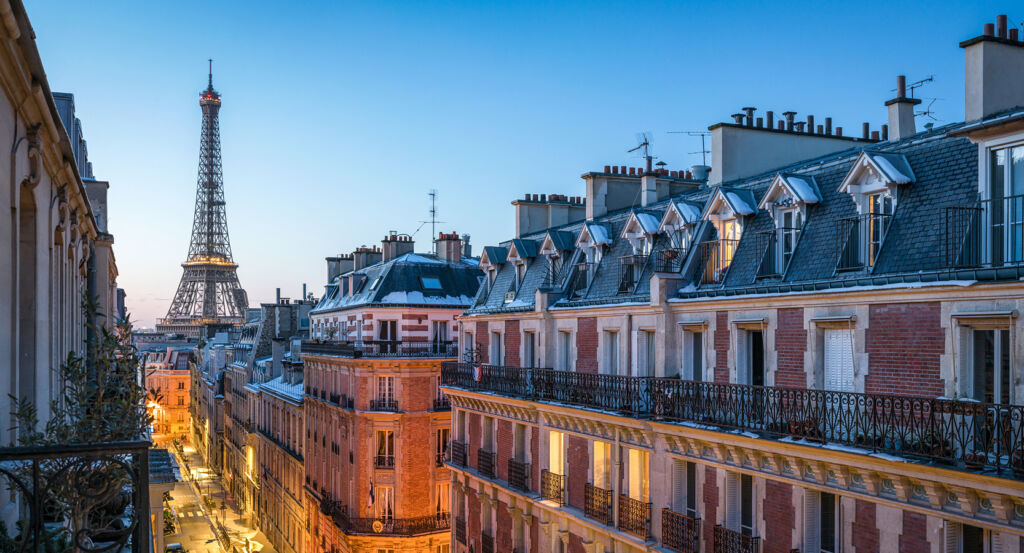
Why you should experience Rue Beaubourg in Paris, France.
Rue Beaubourg is a spirited Sainte-Avoye corridor where medieval heritage, architectural innovation, artistic expression, and contemporary Parisian culture converge along one of the capital's most transformative streets.
Running through Sainte-Avoye between Les Halles and the Marais, this energetic corridor unfolds through world-renowned museums, historic churches, independent galleries, lively cafés, elegant townhouses, and beautifully preserved buildings that demonstrate centuries of uninterrupted urban evolution. Contemporary cultural institutions stand beside medieval streetscapes, while creative studios, neighborhood boutiques, and thriving public spaces create a dynamic environment where historic Paris continually reinvents itself. Every section of the corridor reveals another layer of artistic ambition and architectural transformation. The result is a corridor defined by cultural innovation, historical continuity, and one of Central Paris' most compelling urban streets.
What you should know about Rue Beaubourg.
Rue Beaubourg is best known for becoming the address of the Centre Pompidou, inaugurated in 1977 and designed by Renzo Piano and Richard Rogers, whose revolutionary inside-out architecture permanently transformed twentieth century museum design by exposing structural systems, mechanical services, escalators, and circulation on the building's exterior. Awarded through an international competition attracting 681 submissions from 49 countries, the project established one of the world's greatest collections of modern and contemporary art, housing more than 140,000 works by artists including Pablo Picasso, Henri Matisse, Wassily Kandinsky, Marcel Duchamp, Joan Miró, Jackson Pollock, and Frida Kahlo. Long before this cultural transformation, Rue Beaubourg served as a principal medieval thoroughfare connecting the Right Bank with the historic markets of Les Halles, preserving landmarks including the Gothic Église Saint-Merri and centuries of commercial activity that shaped the neighboring Marais. The avenue entered another defining chapter during the late twentieth century as the Pompidou project revitalized the surrounding district, attracting galleries, design firms, creative industries, and one of Europe's most energetic public squares, where street performers, musicians, and artists continue contributing to its international reputation as a center of cultural life.
Exposed steel trusses, color-coded service pipes, vast column-free galleries, and flexible exhibition spaces continue demonstrating why the Centre Pompidou became one of the most influential architectural projects of the modern era, inspiring museums around the world to rethink how cultural institutions could function within the public realm. Historic churches, preserved medieval street patterns, and contemporary creative enterprises reinforce the corridor's unique ability to unite nearly a thousand years of Parisian history with groundbreaking architectural innovation. Few streets demonstrate the discussion between medieval heritage and modern cultural ambition as completely as Rue Beaubourg.
How to fold Rue Beaubourg into your trip.
Rue Beaubourg works as an exploration through Sainte-Avoye's celebrated cultural landmarks and historic streets.
Begin at the Centre Pompidou, where one of the world's most influential museums establishes the extraordinary artistic significance of the corridor before following Rue Beaubourg through the historic heart of the Right Bank. Continue to Église Saint-Merri, whose grand Gothic architecture preserves the neighborhood's medieval heritage only steps from the museum's contemporary landmark. Conclude at Place Georges-Pompidou, where lively public performances and sweeping architectural views provide a memorable finale celebrating the remarkable relationship between historic Paris and modern cultural innovation. The progression moves naturally from groundbreaking architecture to medieval craftsmanship before concluding within one of Europe's most celebrated civic spaces, revealing why Rue Beaubourg remains one of Paris' most influential cultural corridors.
Where your story begins.
Foresyte Travel reveals places that feel extraordinary long before you arrive.
Experience premium editorial crafted for luxury travelers.














































































































