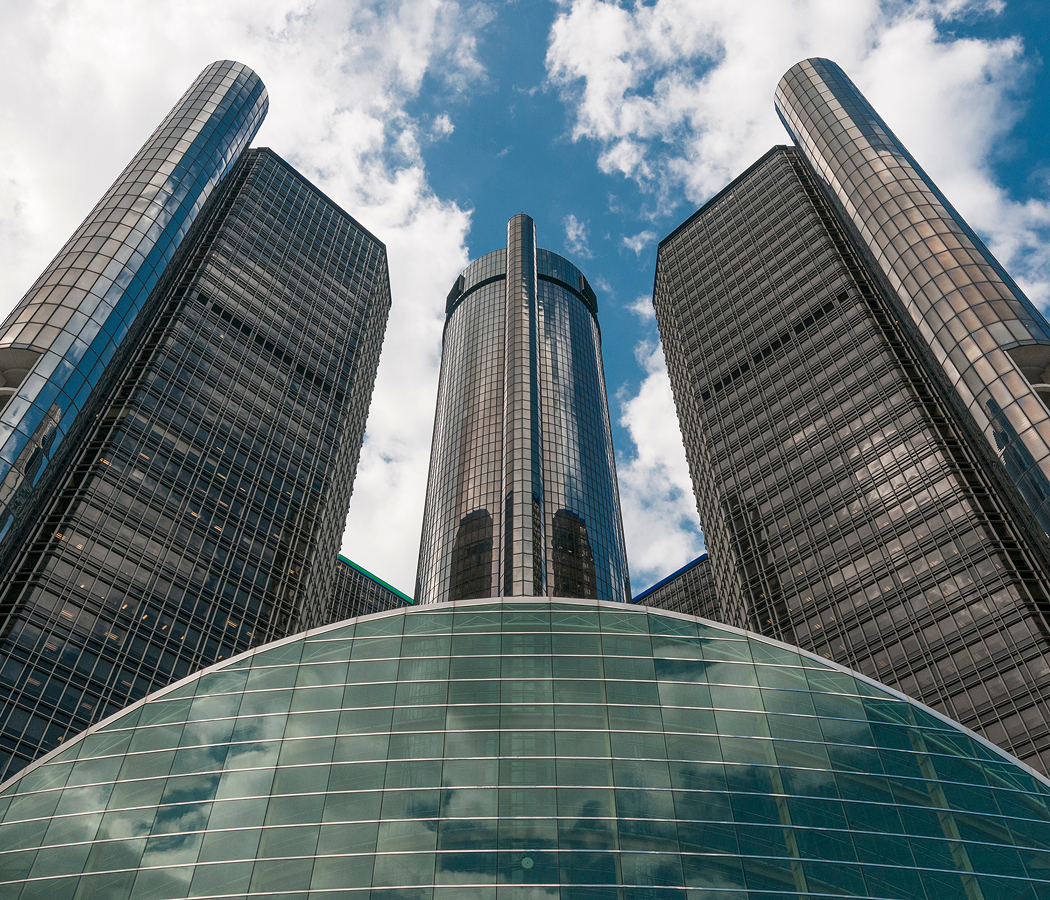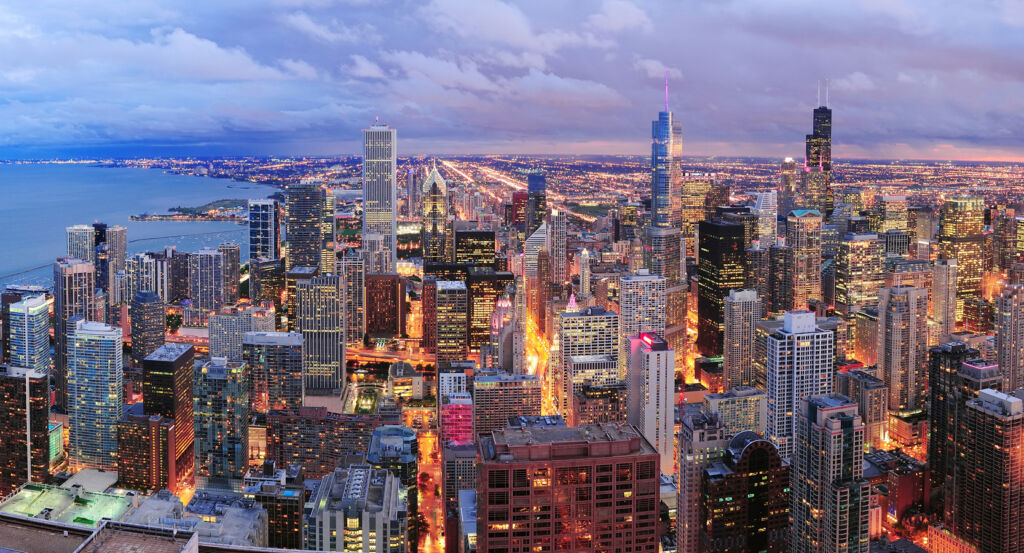
Why you should experience Clinton Street in Chicago, Illinois.
Clinton Street is a purposeful corridor where the West Loop's transportation heritage, commercial evolution, architectural renewal, and Chicago's downtown character intersect along one of the city's defining north-south streets.
Running through the West Loop between Fulton Market and Printer's Row, Clinton Street connects railroad terminals, office towers, historic warehouses, residential districts, educational institutions, and civic infrastructure that collectively reflect more than 170 years of metropolitan development. The corridor reveals how rail transportation, wholesale commerce, engineering, and sustained reinvestment reshaped Chicago's western downtown into one of the nation's most important business districts. Historic masonry buildings, modern high-rises, commuter rail facilities, and carefully integrated streetscapes continue defining the corridor while reinforcing its enduring importance. The result is a corridor distinguished by transportation innovation, architectural continuity, and lasting economic vitality.
What you should know about Clinton Street.
Clinton Street is best known for developing alongside Chicago's nineteenth-century railroad expansion after the city's incorporation in 1837, becoming a principal north-south route serving freight yards, depots, warehouses, and industrial businesses clustered west of the South Branch of the Chicago River. Completion of the Galena and Chicago Union Railroad in 1848, followed by rapid growth of the Chicago & North Western Railway, the Chicago, Burlington & Quincy Railroad, and the Pennsylvania Railroad, established the surrounding district as one of North America's foremost rail transportation centers. Construction of extensive freight houses, produce markets, wholesale warehouses, grain distribution facilities, and manufacturing buildings between the 1850s and the 1930s reinforced Clinton Street's importance within Chicago's commercial economy while supporting regional and national trade. Development accelerated again during the late twentieth century through rehabilitation of historic industrial buildings, modernization of transportation infrastructure, expansion of commercial office space, and adaptive reuse projects that preserved much of the corridor's historic masonry architecture. Continued investment in multimodal transportation, streetscape improvements, and commercial redevelopment has maintained Clinton Street as one of Chicago's most historically significant transportation corridors.
Organizations including the West Loop Community Organization and the West Central Association advanced long-term planning through economic development initiatives, infrastructure advocacy, business support, and coordinated neighborhood investment serving the Clinton Street corridor. Engineering projects administered by the Chicago Department of Transportation, the Illinois Department of Transportation, and the Chicago Metropolitan Agency for Planning improved roadway design, freight circulation, bicycle infrastructure, pedestrian accessibility, and connections between rail corridors and surrounding commercial districts. Long-term preservation of historic warehouse buildings, continued private investment, strategic zoning initiatives, and coordinated transportation planning collectively demonstrate how engineering, commerce, freight logistics, and civic leadership have sustained Clinton Street's historic identity. Together, the Galena and Chicago Union Railroad, the Chicago & North Western Railway, the Chicago, Burlington & Quincy Railroad, the Pennsylvania Railroad, the West Loop Community Organization, the West Central Association, and generations of transportation investment establish Clinton Street among Chicago's most historically representative urban corridors.
How to fold Clinton Street into your trip.
Clinton Street works as an exploration of the West Loop's transportation heritage, architectural evolution, and cultural vitality.
Begin at Union Station, where grand Beaux-Arts architecture and one of America's busiest passenger rail terminals introduce the transportation history surrounding Clinton Street before naturally expanding into the broader district. Continue to Old St. Patrick's Church, where one of Chicago's oldest surviving churches provides insight into the neighborhood's nineteenth-century development before guiding the experience toward its conclusion. Conclude at Fulton Market District, where restored warehouse architecture, acclaimed dining establishments, and contemporary commercial investment provide the historical and economic payoff, illustrating how preservation and entrepreneurship continue shaping the West Loop. The progression moves naturally from transportation history to early civic development before concluding with one of Chicago's foremost commercial districts.
Where your story begins.
Foresyte Travel reveals places that feel extraordinary long before you arrive.
Experience premium editorial crafted for luxury travelers.