Why Union Station matters.
Union Station is an expansive transportation landmark where architectural grandeur, railroad history, and national connectivity converge within one of America's most significant passenger terminals.
Set along Canal Street near Adams Street and just steps from the Chicago River, this iconic station connects historic rail networks, civic landmarks, commercial districts, transportation corridors, and public spaces that have shaped city life for generations. Soaring Beaux-Arts architecture, grand waiting halls, expansive columns, historic concourses, transportation infrastructure, and thriving public spaces create an environment defined by ambition and movement. The station emerged during the early twentieth century as railroads sought a unified gateway to the nation's fastest-growing metropolis. Architects, railroad executives, civic leaders, commuters, immigrants, and travelers helped establish a reputation that continues to attract visitors from around the world. Nearby, the West Loop extends naturally from Union Station through a network of historic streets, commercial destinations, and civic institutions that reinforce the landmark's enduring significance. The result is a destination defined by architectural achievement, transportation innovation, and historical importance.
What defines Union Station.
Union Station is best known for housing the Great Hall, the expansive waiting room crowned by a 219-foot barrel-vaulted skylight that ranks among the most striking railroad interiors ever constructed in the United States.
Completed in 1925, the hall was designed to inspire travelers with a sense of scale, permanence, and civic pride befitting one of the nation's premier transportation gateways. Marble walls, massive Corinthian columns, ornate detailing, and dramatic natural light transformed routine travel into a grand public experience. Millions of passengers passed through the space during the golden age of rail travel, reinforcing Chicago's position as the nation's railroad capital. Preservation efforts ensured the hall survived changing transportation patterns and remains one of the city's most celebrated interior landmarks. Few American transportation facilities are associated with an interior space that so powerfully captures the grandeur of the railroad era.
How Union Station fits.
Union Station works as an exploration of Chicago's transportation heritage, architectural legacy, and civic ambition.
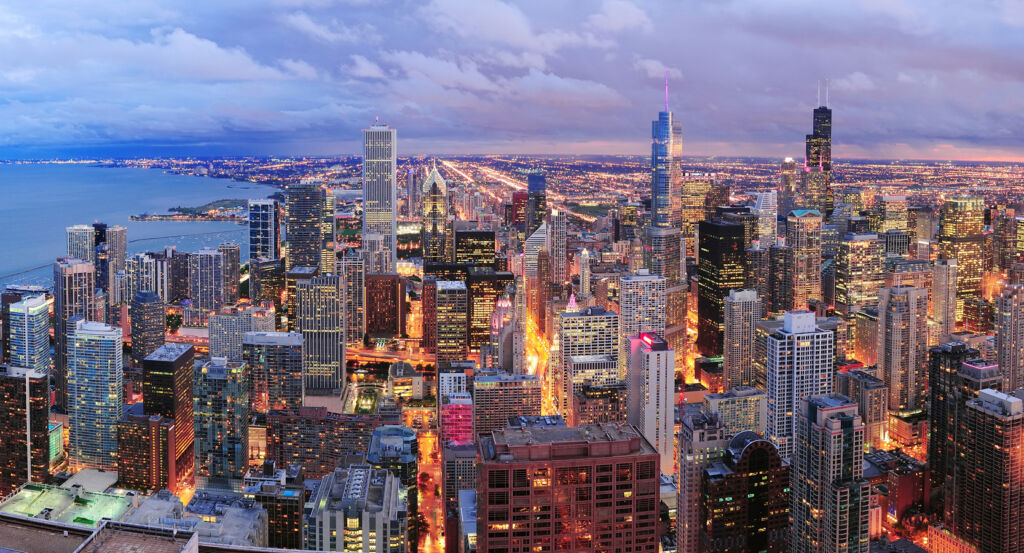
Begin inside the Great Hall, where the station's defining relationship with architecture, travel, and city-building immediately comes into focus. Continue toward the Chicago Riverwalk, whose public spaces reveal the commercial and transportation forces that helped shape the city across generations. From there, make your way to Willis Tower, where one of Chicago's most recognizable landmarks provides a broader perspective on the economic growth and urban development that continue to define the city today. Along the route, you'll encounter historic transportation infrastructure, architectural masterpieces, civic landmarks, public gathering places, commercial institutions, celebrated streetscapes, and iconic skyline views that showcase the district's remarkable depth. The progression moves naturally from railroad palace to riverfront destination to skyscraper icon, revealing the forces that transformed Union Station into one of America's most consequential transportation landmarks. Union Station remains one of Chicago's most rewarding destinations, preserving a distinctive balance between historical significance, architectural grandeur, and everyday utility.
Where your story begins.
Foresyte Travel reveals places that feel extraordinary long before you arrive.
Enjoy editorial crafted for luxury travelers.
Foresyte may earn a commission when you book.