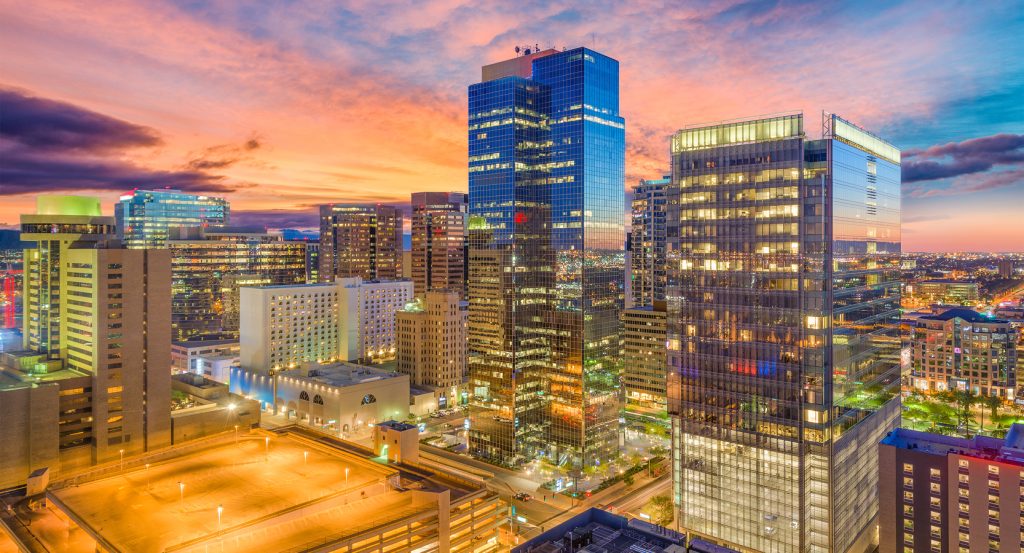
Why you should experience 59th Avenue in Phoenix, Arizona.
59th Avenue is a lively corridor where Maryvale's multicultural communities, commercial ambition, neighborhood resilience, and West Phoenix growth create one of the city's most engaging thoroughfares.
Running through Maryvale between Alhambra and Estrella, the corridor connects established neighborhoods, regional shopping destinations, employment centers, community parks, and longstanding business districts that reflect decades of metropolitan expansion across western Phoenix. Each successive stretch reveals mature shade trees, neighborhood storefronts, landscaped medians, contemporary commercial architecture, and broad Sonoran Desert vistas that reinforce the avenue's unmistakable identity. The defining moment arrives as 59th Avenue demonstrates how entrepreneurial investment, cultural diversity, and sustained neighborhood growth continue shaping one of West Phoenix's defining corridors. The result is an experience defined by neighborhood vitality, commercial character, and one of Maryvale's most rewarding corridors.
What you should know about 59th Avenue.
59th Avenue is best known for supporting Maryvale's rapid expansion throughout the 1960s, 1970s, and 1980s, when West Phoenix emerged as one of Arizona's largest suburban communities. Commercial growth introduced neighborhood shopping centers, medical offices, hospitality properties, financial institutions, automotive businesses, and regional retail destinations featuring reinforced concrete, structural steel framing, stucco façades, curtain wall glazing, decorative masonry, shaded arcades, and generous landscaped setbacks that continue defining the avenue's architectural identity. Development accelerated alongside nearby Interstate 10, strengthening regional accessibility while attracting healthcare providers, distribution firms, professional services, and locally owned businesses throughout western Phoenix. Landscaped medians, blue palo verde, desert willow, red yucca, agave, and irrigated planting beds reinforce the corridor's relationship with the surrounding Sonoran Desert while softening its broad urban scale. Continued reinvestment has modernized commercial properties, expanded neighborhood services, strengthened retail activity, and maintained 59th Avenue as one of Maryvale's principal commercial corridors. Collectively, the corridor's suburban origins, commercial prominence, transportation accessibility, and long-term investment established 59th Avenue as one of West Phoenix's defining thoroughfares.
Along the corridor, Maryvale Baseball Park, opened in 1998 as the spring training home of the Milwaukee Brewers, elevated the avenue's regional profile by attracting generations of baseball fans and establishing an enduring connection between professional sports and West Phoenix. Nearby, Desert West Community Center has long complemented the surrounding parks, recreation facilities, and neighborhood gathering spaces, reinforcing 59th Avenue as a corridor where community life extends beyond its commercial districts. The surrounding business corridors also showcase a longstanding concentration of independently operated Mexican, Salvadoran, Vietnamese, and Asian restaurants, bakeries, markets, and specialty retailers whose enduring presence reflects Maryvale's multicultural character and entrepreneurial traditions. Together, these recreational destinations, established community institutions, and locally owned businesses demonstrate how 59th Avenue evolved into a corridor whose character is shaped as much by its neighborhoods as by its commercial prominence.
How to fold 59th Avenue into your trip.
59th Avenue works as an exploration of West Phoenix's recreation, commerce, and historic landscapes.
Begin at Desert West Park, where expansive green space, desert landscaping, and recreational amenities establish the neighborhood story surrounding 59th Avenue while introducing the area's community-oriented character. Continue to Maryvale Baseball Park, where the Milwaukee Brewers' longtime spring training home showcases the corridor's connection to professional baseball before guiding the experience toward its historical conclusion. Conclude at Sahuaro Ranch Park, where preserved ranch buildings, historic orchards, and agricultural landscapes provide the historical payoff by revealing the rural heritage that preceded West Phoenix's suburban expansion. The progression moves naturally from neighborhood recreation to professional baseball before culminating in one of the Valley's most significant historic ranch properties.
Where your story begins.
Foresyte Travel reveals places that feel extraordinary long before you arrive.
Experience premium editorial crafted for luxury travelers.