
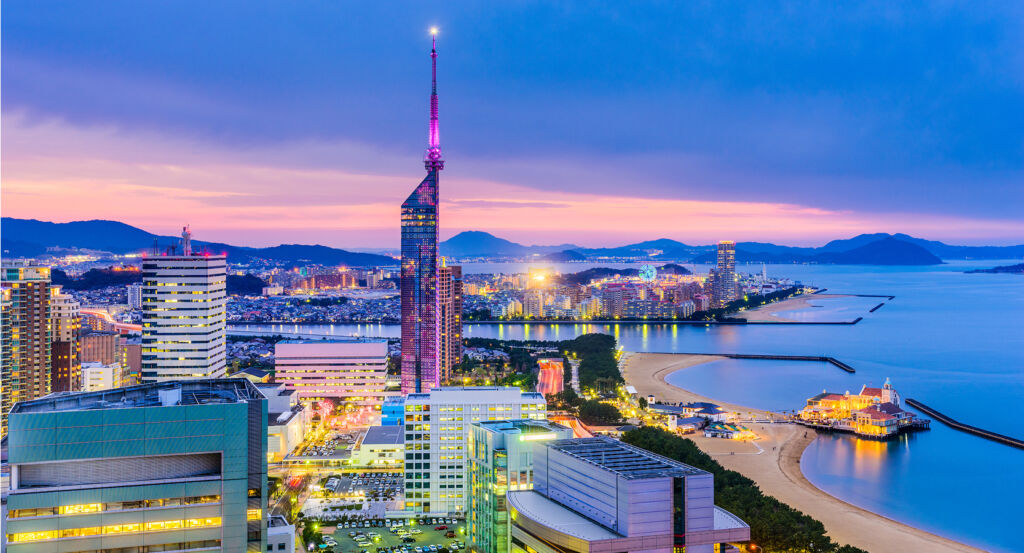
Why you should experience APA Hotel Hakata Ekimae 3Chome in Fukuoka, Japan.
APA Hotel Hakata Ekimae 3Chome is a tightly scoped urban shelter that reframes Fukuoka as a city you interact with in controlled bursts, where the hotel exists not to host you, but to give you back your edges at the start and end of each day.
This location sits slightly downstream from Hakata Station's most obvious flow, and that subtle displacement defines everything about the stay. You are close enough that access is never a question, yet far enough that the city's constant insistence does not spill directly into your space. Arrival feels deliberate. You move from a busy street into an interior that immediately compresses stimulus. The lobby is modest, quiet, and transitional by design, there is no attempt to create a sense of arrival beyond utility. Lighting is steady and neutral, circulation is linear, and materials are intentionally unremarkable. This is not a space that wants to be remembered; it wants to be effective. Guest rooms continue this theme with a kind of disciplined minimalism that prioritizes mental relief over physical expansion. The footprint is compact, but the intent is psychological. The room functions as a seal. Beds are firm and consistent, designed to shut the body down. Layouts are standardized and predictable, removing friction at moments when energy is already spent. Furnishings are sparse and uniform, reducing visual negotiation and reinforcing a sense of control. Windows offer narrow but grounding views of surrounding buildings and street movement, enough to maintain orientation. Bathrooms are efficient, clean, and purpose-built, supporting routine at speed. Across the property, the experience feels contained, quiet, and resolutely inward-facing. APA Hotel Hakata Ekimae 3Chome is ideal for travelers who want Fukuoka to feel intense by choice, not by default, a city you enter and exit cleanly.
What you should know about APA Hotel Hakata Ekimae 3Chome.
APA Hotel Hakata Ekimae 3Chome operates on a principle of boundary control, treating the hotel room as a deliberate psychological barrier between the guest and the city.
Unlike properties that attempt to soften or reinterpret urban energy, this hotel contains it. Circulation through shared spaces is narrow, efficient, and exposure-minimizing. You are never encouraged to linger, socialize, or absorb atmosphere. That absence is intentional. The building is designed to shorten the distance between outside and inside, and then close the door firmly behind you. Materials reinforce this boundary. Surfaces are matte and subdued, finishes resist reflection, and the color palette avoids stimulation. Acoustic behavior is tightly managed. Exterior sound is dampened into distant presence, while interior noise is sharply controlled, allowing rooms to function as genuine decompression chambers. Lighting strategy supports this containment. Public areas are evenly lit for safety and orientation, while guest rooms rely on predictable, low-drama lighting that signals shutdown. There are no cues to extend the day, no ambient flourishes meant to keep you alert. Service culture mirrors the same boundary-respecting character. Interactions are brief, precise, and emotionally neutral. Staff are efficient without being familiar, present without being intrusive. The hotel does not seek relationship; it seeks reliability. Another understated aspect of this location is how it changes the resonant texture of Hakata. By staying just beyond the station's loudest perimeter, you experience the city as something you step into deliberately rather than something that envelops you. Over multiple nights, this separation becomes protective. The city remains vivid, but it does not accumulate. The hotel does not express identity, culture, or brand philosophy. It expresses containment as comfort.
How to fold APA Hotel Hakata Ekimae 3Chome into your trip.
APA Hotel Hakata Ekimae 3Chome works best when you treat it as a hard stop, a place that decisively ends each day and resets the next.
Begin your mornings cleanly. Wake, prepare, and reenter Fukuoka. Hakata Station and surrounding transit lines are easily reached, allowing you to project outward quickly. Use the hotel's containment to your advantage. Do not ration energy for the room; spend it fully in the city. Walk far, stay late, engage deeply. When you return, allow the space to do exactly what it was designed to do: close the day. Midday returns, if necessary, are utilitarian rather than restorative, a brief pause rather than a retreat. The room is not there to inspire; it is there to silence. Evenings are where the hotel proves its value. After crowds, conversation, and constant decision-making, the room offers a space that does not ask you to interpret, participate, or respond. You simply arrive and disengage. For longer stays, this rhythm becomes stabilizing. Fukuoka remains dense and demanding, but your nights remain clean and contained. Business travelers benefit from the hotel's ability to create sharp boundaries between work and rest. Leisure travelers who prefer structure and psychological quiet over ambiance gain a sense of control that prevents burnout. Anchoring your stay at APA Hotel Hakata Ekimae 3Chome allows Fukuoka to be experienced as a city you confront on your terms, not one that bleeds into every hour. The hotel does not compete with charm, luxury, or immersion. It offers something more elemental: closure. In doing so, it delivers a stay that feels disciplined, dependable, and mentally restorative, where the city ends when you need it to, and begins again only when you're ready.
Where your story begins.
Foresyte Travel reveals places that feel extraordinary long before you arrive.
Experience premium editorial crafted for luxury travelers.

















































































































