
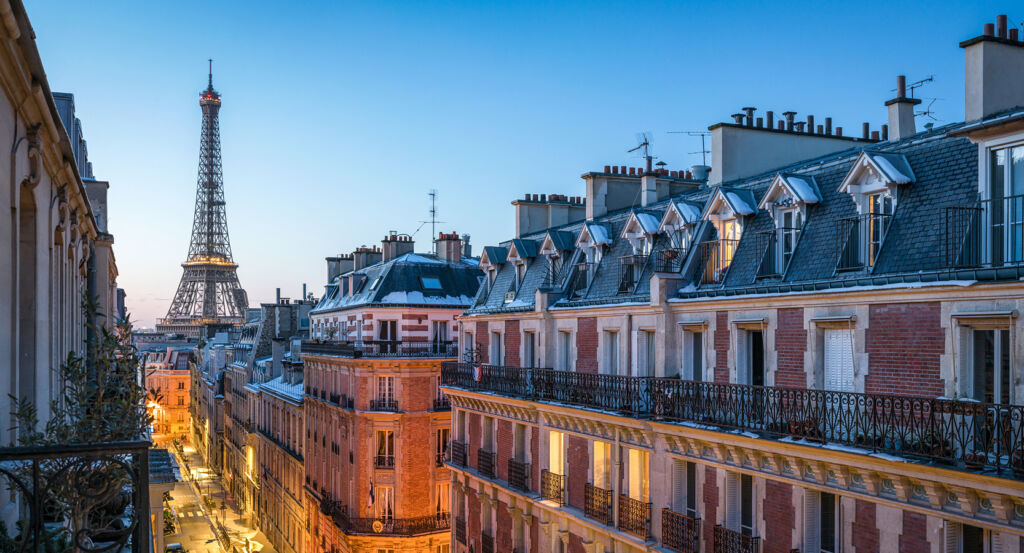
Why you should experience Avenue de l'Opéra in Paris, France.
Avenue de l'Opéra is a grand Palais-Royal corridor where imperial vision, Beaux-Arts architecture, luxury commerce, and Parisian grandeur converge along one of the capital's most celebrated ceremonial avenues.
Running through Palais-Royal between Place du Palais-Royal and Place de l'Opéra, this grand avenue unfolds through elegant Haussmann façades, prestigious hotels, luxury boutiques, refined cafés, celebrated cultural institutions, and breathtaking urban vistas that define the architectural magnificence of Central Paris. Broad sidewalks, harmonious limestone buildings, uninterrupted sightlines, and energetic commercial life create an atmosphere where art, commerce, and civic ambition have flourished since the nineteenth century. Every stretch of the avenue reflects another chapter in the remarkable transformation of Paris into one of the world's great modern capitals. The result is a corridor defined by architectural distinction, cultural prestige, and one of the city's most iconic urban boulevards.
What you should know about Avenue de l'Opéra.
Avenue de l'Opéra is best known as Baron Haussmann's grand ceremonial approach to Charles Garnier's Palais Garnier, constructed between 1864 and 1879 under Emperor Napoleon III to create an uninterrupted grand vista culminating at one of the world's greatest opera houses while becoming the first major Parisian avenue designed without rows of trees to preserve its architectural perspective. Carved through the dense medieval fabric of Central Paris, the avenue required the demolition of hundreds of historic buildings as part of Haussmann's sweeping reconstruction, establishing a broad east-west axis linking the Louvre and Palais-Royal with the newly completed opera house. Its harmonious limestone façades, uniform cornice heights, wrought-iron balconies, and carefully regulated architectural proportions became defining expressions of Second Empire planning and influenced boulevard design throughout Europe and beyond. The avenue rapidly evolved into one of Paris' foremost commercial addresses, attracting luxury hotels including the Grand Hôtel du Louvre, prestigious banks, elegant cafés, and internationally renowned retailers that reinforced the district's status as the cultural and financial heart of the capital. Together, with Charles Garnier's operatic masterpiece at its western terminus, these architectural, engineering, commercial, and urban achievements established Avenue de l'Opéra as one of the defining accomplishments of nineteenth-century city planning and one of the world's most celebrated ceremonial streets.
Perfectly aligned perspectives, grand Second Empire façades, refined commercial institutions, and one of Paris' most carefully choreographed urban compositions continue illustrating how Haussmann united architecture, transportation, and civic performance within a single boulevard. The avenue's remarkable combination of innovative planning, architectural uniformity, and direct visual discussion with the Palais Garnier demonstrates why it remains one of the finest surviving expressions of nineteenth-century urban design. Few Parisian corridors combine architectural ambition, engineering precision, commercial prestige, and grand planning with such extraordinary international influence.
How to fold Avenue de l'Opéra into your trip.
Avenue de l'Opéra works as an exploration through Palais-Royal's celebrated monuments and architectural masterpieces.
Begin at the Palais Garnier, where Charles Garnier's extraordinary Beaux-Arts masterpiece introduces the grand vision that inspired the avenue before strolling east beneath its elegant Haussmannian façades. Continue to the Palais-Royal, whose historic gardens, arcades, and cultural heritage reveal centuries of royal and artistic history. Conclude at the Louvre Museum, where one of the world's greatest collections of art provides a memorable finale celebrating the remarkable relationship between architecture, urban planning, and cultural achievement that continues defining Central Paris. The progression moves naturally from operatic grandeur to royal elegance before culminating in artistic mastery, revealing why Avenue de l'Opéra remains one of Paris' most distinguished ceremonial boulevards.
Where your story begins.
Foresyte Travel reveals places that feel extraordinary long before you arrive.
Experience premium editorial crafted for luxury travelers.














































































































