
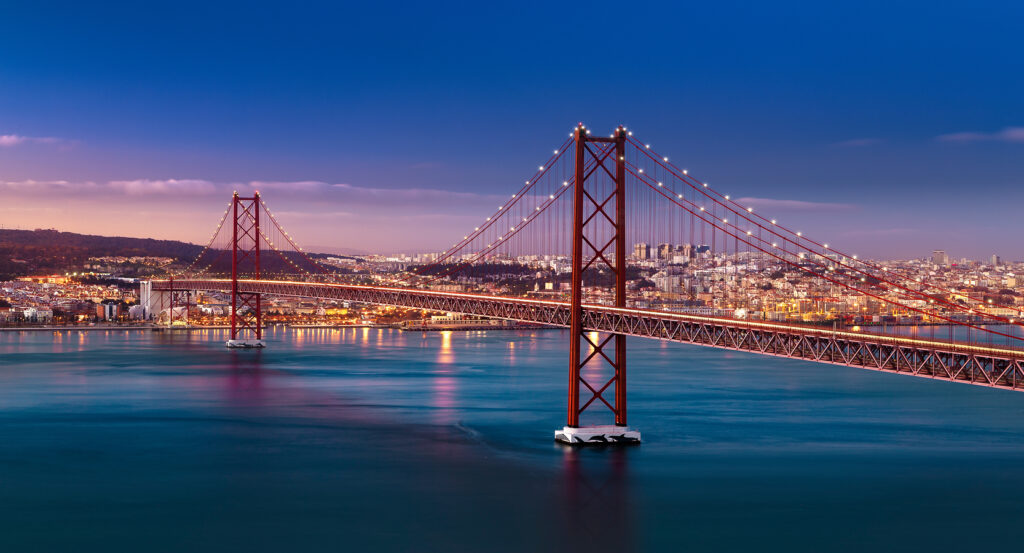
Why Belem matters.
Belem is the historic waterfront district where Portugal's Age of Discovery came to life, with expansive landmarks, maritime heritage, and cultural treasures converging along the banks of the Tagus River.
Grand monasteries, riverside promenades, world-renowned museums, historic gardens, expansive architecture, and sweeping waterfront vistas create a neighborhood that captures Portugal's greatest era of exploration. During the fifteenth and sixteenth centuries, Belem served as the departure point for many of the voyages that connected Europe with Africa, Asia, and the Americas, transforming Portugal into one of the world's leading maritime powers. Kings, navigators, merchants, and explorers passed through the district, shaping a legacy that continues to define the nation's identity. Today, visitors encounter some of Portugal's most celebrated landmarks within a setting that remains deeply connected to the river and the sea. The result is a neighborhood that feels monumental, historic, and profoundly significant. To the east, Alcântara's waterfront districts and cultural corridors extend naturally from Belem along the northern bank of the Tagus, reinforcing the neighborhood's position within one of Europe's most important maritime landscapes. Every monument, riverside path, and historic façade reflects a neighborhood shaped by exploration, ambition, and national pride.
What defines Belem.
Belem is best known for being home to Jerónimos Monastery, a UNESCO World Heritage Site and one of the greatest masterpieces of Manueline architecture in the world.
Commissioned by King Manuel I in the early sixteenth century, the monastery was built to commemorate Vasco da Gama's successful voyage to India and celebrate Portugal's emergence as a global maritime power. Its extraordinary stonework, intricate decorative details, and expansive scale represent the height of Portugal's artistic and architectural achievement during the Age of Discovery. Over the centuries, the monastery became a symbol of national character and the final resting place of several of Portugal's most important historical figures. Today, it stands as one of the country's most visited and admired landmarks. Few monuments in Europe possess such a powerful connection to exploration, culture, and national history.
How Belem fits.
Belem works as an exploration of the monuments, museums, and waterfront landmarks that define Portugal's most important historic district.
Begin at Jerónimos Monastery, where the neighborhood's defining connection to exploration and architectural excellence immediately comes into focus. Continue toward Belém Tower, whose riverside fortifications and iconic silhouette reveal the maritime ambitions that helped shape Portugal's global legacy. From there, make your way to Monument to the Discoveries, where expansive sculptures and panoramic river views provide a broader perspective on the explorers and visionaries who transformed world history from these shores. Along the route, you'll encounter world-class museums, historic gardens, neighborhood cafés, cultural institutions, waterfront promenades, public plazas, and architectural masterpieces that showcase the neighborhood's remarkable depth. The progression moves naturally from monastic masterpiece to defensive fortress to commemorative monument, revealing the forces that shaped the neighborhood. Belem remains one of Europe's most extraordinary destinations, preserving a remarkable balance between historical significance, cultural achievement, and riverside beauty.
Where your story begins.
Foresyte Travel reveals places that feel extraordinary long before you arrive.
Enjoy editorial crafted for luxury travelers.
Foresyte may earn a commission when you book.














































































































