
Why Boulevard Voltaire matters.
Boulevard Voltaire is a grand Folie-Méricourt corridor where republican ideals, revolutionary history, architectural elegance, and energetic Parisian life converge along one of the capital's most influential boulevards.
Running through Folie-Méricourt between Place de la République and Place de la Nation, this expansive boulevard unfolds through historic cafés, celebrated performance venues, elegant Haussmann architecture, independent boutiques, tree-lined promenades, and lively neighborhood squares that reflect the dynamic spirit of eastern Paris. Broad sidewalks, mature plane trees, thriving terraces, and beautifully proportioned façades create an atmosphere where political debate, artistic expression, and everyday Parisian culture have flourished for generations. Every section of the boulevard reveals another chapter in the remarkable evolution of modern Paris. The result is a corridor defined by civic significance, architectural distinction, and one of the capital's great ceremonial avenues.
What defines Boulevard Voltaire.
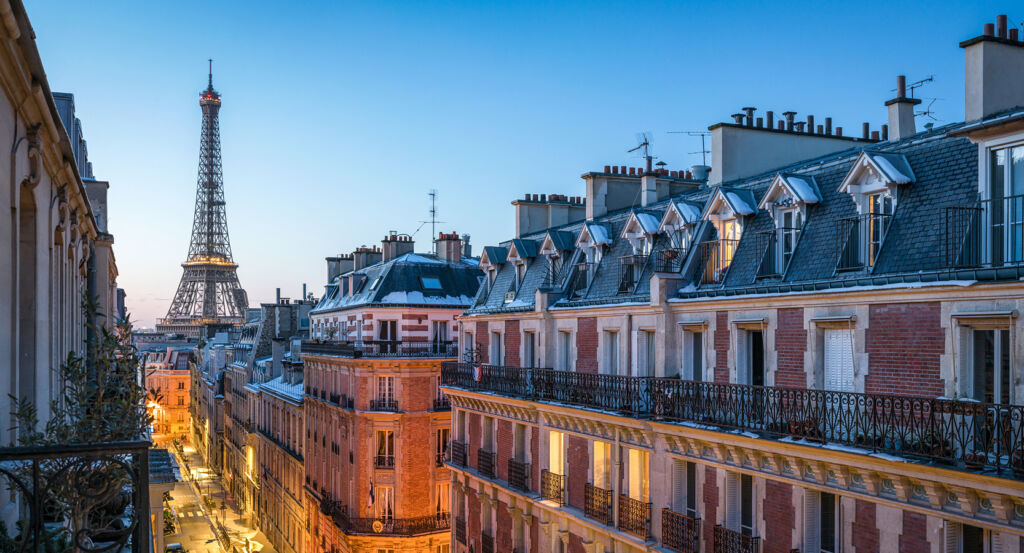
Boulevard Voltaire is best known as one of Baron Haussmann's great nineteenth-century boulevards, inaugurated in 1862 and named in honor of Enlightenment philosopher Voltaire, whose advocacy for civil liberties, religious tolerance, freedom of expression, and judicial reform profoundly influenced modern democratic thought and the intellectual foundations of the French Republic. Constructed through the former medieval neighborhoods of eastern Paris, the boulevard became a defining element of Haussmann's urban transformation, improving circulation between Place de la République and Place de la Nation while introducing broad tree-lined avenues, grand apartment buildings, and modern infrastructure that reshaped the capital. The corridor also occupies a central place in France's political history, repeatedly serving as the route for major demonstrations, labor marches, republican commemorations, and national solidarity gatherings, most notably during the unprecedented January 2015 marches following the Charlie Hebdo and Hyper Cacher attacks, when millions of participants and dozens of world leaders assembled along its length in one of the largest public demonstrations in French history. Architecturally, Boulevard Voltaire preserves a remarkable succession of Second Empire and Third Republic residential buildings, while landmark institutions including the Cirque d'Hiver Bouglione, inaugurated in 1852 by Jacques Ignace Hittorff for Napoleon III, reinforce its longstanding relationship with public entertainment, civic life, and cultural innovation. Together, these achievements establish Boulevard Voltaire as one of Paris' defining expressions of republican identity, nineteenth-century urban planning, and democratic public space.
Historic apartment façades, carefully designed tree-lined promenades, nationally significant civic institutions, and an enduring tradition of peaceful public assembly continue demonstrating how the boulevard functions simultaneously as a transportation artery, residential neighborhood, and symbolic civic stage. Its lasting association with Enlightenment philosophy, Haussmann's transformative planning, and some of the most consequential demonstrations in modern French history demonstrates why Boulevard Voltaire remains one of the capital's most influential public corridors. Few Parisian boulevards unite intellectual history, urban innovation, political expression, and architectural coherence with such remarkable continuity.
How Boulevard Voltaire fits.
Boulevard Voltaire works as an exploration through Folie-Méricourt's celebrated civic landmarks and historic neighborhoods.
Begin at Place de la République, where France's great republican monument introduces the democratic ideals embodied by the boulevard before strolling beneath its elegant rows of plane trees. Continue to the Cirque d'Hiver Bouglione, whose extraordinary nineteenth-century architecture and enduring performance tradition celebrate one of Paris' most distinctive cultural institutions. Conclude at Place de la Nation, where one of the capital's grandest ceremonial squares provides a memorable finale celebrating the remarkable relationship between republican history, grand urban planning, and modern Parisian life. The progression moves naturally from civic symbolism to architectural innovation before culminating in one of Paris' defining public spaces, revealing why Boulevard Voltaire remains one of the city's most historically significant avenues.
Where your story begins.
Foresyte Travel reveals places that feel extraordinary long before you arrive.
Experience premium editorial crafted for luxury travelers.
Foresyte Travel may earn a commission when you book through the link on this page.














































































































