
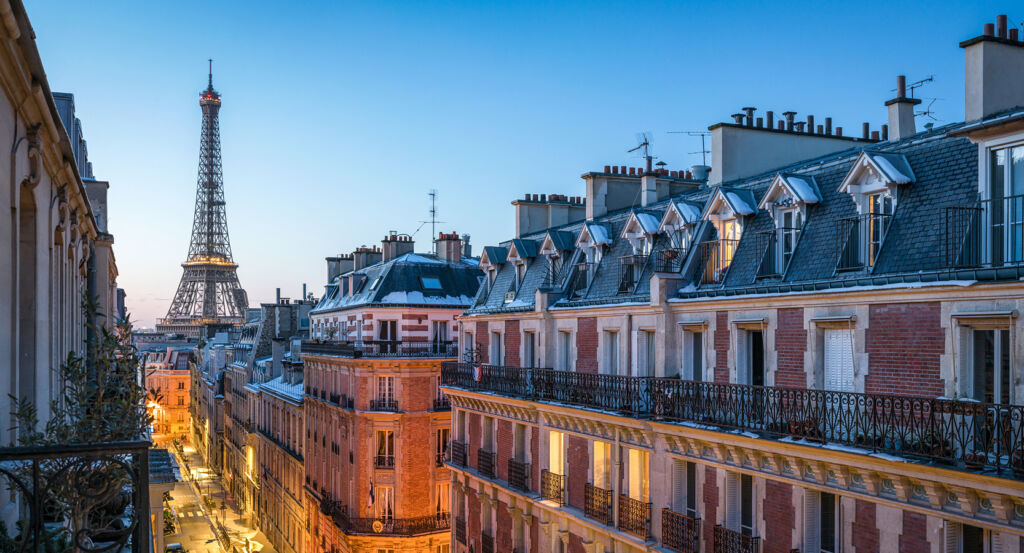
Why Folie Méricourt matters.
Folie Méricourt is a kinetic enclave where the old northeastern faubourgs meet inner Paris through former industrial passages, dense residential streets and an inherited artisan geography extending between République and Belleville.
Positioned between République, Belleville, and Saint-Ambroise, the neighborhood occupies a northeastern pocket where Rue Oberkampf, Avenue Parmentier and Rue Jean-Pierre Timbaud cross territory absorbed by Paris as workshops, housing and entertainment expanded beyond the older city. Narrow streets alternate with deep courtyards and passages whose interiors once accommodated metalworking, furniture production and small manufacturers, creating abrupt shifts between busy commercial axes and quieter spaces concealed behind street facades. Rue Oberkampf establishes the primary encounter through a long east-west corridor whose changing width and building stock carry the district from the grand scale of République toward the rising ground of Ménilmontant. Rue Jean-Pierre Timbaud adds a distinct secondary mechanism through former workshop properties and tightly packed residential blocks tied to the skilled trades that concentrated across eastern Paris during the nineteenth century. Smaller streets around Rue de la Folie-Méricourt preserve an older geometry beneath the straighter arteries introduced as the capital expanded and circulation intensified. The result is a neighborhood where artisan production, industrial growth and metropolitan expansion remain embedded in the street fabric, preparing a history that began when fields beyond the old city gave way to estates, workshops and one of eastern Paris's most densely inhabited faubourgs.
What defines Folie Méricourt.
Folie Méricourt is best known for emerging from territory beyond the historic city where agricultural land, country properties and suburban roads were gradually absorbed into the expanding Faubourg du Temple. The district's name preserves the memory of a folie, a country residence built beyond dense Paris, associated with the Méricourt family and the route that became Rue de la Folie-Méricourt. Development accelerated after the seventeenth-century removal of the Charles V fortifications opened the northern and eastern approaches to construction, allowing settlement to extend beyond the old Porte du Temple. The Boulevard du Temple grew along the former defensive line and became a major entertainment corridor during the eighteenth and nineteenth centuries, drawing audiences toward theaters clustered between the present République and Pasdeloup. Farther east, workshops multiplied across cheaper suburban land as artisans displaced from central districts established production near the Faubourg du Temple and Oberkampf corridors. The Farmers-General wall placed much of this expanding territory inside the fiscal boundary in the late eighteenth century, tightening its relationship with the capital before the annexation of 1860 reorganized eastern Paris into new Arrondissements. Industrialization deepened the concentration of metalworkers, mechanics, cabinetmakers and other skilled trades during the nineteenth century. Dense worker housing followed the workshops, binding residence and production inside courtyards and passages that became characteristic of the district. The resulting social geography placed Folie Méricourt inside the broader working-class territory of northeastern Paris, where craft labor and manufacturing shaped both the physical district and its political culture.
Entertainment and public assembly supplied a separate mechanism for the neighborhood's development as the Oberkampf corridor became one of eastern Paris's important social arteries. Dance halls and cafés flourished among the residential and manufacturing streets during the nineteenth century, drawing on a population whose leisure institutions developed close to workplaces and homes. The Tivoli-Vauxhall occupied part of the surrounding district after opening in 1841, extending a Parisian tradition of public gardens, dancing and performance into the eastern faubourgs. Political clubs and meeting halls gained importance as republican and labor organization intensified during the later nineteenth century, giving the area a public culture closely connected to its skilled-worker population. Rue Oberkampf subsequently accumulated cafés, small performance spaces and music venues inside buildings whose earlier uses ranged across workshops, storage and local commerce. Twentieth-century deindustrialization removed much heavy production but left the narrow plots, passages and former manufacturing courts available for new occupations. Cultural activity consequently entered spaces created by the district's productive economy, carrying an older pattern of concentrated work and sociability into another phase of urban life.
How Folie Méricourt fits.
Folie Méricourt works as the anchor for an exploration connecting a nineteenth-century circus transformed into a permanent performance hall, a workers' cooperative built around Belle Époque social reform and a former foundry converted into an experimental cultural institution.
Begin at Cirque d'Hiver Bouglione, commissioned by Louis Dejean and designed by Jacques Ignace Hittorff as the Cirque Napoléon, whose polygonal building opened in 1852 with Prince Louis-Napoléon presiding over the inauguration. Hittorff organized the structure around twenty sides and an arena conceived for equestrian performance, then entrusted its sculptural decoration to James Pradier and Francisque Duret; the building became Cirque d'Hiver after the Second Empire and later passed through theatrical, cinematic and circus uses before the Bouglione family acquired it in 1934, establishing the dynasty whose productions became inseparable from the hall. Continue to Maison des Métallos, whose industrial chapter began when the Gautrot musical-instrument company established workshops on Rue Jean-Pierre Timbaud during the nineteenth century, producing brass and woodwind instruments on a substantial manufacturing site. The Union fraternelle des métallurgistes acquired the property in 1936 and developed it as a center for metalworkers through union activity, education and social services; the City of Paris purchased the complex in 2001, and its reopening as a cultural institution preserved a building whose successive occupations connect manufacturing labor, organized workers and contemporary performance. Conclude at Atelier des Lumières, housed inside the former Chemin-Vert foundry established in 1835 by the Plichon brothers to produce cast components for industrial and naval customers. Four generations maintained the enterprise before economic pressures closed the foundry in 1929, after which the industrial halls survived through later commercial use; Bruno Monnier identified the site for a digital-art center decades later, and the venue opened in 2018 using large-scale projection across the old foundry walls and structural surfaces. The progression moves from Hittorff translating Second Empire performance into permanent architecture through metalworkers converting an instrument factory into a center of collective organization into a nineteenth-century foundry receiving a new cultural function, tracing the successive performance, labor and industrial histories surrounding Folie Méricourt.
Where your story begins.
Foresyte Travel reveals places that feel extraordinary long before you arrive.
Experience premium editorial crafted for luxury travelers.
Foresyte Travel may earn a commission when you book through the link on this page.














































































































