
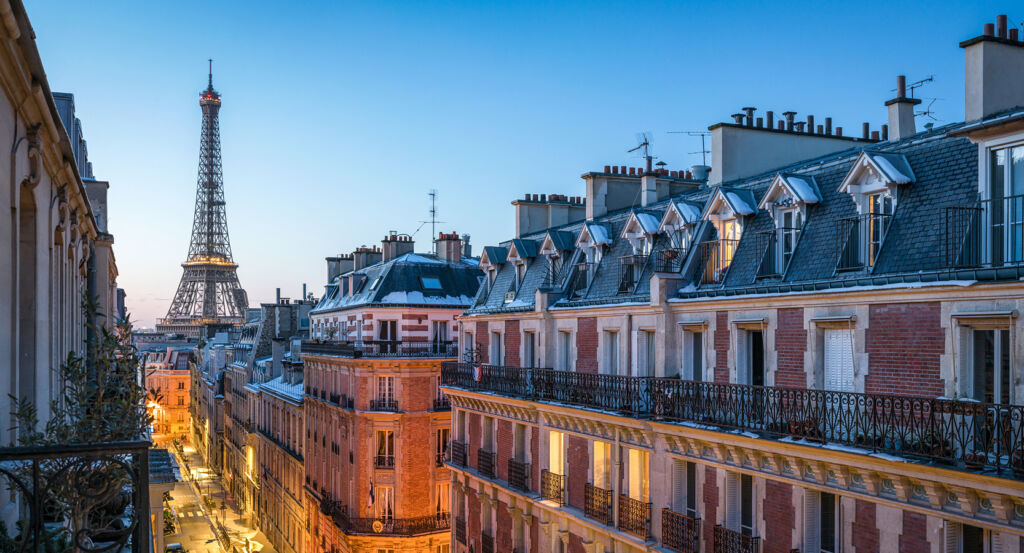
Why you should experience Boutet Bastille Hotel Paris - MGallery Collection in Paris, France.
Boutet Bastille Hotel Paris - MGallery Collection is a storied five-star hotel where Faubourg Saint-Antoine's cabinetmaking tradition, workshop culture, Art Deco craftsmanship and centuries-deep devotion to skilled making converge within a former joinery house turned chocolate factory.
Set along Rue Faidherbe near Rue de Charonne and just steps from Rue du Faubourg Saint-Antoine, the hotel occupies Maison Boutet, constructed in 1926 by architect Achille Champy with an Art Deco façade whose ochre mosaics were executed by celebrated ceramicists Gentil & Bourdet. The building began as the headquarters of Maison Boutet, a supplier of wood to the surrounding furniture workshops, before becoming a chocolate factory and remaining in industrial use for 63 years. Architect Vincent Bastie and designer Astrid Dieterlen later preserved the façade during its conversion into hospitality, while Bruno Borrione developed the interiors and students from École Boulle contributed bespoke furniture, connecting the building's contemporary incarnation directly with the design education descended from the neighborhood's furniture-making culture. The result is a hotel where timber, chocolate, mosaics and contemporary French design preserve the productive imagination that has defined Faubourg Saint-Antoine for centuries.
What you should know about Boutet Bastille Hotel Paris - MGallery Collection.
Boutet Bastille Hotel Paris - MGallery Collection is best known for inhabiting Maison Boutet, the Art Deco building erected in 1926 by architect Achille Champy for a wood supplier serving Faubourg Saint-Antoine's furniture-making economy before the premises became a chocolate factory and continued manufacturing assorted goods for 63 years. Gentil & Bourdet, the major French ceramics workshop whose architectural mosaics appeared on prominent early twentieth-century buildings, created the ochre mosaic decoration across Champy's façade, while surviving friezes preserve the Maison Boutet name and references to its commercial branches directly within the exterior composition. Manufacturing had ceased by the mid-1980s and the building subsequently served as offices before architect Vincent Bastie and designer Astrid Dieterlen led its restoration, preserving the industrial exterior while Bruno Borrione conceived the new hotel interiors. The completed property contains 80 rooms and suites, including eight with planted terraces overlooking Paris, while students from École Boulle, the applied-arts school historically associated with furniture, cabinetmaking and interior craftsmanship, created bespoke pieces including the Silvera chair. The convergence of Champy's architecture, Gentil & Bourdet ceramics, Maison Boutet's timber trade, decades of chocolate production, Bastie and Dieterlen's restoration, Borrione's interiors and École Boulle furniture gives the hotel an unusually complete material history rooted in the manufacturing culture of its own neighborhood.
CODAGE Paris develops that material narrative beneath the former factory through a dedicated spa containing two treatment rooms, swimming pool, sauna, hammam and fitness space, bringing the French skincare house founded by siblings Amandine and Julien Azencott into the property's contemporary program. Le Bar du Boutet preserves the building's second industrial life through its drinks program, with the tenth-anniversary cocktail combining Citadelle Rouge gin, Dolin Rouge, Campari and J.M Cacao Forastero bitters specifically as a reference to the former chocolate factory. École Boulle provides a particularly meaningful bridge between past and present because the students' bespoke furniture returns contemporary design production to a building originally devoted to supplying wood for the cabinetmakers of Faubourg Saint-Antoine. Together, CODAGE, École Boulle, Bruno Borrione and the surviving Maison Boutet fabric allow the hotel's current character to continue the address's century-old relationship with making, materials and French craftsmanship rather than merely memorializing its former uses.
How to fold Boutet Bastille Hotel Paris - MGallery Collection into your trip.
Boutet Bastille Hotel Paris - MGallery Collection works as the anchor for an afternoon tracing the furniture makers, market culture and architectural ingenuity that shaped the working character of eastern Paris.
Begin at Passage du Chantier, among the surviving passages off Faubourg Saint-Antoine where furniture workshops and merchants concentrated around the cabinetmaking economy that made this district synonymous with French decorative production, establishing the craft lineage that gives Maison Boutet's original timber business its deeper context. Continue to Marché d'Aligre, whose roots reach the eighteenth century and whose adjoining covered Beauvau market preserves the food-trading intensity of a quarter historically organized around workshops, merchants and densely layered neighborhood commerce, shifting the sequence from manufactured objects toward the social life that supported their makers. Conclude at Viaduc des Arts, where the nineteenth-century railway arches running from Bastille were converted into workshops occupied by contemporary cabinetmakers, restorers, fashion artisans and decorative specialists, allowing skilled production to remain visible within the architecture of the district. The progression moves from the narrow passages of Faubourg Saint-Antoine's furniture economy through Aligre's enduring market culture into workshops housed beneath former railway infrastructure, revealing a neighborhood where making has repeatedly survived by finding new forms, precisely the story embodied by Boutet Bastille Hotel Paris - MGallery Collection.
Where your story begins.
Foresyte Travel reveals places that feel extraordinary long before you arrive.
Experience premium editorial crafted for luxury travelers.














































































































