
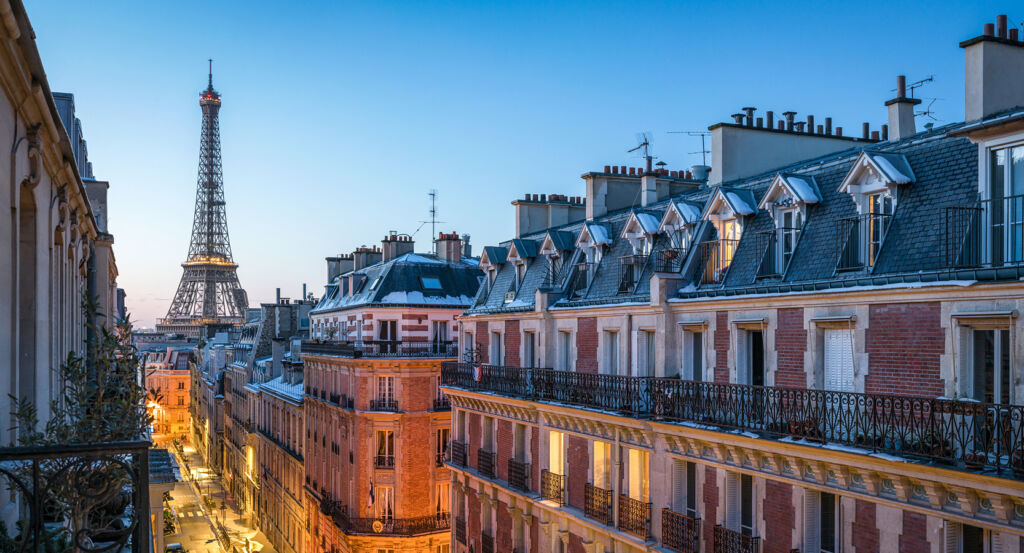
Why Rue de Charonne matters.
Rue de Charonne is a spirited Roquette corridor where artisan heritage, revolutionary history, creative culture, and contemporary Parisian life converge along one of eastern Paris' most character-filled streets.
Running through Roquette between Place de la Bastille and Porte de Montreuil, this historic corridor unfolds through independent boutiques, celebrated cafés, artisan workshops, elegant townhouses, lively restaurants, and beautifully preserved eighteenth and nineteenth century architecture that reflects centuries of continuous urban evolution. Hidden courtyards, restored craft ateliers, neighborhood markets, and thriving creative businesses create a streetscape where the spirit of old Faubourg Saint-Antoine remains unmistakably alive. Every section of the corridor reveals another layer of craftsmanship, resilience, and cultural renewal that continues defining eastern Paris. The result is a corridor defined by authentic neighborhood character, artistic vitality, and one of the capital's most enduring historic avenues.
What defines Rue de Charonne.
Rue de Charonne is best known for following the ancient road connecting Paris with the medieval village of Charonne, while becoming the principal commercial spine of the Faubourg Saint-Antoine, France's historic center of cabinetmaking and luxury furniture production. By the seventeenth and eighteenth centuries the corridor supported hundreds of master ébénistes, joiners, woodcarvers, bronze workers, upholsterers, and decorative artisans whose workshops supplied the royal court at Versailles and Europe's aristocracy with some of the finest furniture ever produced. Following the abolition of restrictive guild regulations in the faubourg, generations of celebrated craftsmen including Jean-François Oeben, Jean-Henri Riesener, and Georges Jacob established workshops throughout the surrounding district, helping define the international reputation of French decorative arts. The avenue also witnessed major episodes of French political history, from the Revolution through the Paris Commune, before becoming a center of industrial production during the nineteenth century and later a hub for artists, designers, and independent entrepreneurs who transformed former workshops into galleries, studios, and cultural venues. In modern history, the corridor is also remembered for the nearby Bataclan terrorist attack of 13 November 2015, an event that profoundly marked Paris and led Rue de Charonne and its surrounding neighborhood to become enduring symbols of resilience, solidarity, and civic remembrance.
Many of the former artisan courtyards, known as passages and cités, survive behind discreet entrances, preserving rare examples of the workshops where generations of master craftsmen perfected techniques that shaped French decorative arts for more than three centuries. Independent design studios, furniture makers, galleries, and creative businesses continue occupying these historic spaces, sustaining an unbroken tradition of craftsmanship while adapting it for contemporary Paris. The remarkable continuity between royal manufacturing, industrial innovation, artistic reinvention, and collective memory makes Rue de Charonne one of the capital's richest expressions of living urban history.
How Rue de Charonne fits.
Rue de Charonne works as an exploration through Roquette's remarkable artisan heritage and cultural landmarks.
Begin at Place de la Bastille, where the revolutionary heart of Paris establishes the historic significance of the neighborhood before following Rue de Charonne through the former workshops of the Faubourg Saint-Antoine. Continue to Cour Damoye, among the district's finest surviving artisan passages, where historic workshops preserve the craftsmanship that made this neighborhood famous throughout Europe. Conclude at Atelier des Lumières, where a beautifully restored nineteenth century iron foundry now hosts immersive digital exhibitions that celebrate the remarkable reinvention of eastern Paris' industrial heritage. The progression moves naturally from revolutionary history to traditional craftsmanship before culminating in contemporary cultural innovation, revealing why Rue de Charonne remains one of Paris' most rewarding historic corridors.
Where your story begins.
Foresyte Travel reveals places that feel extraordinary long before you arrive.
Experience premium editorial crafted for luxury travelers.
Foresyte Travel may earn a commission when you book through the link on this page.














































































































