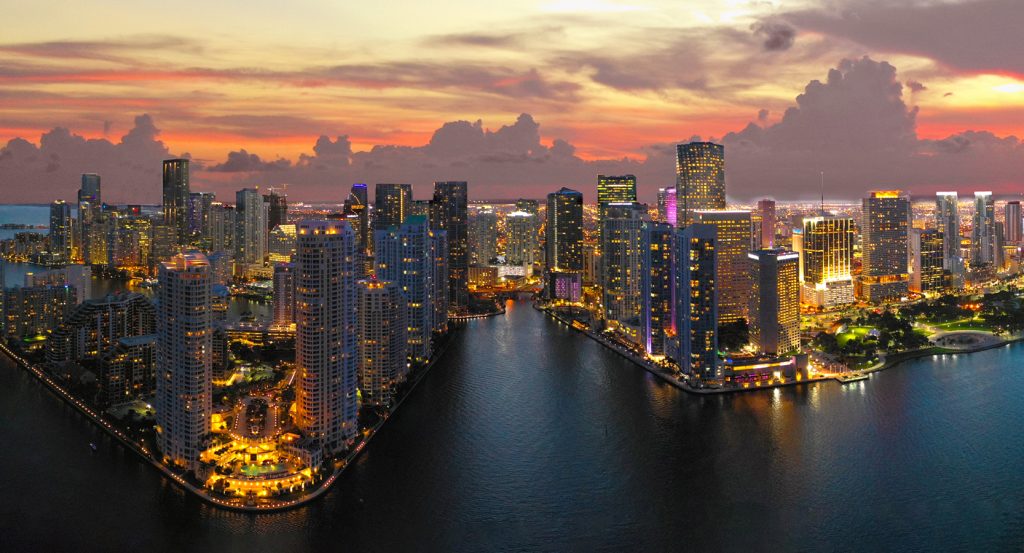
Why you should experience Buena Vista Boulevard in Miami, Florida.
Buena Vista Boulevard is an cultivated corridor where Buena Vista's architectural legacy, creative energy, tropical landscape, and neighborhood character continue defining one of Miami's most distinctive residential streets.
Running through Buena Vista between Design District and Little Haiti, the corridor links early twentieth-century residences, architect-designed commercial buildings, mature tree canopies, neighborhood institutions, and landscaped sidewalks that collectively reflect Miami's transition from a small frontier settlement into an internationally recognized center for design and culture. Mediterranean Revival homes, Mission Revival architecture, Craftsman bungalows, and thoughtfully preserved streetscapes create an environment where historic craftsmanship and contemporary creativity remain closely connected. Throughout the corridor, established public spaces, preserved buildings, and flourishing tropical vegetation reinforce a setting whose character has evolved through careful stewardship and architectural continuity. The result is an experience defined by refinement, walkability, and one of Miami's most engaging neighborhood corridors.
What you should know about Buena Vista Boulevard.
Buena Vista Boulevard is best known for extending through the Buena Vista East Historic District, listed on the National Register of Historic Places in 1988 for preserving one of Miami's finest concentrations of early twentieth-century residential architecture. Development surrounding the corridor accelerated between 1910 and the late 1920s as Miami expanded northward beyond its original downtown, producing an architectural collection that includes Mediterranean Revival, Mission Revival, Craftsman, Prairie School, Colonial Revival, and Frame Vernacular residences. Architects including H. George Fink, Walter De Garmo, August Geiger, Martin Luther Hampton, and Phineas Paist influenced the surrounding built environment through broad front porches, clay barrel tile roofs, decorative stucco, exposed rafters, coral rock detailing, and deeply shaded verandas adapted to South Florida's climate. Mature live oaks, mahogany, royal poinciana, gumbo limbo, sabal palms, and flowering tropical understory contribute to a dense urban canopy that distinguishes the boulevard throughout the year. Buena Vista Boulevard also reflects Miami's early City Beautiful influences through generous setbacks, landscaped rights-of-way, interconnected residential blocks, and a pedestrian-oriented street pattern established during the city's formative decades.
The Buena Vista East Historic District continues protecting contributing residences through preservation guidelines that retain original architectural massing, exterior materials, and decorative detailing representative of Miami's earliest suburban expansion. Nearby design studios, galleries, and creative businesses have strengthened the surrounding neighborhood while complementing its historic fabric through sensitive investment that respects the area's established scale and architectural rhythm. Dade County pine, coral limestone, decorative cast stone, original wood windows, clay roof tile, and hand-forged wrought iron incorporated throughout neighboring properties demonstrate the regional materials and craftsmanship that continue defining Buena Vista Boulevard's architectural character. Together, these preservation initiatives, creative investment, and enduring construction traditions deepen the historical narrative established by Buena Vista Boulevard, demonstrating why the corridor remains one of Miami's finest expressions of early residential planning.
How to fold Buena Vista Boulevard into your trip.
Buena Vista Boulevard works as an exploration of Miami's architectural heritage, creative culture, and tropical streetscapes.
Begin at the Institute of Contemporary Art, Miami, where internationally recognized exhibitions and striking contemporary architecture establish an engaging introduction before following Buena Vista Boulevard through the surrounding historic neighborhood. Continue to the Moore Building, whose dramatic central atrium, early twentieth-century craftsmanship, and celebrated design heritage broaden the appreciation for the district's enduring creative identity. Conclude at Palm Court, where thoughtfully designed public spaces, sculpture, lush landscaping, and refined architecture provide the culminating reward by revealing how contemporary design complements the surrounding historic neighborhood. The progression moves naturally from contemporary art through architectural craftsmanship before concluding within an elegantly designed public setting, revealing how Buena Vista Boulevard connects Miami's historic residential legacy with its internationally respected design culture.
Where your story begins.
Foresyte Travel reveals places that feel extraordinary long before you arrive.
Experience premium editorial crafted for luxury travelers.