Why Colline du Château matters.
Colline du Château is a historic hilltop park where Vieux Nice's medieval origins meet the military ambitions of the House of Savoy, the archaeological foundations of the city and the panoramic Mediterranean landscape that defines the French Riviera.
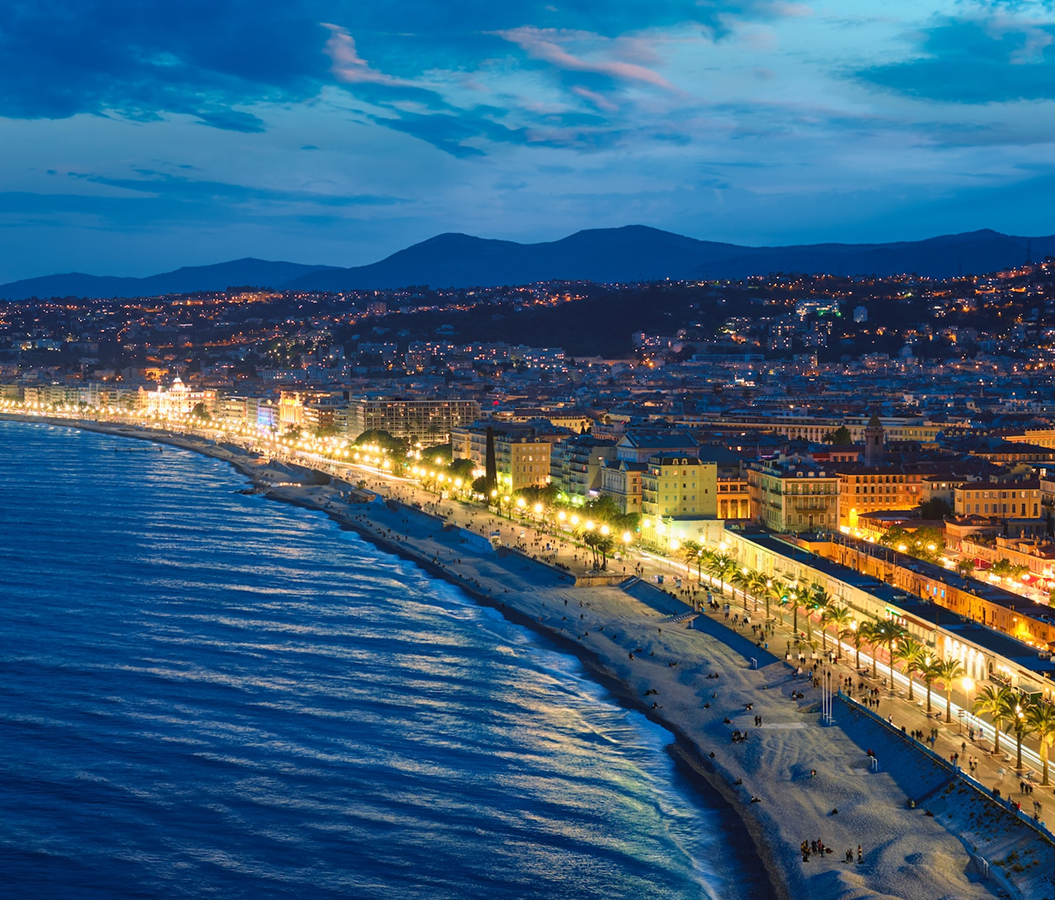
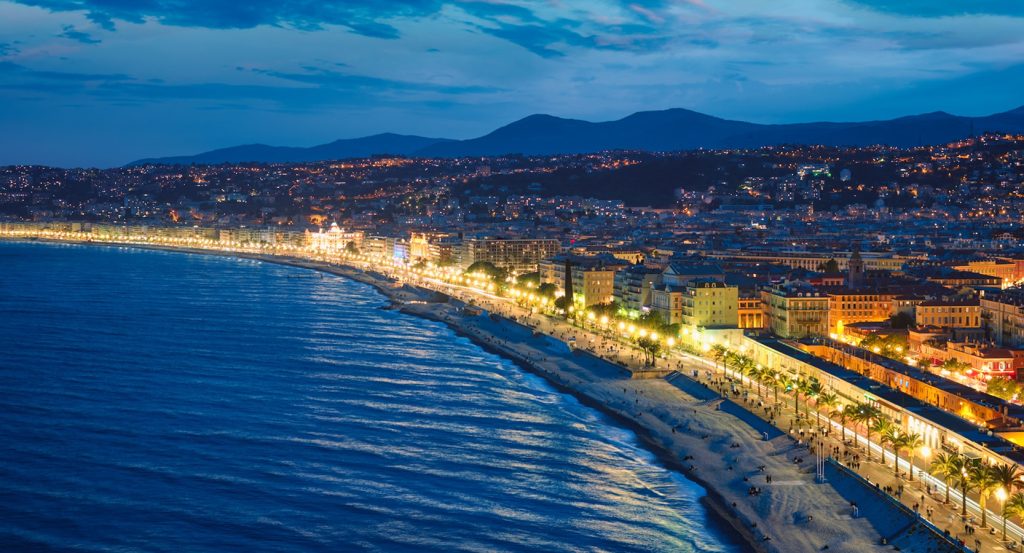
Rising between the eastern edge of Vieux Nice and Port Lympia, the limestone promontory overlooks the Baie des Anges from a commanding position above Quai des États-Unis, Quai Rauba-Capeu and the waterfront approaches to Nice's historic center. Its wooded summit reaches ninety-three meters above sea level, with terraced gardens, stone stairways and winding pedestrian paths occupying the former fortified plateau. West-facing overlooks reveal the crescent of Promenade des Anglais and the tightly arranged terracotta rooftops of the old town, with the Mediterranean extending toward the distant coastline. The eastern slopes open toward Port Lympia and Mont Boron, and the landscaped interior incorporates an expansive artificial waterfall, archaeological remains, mature Mediterranean vegetation and historic funerary grounds. The result is an elevated historical landscape whose surviving ruins, nineteenth-century gardens and contrasting coastal panoramas reveal the geographical foundations of Nice.
What defines Colline du Château.
Colline du Château is best known for occupying the original fortified nucleus of Nice, where successive civilizations established settlements, religious institutions and military defenses overlooking the Mediterranean. Human occupation of the hill reaches into the Neolithic period, with archaeological evidence establishing activity around the third millennium BCE and a much longer relationship between the promontory and the surrounding coastal territory. The ancient Greek settlement of Nikaia developed in the vicinity during the fourth century BCE, connecting the site to the commercial expansion of Greek communities along the western Mediterranean. The elevated terrain offered natural defensive advantages, and its position above the coastal approaches encouraged the development of a fortified settlement during the medieval period. By the eleventh century, the hill contained a substantial castle, residential structures and the Cathédrale Sainte-Marie, establishing a concentrated political and religious center above the emerging lower town. The cathedral's earliest construction belonged to Late Antiquity, with an initial religious building dating to the fifth or sixth century and successive medieval reconstructions transforming its architectural organization. Its mature plan incorporated a central nave, two side aisles and an eastern termination, reflecting the development of the hilltop ecclesiastical complex through several major building campaigns. The surrounding cemetery became an important funerary site, with burial phases extending from the ninth century into the eighteenth century and revealing changing relationships between religious buildings and urban society. During the thirteenth century, the expansion of the lower town gradually shifted residential and commercial activity toward the coastal plain, changing the strategic importance of the elevated settlement. Nice's submission to the House of Savoy in 1388 established a new political relationship with a dynasty whose territorial ambitions increasingly shaped the city's defensive architecture. The hilltop castle underwent substantial modifications during the fifteenth century as Savoyard authorities strengthened the fortifications and adapted the complex to changing military requirements. The Franco-Ottoman siege of 1543 became one of the defining confrontations in the city's history, bringing French and Ottoman forces against the defenses of Nice during the wider Italian Wars. Catherine Ségurane entered local historical tradition through her association with resistance during the siege, becoming a celebrated figure in the civic memory of Nice. Duke Emmanuel Philibert of Savoy subsequently expanded the defensive system, and the construction of a major citadel beginning in 1570 transformed the hill into an increasingly specialized military installation. The fortress developed substantial bastions, defensive walls and artillery positions suited to the evolving requirements of early modern warfare. French forces captured Nice during the military campaigns of 1691, demonstrating the strategic vulnerability of the Savoyard stronghold during the conflicts of Louis XIV. Another French offensive culminated in the capture of the fortress in 1705, followed by the systematic demolition of its fortifications in 1706 on the orders of Louis XIV. The destruction eliminated the military complex that had dominated Nice for centuries and permanently altered the relationship between the historic city and its commanding promontory. The former citadel subsequently became an extensive ruin, and a cemetery established in 1783 introduced a new civic function to the abandoned military terrain. King Charles-Félix of Sardinia supported the transformation of the hill into a public landscape during the early nineteenth century, connecting the former fortress to the emerging recreational culture of Nice. Naturalist Antoine Risso contributed to the reforestation program, introducing botanical interests and exotic plant species into the development of a landscaped public park. The Royal Chamber of Commerce and Agriculture participated in the improvement of the grounds, and successive landscaping campaigns gradually transformed the exposed ruins into wooded promenades and ornamental gardens. The reconstruction of the former Saint-Elme tower as Tour Bellanda in 1844 introduced a romantic architectural feature overlooking the western waterfront. In 1885, an expansive artificial cascade was constructed over the remains of the former keep, connecting the scenic garden design to the hydraulic infrastructure supplying the expanding city. Archaeological investigations initiated during the nineteenth century subsequently uncovered substantial elements of the former cathedral, cloister, cemetery and surrounding medieval buildings. Excavations conducted between 2006 and 2015 expanded understanding of the hilltop settlement, and later investigations concentrated on the medieval burial grounds and their changing funerary practices. A major archaeological campaign in 2021 continued the reconstruction of the site's historical development through its religious, residential and defensive phases. Colline du Château preserves the physical foundations of Nice through ancient settlement, medieval urban formation, Savoyard military engineering, Bourbon destruction and the nineteenth-century transformation of a fortress into a public landscape.
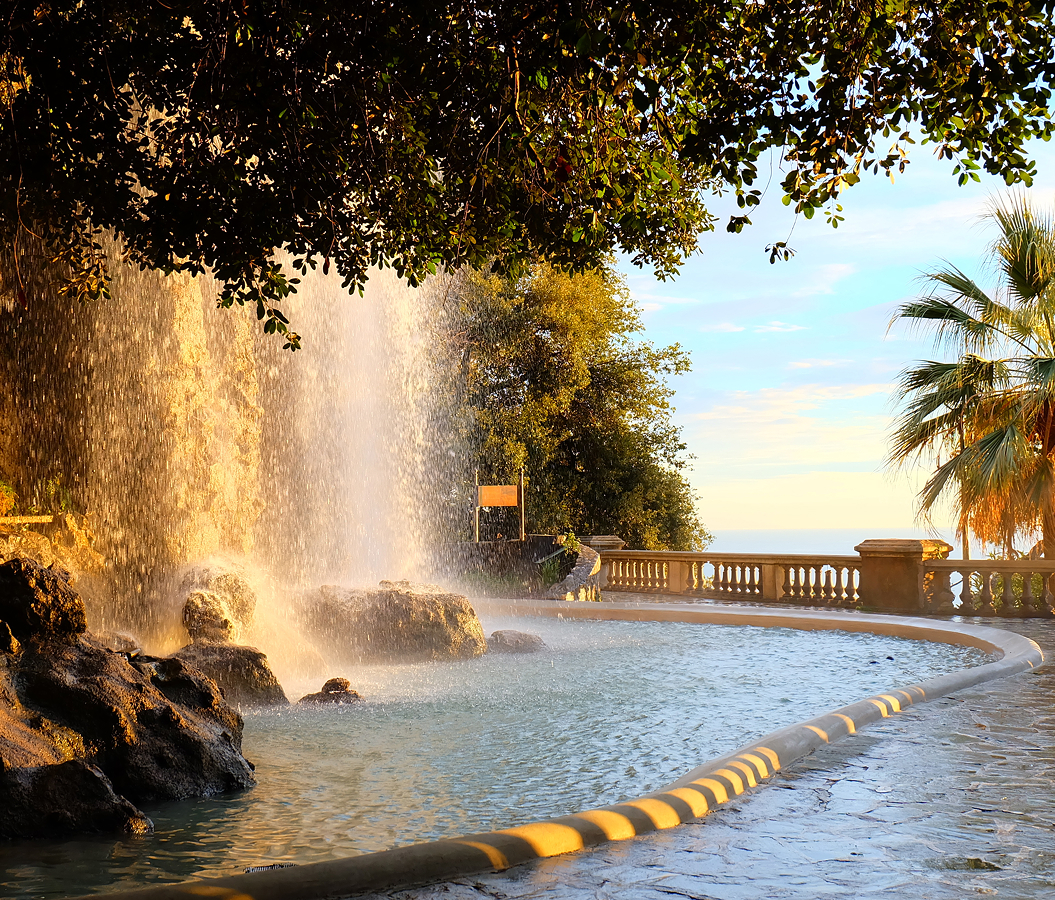
Antoine Risso's botanical vision established the foundation of the hill's distinctive landscape experience, transforming the former military terrain into a succession of wooded paths, garden terraces and elevated observation points. The limestone promontory creates two contrasting visual environments, with the western slopes oriented toward the historic city and the eastern side overlooking the harbor. From the principal western belvederes, the rooftops of Vieux Nice form a dense architectural foreground beneath the sweeping Mediterranean coastline. The narrow urban blocks reveal the compact organization of the historic settlement, and the adjoining waterfront establishes a clear geographical relationship between the old town and the Baie des Anges. The eastern viewpoints introduce an entirely different composition through the enclosed waters of Port Lympia, its harbor infrastructure and the residential slopes rising toward Mont Boron. The elevated paths connect these perspectives through a network of landscaped terraces, allowing the visitor experience to develop through successive changes in altitude, vegetation and coastal orientation. Mature pines, cypresses and other Mediterranean plantings establish shaded passages between the exposed overlooks, creating a landscape whose botanical character reflects the nineteenth-century garden tradition. The park's internal circulation incorporates stone stairways, sloping pathways and retaining walls adapted to the irregular topography of the former defensive complex. These routes reveal the physical challenges of converting a fortified limestone summit into an accessible recreational environment. The Cascade du Château provides the landscape's most theatrical architectural feature, with water descending across an expansive arrangement of artificial rockwork and masonry. Its construction transformed the former military summit into a scenic garden composition, and the falling water introduced movement, sound and a distinctive visual contrast against the surrounding stone. The cascade's historical hydraulic function connected the ornamental feature to the development of modern municipal water infrastructure. Nearby archaeological remains introduce another layer of experience through exposed foundations, fragmented masonry and the surviving organization of the former ecclesiastical precinct. The excavated cathedral complex reveals the scale of religious construction on the hill, and the adjacent burial grounds establish the relationship between sacred architecture and the medieval community. The historic cemeteries occupy a separate part of the promontory, where funerary monuments and memorial sculpture contribute to the site's architectural diversity. Tour Bellanda introduces a complementary romantic element through its cylindrical form and elevated relationship with the western coastline. Its position above the seafront establishes a visual connection between the nineteenth-century transformation of Nice and the older defensive geography of the promontory. The public gardens also incorporate open lawns, seating areas and recreational spaces that support the hill's continuing role in the daily life of the city. These features establish a distinctive combination of archaeological interpretation, botanical landscape and panoramic observation within a single urban park. The park's significance derives from the continuous physical relationship between the foundations of medieval Nice, the transformation of its military terrain and the Mediterranean geography that shaped the city's development.
How Colline du Château fits.
Colline du Château provides the starting point for an exploration connecting Nice's historic waterfront, its Baroque religious heritage and the expansive civic architecture that emerged during the city's transformation into an international Mediterranean destination.
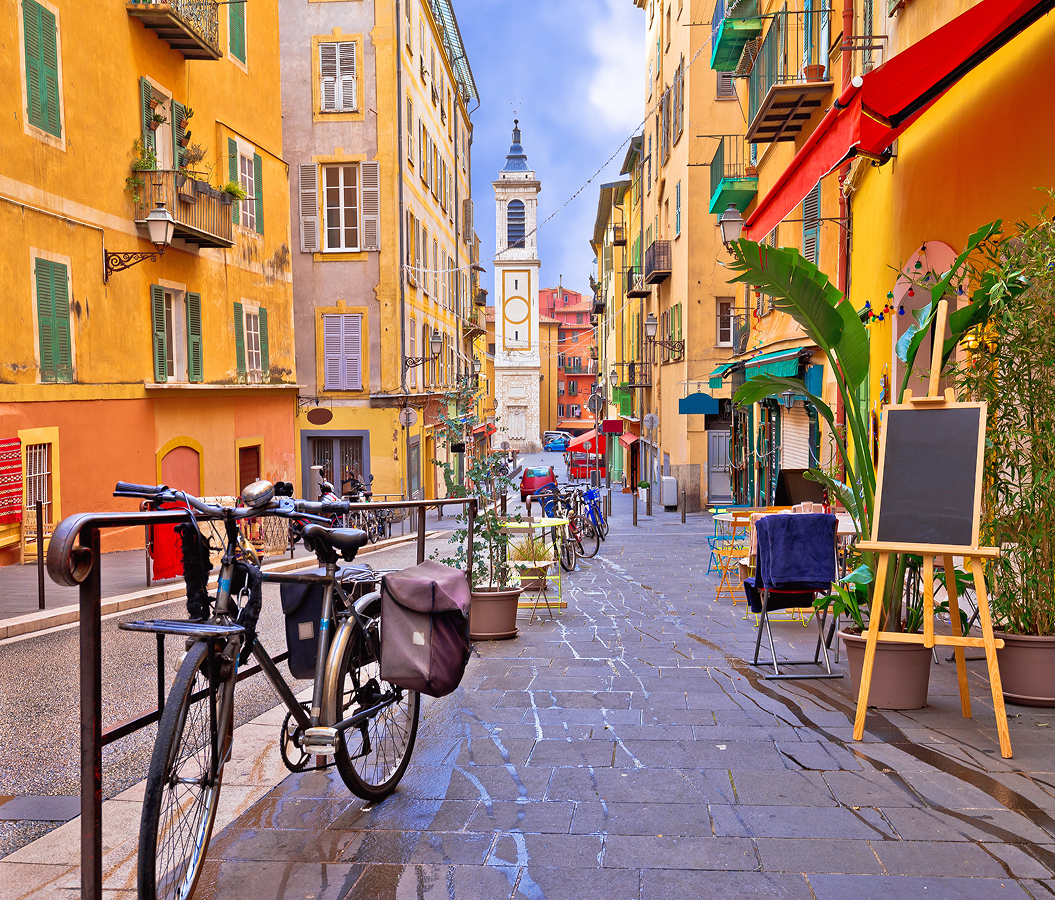
Begin at Quai Rauba-Capeu, the coastal promenade curving around the southeastern base of the hill between the Baie des Anges and the approaches to Port Lympia. Its elevated waterfront position reveals the limestone cliffs supporting the former fortified settlement and the exposed Mediterranean coastline extending toward Cap de Nice. The Monument aux Morts, inaugurated in 1928, occupies an expansive recess carved into the rock face and commemorates the inhabitants of Nice who died during the First World War. Architect Roger Séassal designed the memorial, creating a substantial architectural composition integrated directly into the coastal escarpment. Its sculptural program incorporates allegorical figures and commemorative inscriptions, establishing a solemn relationship between the city's military history and its Mediterranean setting. The surrounding promenade also provides one of the defining views of Nice's waterfront, connecting the historic harbor approaches with the sweeping coastline of the Baie des Anges. Continue to Cathédrale Sainte-Réparate, the principal cathedral of Nice, positioned within the historic street network of Vieux Nice near Place Rossetti. The cathedral is dedicated to Saint Reparata, an early Christian martyr whose cult became associated with the religious traditions of the city. Construction of the present Baroque building began during the seventeenth century, and architect Jean-André Guibert contributed to the development of its expansive architectural composition. The cathedral was consecrated in 1699, establishing a major religious institution within the expanding lower town. Its Latin-cross plan, richly decorated chapels and substantial dome reflect the influence of Italian Baroque ecclesiastical architecture on the cultural development of Nice. The polychrome interior incorporates elaborate marble decoration, religious paintings and ornamental architectural details that preserve the artistic ambitions of the city's Catholic institutions. The building's relationship with Place Rossetti establishes one of the most distinctive urban settings in Vieux Nice, connecting religious ceremony with the compact residential and commercial character of the historic center. Conclude at Place Masséna, the expansive civic square developed during the nineteenth century as Nice expanded beyond its medieval street network. The square acquired its name in honor of André Masséna, the Napoleonic marshal born in Nice whose military career established one of the city's most prominent historical associations. Its architectural composition incorporates arcaded façades, red-painted buildings and formal urban spaces influenced by the planning traditions of the Kingdom of Sardinia. The Fontaine du Soleil introduces an expansive sculptural centerpiece featuring Apollo and allegorical figures representing planetary deities, establishing a classical artistic program within the public square. Artist Jaume Plensa's installation Conversation à Nice, inaugurated in 2007, added seven illuminated human figures elevated above the square on slender columns. The sculptures represent the continents and connect the historic urban setting to contemporary public art and international cultural exchange. Place Masséna provides a culminating expression of the city's nineteenth-century expansion and its subsequent development as a major cultural center of the French Riviera. The progression moves from Quai Rauba-Capeu's coastal memorial through Cathédrale Sainte-Réparate's Baroque religious architecture and culminates in Place Masséna's expansive civic landscape, connecting the military memory, ecclesiastical traditions and urban transformation that shaped Nice.
Where your story begins.
Foresyte Travel reveals places that feel extraordinary long before you arrive.
Enjoy editorial crafted for luxury travelers.
Foresyte may earn a commission when you book.