
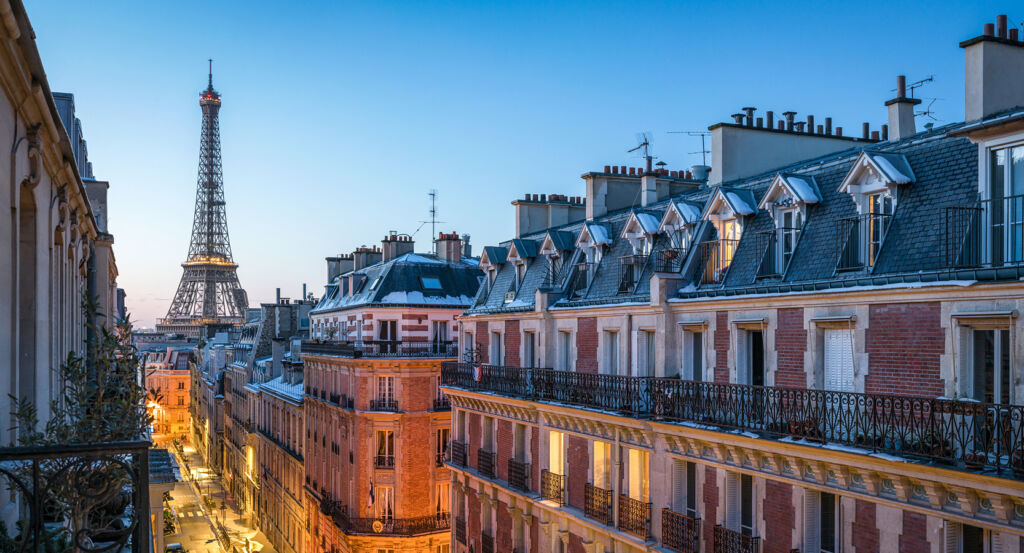
Why you should experience Da Vinci Hotel & Spa in Paris, France.
Da Vinci Hotel & Spa is an enigmatic four-star hotel where Saint-Germain-des-Prés's artistic inheritance, Renaissance fascination, Left Bank intellectualism and enduring mythology of the Mona Lisa converge inside a house with an astonishing connection to the painting itself.
Set along Rue des Saints-Pères near Rue Jacob and just steps from École nationale supérieure des Beaux-Arts, the 24-room hotel occupies the building where Vincenzo Peruggia, who stole the Mona Lisa from the Louvre on August 21, 1911, hid with the painting for several days before returning with it to his Paris lodgings. The hotel rebuilt its character around that episode and Leonardo da Vinci's wider creative universe, assigning rooms to Renaissance figures and themes while reproducing drawings, inventions and works including the lost Battle of Anghiari throughout the interiors. A glass-paneled elevator turns Leonardo's studies into part of the vertical journey through the building, while the subterranean spa translates the Mona Lisa's palette into mosaics beneath a star-studded vaulted ceiling. The result is a hotel where an audacious episode in art history becomes the foundation for an unusually coherent exploration of Leonardo, Renaissance imagery and the cultural imagination surrounding the world's most famous painting.
What you should know about Da Vinci Hotel & Spa.
Da Vinci Hotel & Spa is best known for occupying the building where Vincenzo Peruggia took refuge with the Mona Lisa after stealing Leonardo da Vinci's painting from the Louvre on August 21, 1911, an episode the property placed at the center of its character when it reopened after a complete renovation timed to the centenary of the theft's resolution. The hotel contains only 24 rooms, each conceived around Leonardo's artistic and intellectual world, with room names and decorative narratives invoking figures including Botticelli, Raphael, Michelangelo and Catherine de' Medici alongside Renaissance, invention and painting themes. Standard rooms reproduce The Battle of Anghiari, Leonardo's celebrated lost mural, behind the bed and pair its imagery with ochre blown-glass lighting made specifically in Venice, while the top-floor Adorateur room identifies the space associated with Peruggia's extraordinary 1911 refuge. The glass-paneled elevator incorporates reproductions of Leonardo's studies, extending the curatorial program beyond the guestrooms, while nearly half of the accommodations include balconies overlooking either the patio or Rue des Saints-Pères. The property operates less as a hotel decorated with Leonardo references than as a 24-room narrative connecting his paintings, engineering studies, Renaissance contemporaries and the twentieth-century crime that radically expanded the Mona Lisa's international fame.
The subterranean spa develops another chapter of that narrative through a mosaic-lined pool whose colors derive from the Mona Lisa, positioned beneath a starry vaulted ceiling and engineered with hydromassage jets and a counter-current swimming system. The Mona Lisa room approaches the same subject differently, placing an unfinished work within a ground-floor accommodation opening onto a private patio terrace and using Leonardo's famously prolonged development of La Gioconda as the conceptual thread. Café Da Vinci extends the Italian style into the social spaces, opening between Rue des Saints-Pères and the internal patio and continuing the property's Renaissance framing beyond the private rooms. Vincenzo Peruggia ultimately provides the narrative hinge connecting all of these elements: a genuine episode involving the stolen Mona Lisa gave the hotel a historical relationship with Leonardo's work, while the subsequent room concepts, Venetian glass, reproduced studies and mosaic spa transformed that remarkable accident of provenance into the organizing idea of the property.
How to fold Da Vinci Hotel & Spa into your trip.
Da Vinci Hotel & Spa works as the anchor for an afternoon tracing how Saint-Germain-des-Prés turned artistic training, private collecting and revolutionary experimentation into institutions that repeatedly altered the course of French art.
Begin at École nationale supérieure des Beaux-Arts, whose lineage reaches the seventeenth-century royal academies before the school took shape on the former Petits-Augustins convent site, where Alexandre Lenoir assembled the Musée des Monuments français and architect Félix Duban later created the Palais des Études for generations of artists and architects. Continue to Musée Eugène-Delacroix, occupying the apartment and garden studio where Delacroix moved in 1857 to work near Saint-Sulpice while completing its Chapelle des Saints-Anges, remaining there until his death in 1863 before artists organized to preserve the threatened residence during the twentieth century. Conclude at Monnaie de Paris, founded by Charles the Bald's Edict of Pîtres in 864 and housed since the eighteenth century in Jacques-Denis Antoine's grand Hôtel de la Monnaie, where more than eleven centuries of French minting history connect metalworking, state power, engraving and decorative craftsmanship. The progression moves from institutional artistic education through Delacroix's intensely personal working environment into more than a millennium of French craftsmanship, revealing the concentration of artistic production and material culture surrounding Da Vinci Hotel & Spa.
Where your story begins.
Foresyte Travel reveals places that feel extraordinary long before you arrive.
Experience premium editorial crafted for luxury travelers.














































































































