Why Walt Disney World Resort matters.
Walt Disney World Resort is an expansive entertainment destination where Bay Lake's planned resort landscape meets the creative legacy of Walt Disney, the development of modern theme park engineering and the transformation of Central Florida into an international center for family recreation.
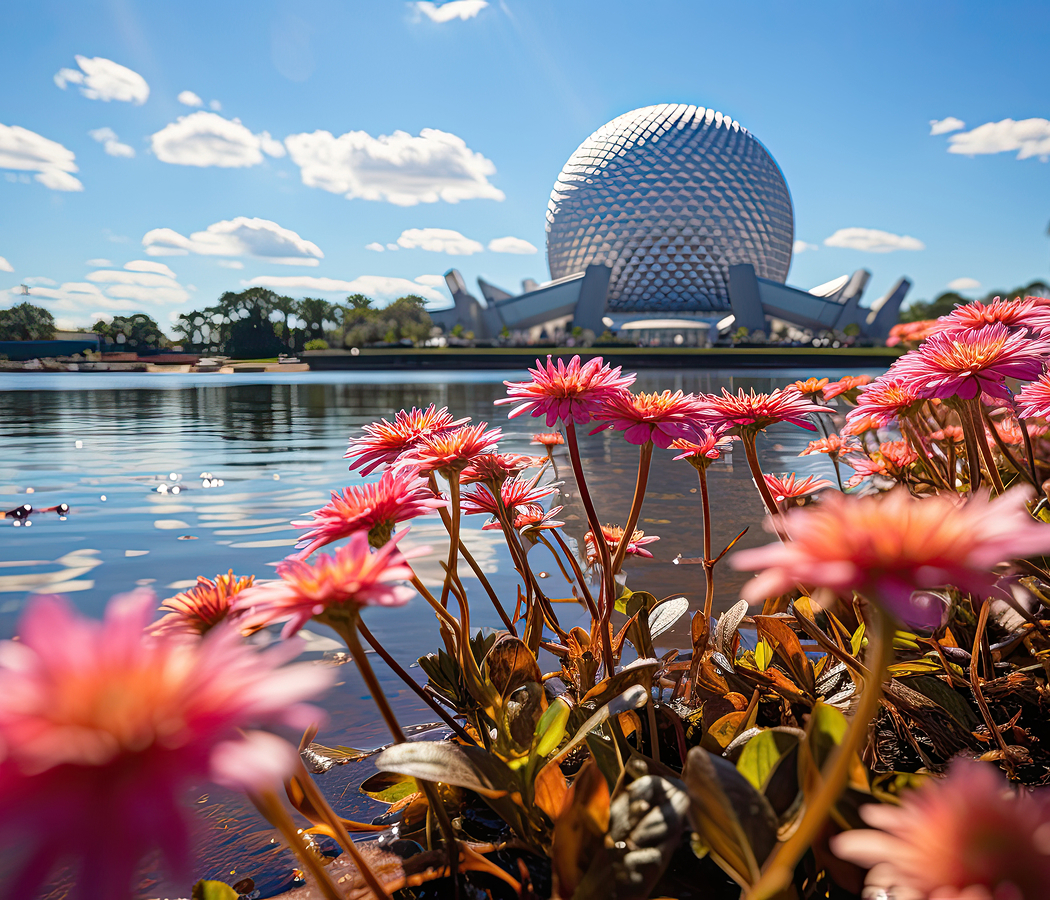
Set across the Reedy Creek watershed near World Drive and just steps from Disney's Contemporary Resort, the destination extends through a vast landscape of lakes, wetlands, wooded conservation areas and carefully organized entertainment districts southwest of Orlando. Fairytale castles, futuristic architectural structures, themed mountain formations and elaborately landscaped waterways establish distinct environments connected by extensive transportation infrastructure. Four theme parks combine theatrical storytelling, sophisticated ride systems, live entertainment and detailed architectural settings inspired by historical places, fictional worlds and scientific exploration. Resort hotels, championship golf courses, water parks and commercial districts occupy surrounding properties, creating an interconnected destination supported by monorails, boats, buses and aerial gondolas. The result is a resort defined by its exceptional geographical scale, influential themed entertainment design and enduring role in the economic and cultural development of Central Florida.
What defines Walt Disney World Resort.
Walt Disney World Resort is best known for Magic Kingdom, EPCOT, Disney's Hollywood Studios and Disney's Animal Kingdom, four major theme parks whose development established one of the world's most influential themed entertainment destinations. The resort originated with Walt Disney's ambition to develop a substantially larger entertainment and urban planning project following the success of Disneyland in California. During the early 1960s, Disney began investigating potential locations for a new development that would provide extensive land for entertainment facilities, transportation infrastructure and experimental community planning. Central Florida emerged as the preferred location because of its transportation connections, favorable climate and substantial undeveloped land. Disney interests began acquiring property through separate companies to preserve confidentiality during the early stages of the project. The development was publicly announced in November 1965, establishing plans for a major resort and an experimental community concept known as EPCOT, the Experimental Prototype Community of Tomorrow. Walt Disney died in December 1966, leaving his brother Roy O. Disney to oversee the completion of the initial resort development. Construction required extensive land preparation, drainage engineering, transportation planning and the creation of an integrated utility infrastructure across the property. The development incorporated a substantial network of roads, canals and water-management facilities designed to accommodate the region's wetlands and seasonal rainfall. Magic Kingdom opened on October 1, 1971, introducing a Florida interpretation of the Disneyland theme park model organized around Cinderella Castle and a collection of themed lands. The resort's initial hotel infrastructure included Disney's Contemporary Resort and Disney's Polynesian Village Resort, both connected to the park through an innovative monorail transportation system. Roy O. Disney dedicated the development shortly before his death in December 1971, establishing the Walt Disney World name in honor of his brother's original vision. EPCOT Center opened on October 1, 1982, introducing a second theme park devoted to technological innovation, international culture and the future of human society. Its development incorporated substantial corporate sponsorship and large-scale architectural pavilions designed to explore communication, transportation, energy and world cultures. Disney-MGM Studios opened on May 1, 1989, introducing a third park centered on film production, television and entertainment history. The park subsequently became Disney's Hollywood Studios, evolving toward attractions based on major film franchises and elaborate fictional environments. Disney's Animal Kingdom opened on April 22, 1998, combining zoological exhibits, conservation programming and themed entertainment within an extensive landscaped environment. The resort's subsequent development introduced additional hotels, transportation systems, water parks and entertainment districts, expanding its capacity to accommodate international visitors across multiple days. Its historical significance rests on the transformation of a substantial Central Florida property into an integrated entertainment destination and its influence on the planning, engineering and operation of modern theme park resorts.
Where your story begins.
Foresyte Travel reveals places that feel extraordinary long before you arrive.
Enjoy editorial crafted for luxury travelers.