Why Dotonbori matters.
Dotonbori is a historic entertainment district where Minami's theatrical heritage meets seventeenth-century canal engineering, centuries of Japanese performing arts and an illuminated streetscape that has become one of Osaka's most recognizable cultural attractions.
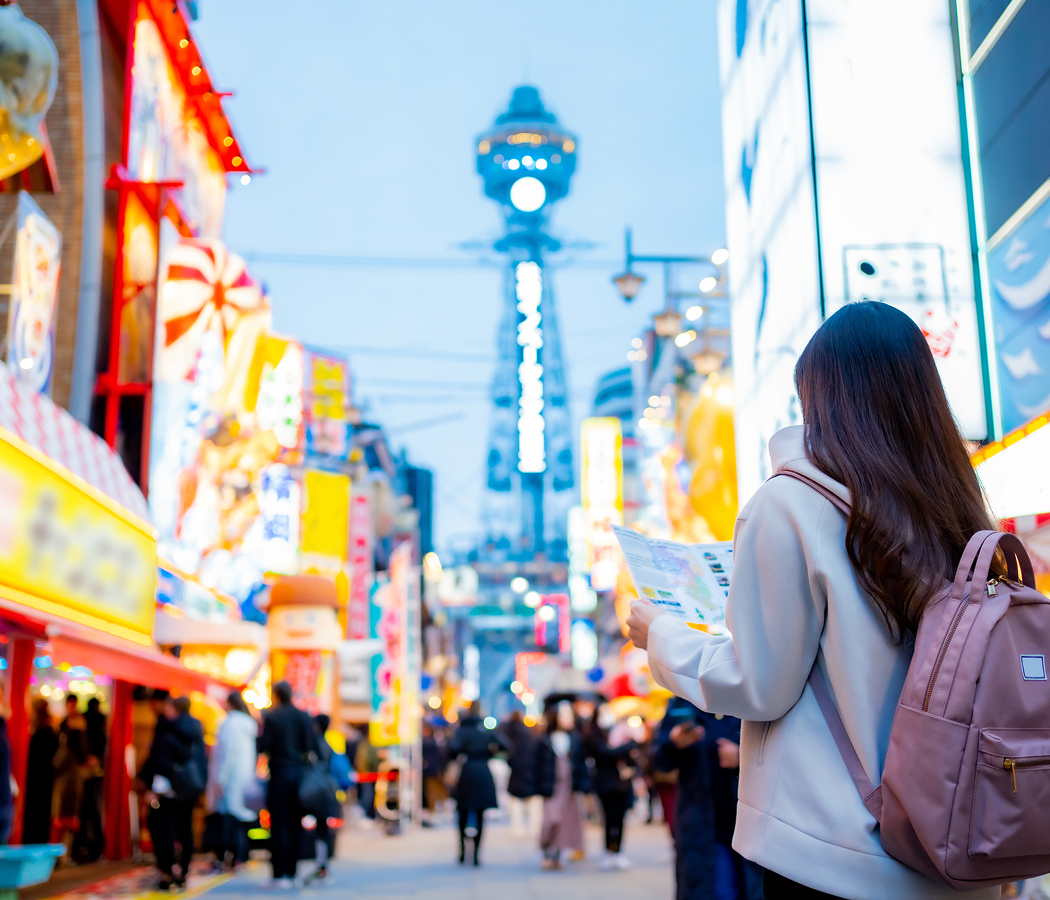
Stretching eastward from Dotonboribashi toward Nipponbashi, Dotonbori occupies the canal corridor between Shinsaibashi, Namba and Sennichimae, with Midosuji, Ebisubashi and the commercial streets surrounding Soemoncho connecting its waterfront to the dense entertainment districts of southern Osaka. Multistory façades carry enormous illuminated advertisements, mechanical sculptures and projecting restaurant signs above a narrow canal lined with pedestrian promenades and closely spaced bridges. Crossing Ebisubashi reveals the celebrated Glico running figure, whose illuminated backdrop rises above the water amid dense concentrations of commercial signage. Below street level, Tonbori River Walk follows the canal beneath pedestrian bridges, bringing the reflections of illuminated buildings and passing sightseeing boats into a continuous waterfront setting. The result is an entertainment corridor whose theatrical commercial architecture and intimate canal geography preserve the performance that has distinguished Osaka's southern entertainment district for four centuries.
What defines Dotonbori.
Dotonbori is best known for evolving from a privately financed seventeenth-century canal into Japan's celebrated center of theatrical entertainment, later developing the extravagant illuminated advertising and restaurant culture that distinguish modern Osaka. The district originated with merchant Yasui Doton, who began excavating a canal in 1612 to connect existing waterways and expand commercial transportation through the southern reaches of the city. Doton died during the Summer Siege of Osaka in 1615, leaving his cousin Yasui Doboku to complete the undertaking under the direction of regional ruler Matsudaira Tadaaki. The finished waterway received its name in honor of Doton, commemorating a privately financed undertaking that helped reshape the commercial geography of southern Osaka. A major transformation followed in 1626 when local administrator Yasui Kyubei secured permission to relocate theatrical establishments to the canal's southern bank. Kabuki playhouses, puppet theaters and teahouses rapidly developed along the waterfront, creating an entertainment economy supported by merchants, performers and audiences arriving by boat. Five principal theaters emerged as the district's cultural anchors, with Naka-za and Kaku-za distinguished for kabuki and Takeda-za celebrated for elaborate mechanical automata. Takemoto Gidayu established Takemoto-za in 1684, developing a form of puppet theater that combined dramatic recitation, shamisen accompaniment and increasingly sophisticated puppet manipulation. Playwright Chikamatsu Monzaemon subsequently developed an influential partnership with the company, introducing The Love Suicides at Sonezaki in 1703 and bringing the conflicts of Osaka's merchant society into Japanese dramatic literature. Competition from Toyotake-za stimulated further artistic innovation, helping establish the traditions that evolved into bunraku. Theaters supported a parallel commercial world of dining establishments, drinking houses and merchants whose livelihoods depended on the district's extensive performance audiences. This relationship between entertainment and gastronomy became an enduring feature of Dotonbori, eventually producing the celebrated kuidaore tradition associated with Osaka's enthusiasm for food. The arrival of modern advertising transformed the waterfront during the twentieth century, extending the visual extravagance of its theatrical past into illuminated commercial architecture. Confectionery entrepreneur Riichi Ezaki commissioned the first Glico running-man advertisement beside Ebisubashi in 1935, creating a thirty-three-meter illuminated tower with multicolored lettering and animated lighting. Wartime metal requisitioning forced its removal in 1943, and a replacement installed in 1955 introduced a small performance stage beneath the illuminated advertising structure. Subsequent generations experimented with moving water, elaborate neon arrangements and increasingly sophisticated lighting technology, culminating in the sixth-generation installation unveiled in October 2014. Measuring twenty meters high and incorporating 140,000 LED lights, the display transformed the original static advertisement into an animated digital composition. Restaurant advertising developed its own striking architecture, particularly after Kani Doraku introduced an enormous mechanical crab during the 1960s, establishing a commercial landmark whose moving claws became synonymous with Dotonbori's visual character. Another distinctive figure emerged through Kuidaore Taro, the mechanical drummer associated with the Osaka Meibutsu Kuidaore restaurant founded in 1949. The character survived the restaurant's closure in 2008 and became an independent attraction, preserving another chapter of the district's theatrical advertising tradition. Revitalization of the canal continued through the opening of Tonbori River Walk in 2004, restoring pedestrian access to a waterfront historically dominated by commerce and entertainment. Ezaki Glico announced another major transformation in October 2026, scheduling the removal of the sixth-generation running-man installation at the end of November before unveiling a seventh-generation design in spring 2027. Dotonbori's enduring significance rests on this exceptional continuity between private canal construction, Japanese theatrical innovation, food culture and commercial performance, preserving four centuries of entertainment history within one of the country's most distinctive urban districts.
Where your story begins.
Foresyte Travel reveals places that feel extraordinary long before you arrive.
Enjoy editorial crafted for luxury travelers.