
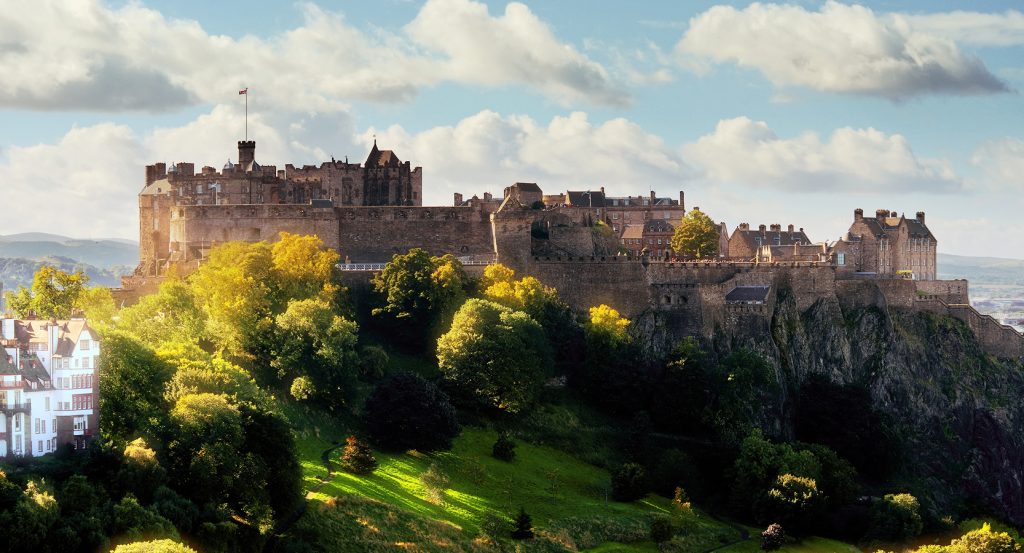
Why Honours of Scotland matters.
Honours of Scotland, or Crown Jewels of Scotland, is an emblem of a nation's identity, resilience, and faith in its sovereignty.
Displayed within the fortified walls of Edinburgh Castle, these jewels shimmer beneath low light, their brilliance magnified by the centuries of struggle they've survived. The crown, orb, and sceptre represent more than monarchy, they tell a story of endurance through rebellion, union, and rediscovery. When you first see the crown, its gold glows with a warmth that feels alive, the result of craftsmanship dating back to 1540 when James V had it refashioned for his coronation. Each jewel and pearl glints with both beauty and burden, reminders of the kings and queens who once wore them, from Mary, Queen of Scots to Charles II. Standing before them, you feel the presence of Scotland's past, not distant or abstract, but vividly alive, pulsing with pride.
What defines Honours of Scotland.
The story of Honours of Scotland reads like a national epic, hidden, lost, and rediscovered through centuries of turmoil.
Forged from Scottish gold and adorned with gems imported from Europe, these are the oldest surviving regalia in the British Isles, predating England's crown jewels by more than a century. After the 1707 Act of Union, they were sealed away within Edinburgh Castle and all but forgotten for over a hundred years, until 1818, when Sir Walter Scott led the expedition that rediscovered them behind a bricked-up doorway. During World War II, they were once again concealed for safekeeping, secretly buried beneath the castle to protect them from air raids. Each piece carries its own mythology: the sceptre gifted by Pope Alexander VI to James IV in 1494, the orb symbolizing divine authority, and the crown, lined with crimson velvet and set with twenty-two pearls, which has graced the heads of Scottish monarchs since the Renaissance. To see them today is to witness not just opulence, but survival, a lineage of character preserved through every storm of history.
How Honours of Scotland fits.
When you visit Edinburgh Castle, make Honours of Scotland your unmissable focal point, it's a space that demands quiet reverence.
Arrive early, before the midday rush, and move slowly through the exhibit. As you enter the dimly lit chamber, your eyes will need a moment to adjust; let them. The jewels emerge from the shadows like relics of light itself, guarded behind glass but alive with presence. Take time to notice the detail, the delicate filigree, the orb's cross gleaming softly, the crown's alternating fleur-de-lis and thistle designs that unite faith and nation. Nearby lies the Stone of Destiny, the ancient coronation stone of Scottish kings, returned from Westminster Abbey in 1996, completing the tableau of sovereignty reclaimed. Afterward, step out onto the ramparts and look over the city below. The wind that once carried battle cries now hums peacefully through the castle walls, and in that moment, you'll feel the continuity of a people whose pride outlasted empires. Honours of Scotland are not just historical artifacts, they are Scotland's heartbeat, still glittering rebelliously atop its storied rock.
Where your story begins.
Foresyte Travel reveals places that feel extraordinary long before you arrive.
Enjoy editorial crafted for luxury travelers.
Foresyte may earn a commission when you book.














































































































