
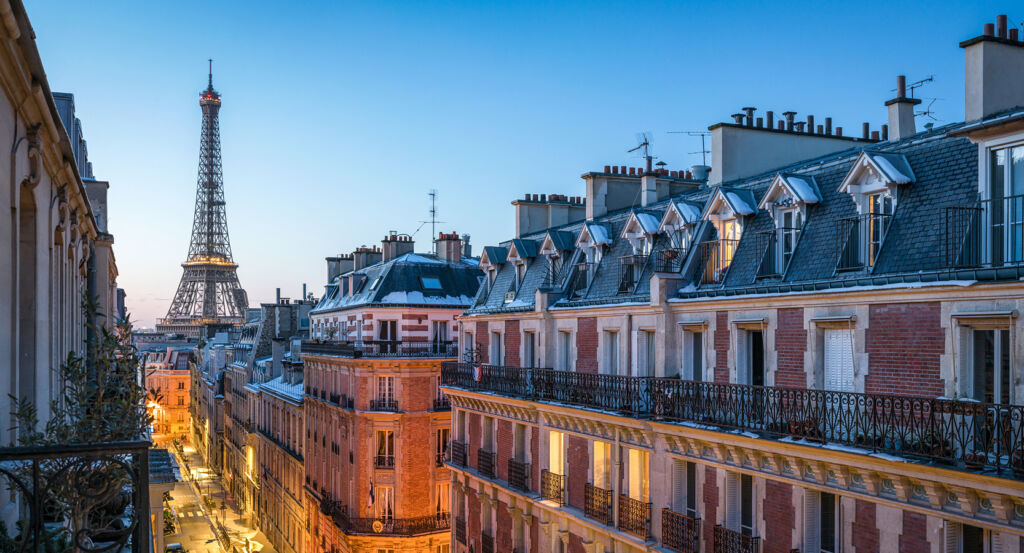
Why you should experience Église de la Sainte-Trinité in Paris, France.
Église de la Sainte-Trinité is an opulent Second Empire church where Saint-Georges' artistic heritage, grand architecture, sacred music, and imperial ambition define one of nineteenth century Paris' most celebrated religious landmarks.
Set along Place d'Estienne d'Orves near Rue de Châteaudun and just steps from Palais Garnier, this commanding church welcomes visitors through soaring vaulted interiors, grand arcades, richly sculpted chapels, luminous stained-glass windows, and lavish decorative programs that exemplify the artistic confidence of Napoleon III's Paris. Elaborate stonework, harmonious proportions, and an imposing bell tower rising above the surrounding district create an atmosphere that reflects one of the capital's grandest ecclesiastical achievements. The result is a destination defined by architectural splendor, artistic excellence, and enduring cultural significance.
What you should know about Église de la Sainte-Trinité.
Église de la Sainte-Trinité is best known for being designed by architect Théodore Ballu and constructed between 1861 and 1867 as a centerpiece of Baron Haussmann's transformation of Paris, creating a grand Second Empire church crowned by a 65-meter bell tower while integrating sculpture, painting, stained glass, and architecture into one of the nineteenth century's most ambitious ecclesiastical ensembles. More than twenty sculptors contributed to the richly ornamented exterior, including Eugène-Louis Lequesne's celebrated representation of the Holy Trinity above the main entrance, while the church achieved international musical distinction through its grand Cavaillé-Coll organ installed in 1869 and the extraordinary legacy of composer Alexandre Guilmant and, most famously, Olivier Messiaen, who served as titular organist from 1931 until his death in 1992 and composed many of the twentieth century's greatest organ works within these walls.
Monumental staircases, richly decorated chapels, painted ceilings, marble columns, and exceptional acoustics demonstrate the extraordinary collaboration between architects, sculptors, painters, craftsmen, and musicians that characterized the artistic ambitions of the Second Empire. The church's commanding position overlooking Place d'Estienne d'Orves reinforces its role as one of Haussmann's defining urban compositions while continuing to host internationally acclaimed organ recitals and sacred concerts. More than 150 years after its completion, Église de la Sainte-Trinité remains one of Paris' foremost monuments of nineteenth century architecture and one of the world's most revered centers of organ music.
How to fold Église de la Sainte-Trinité into your trip.
Église de la Sainte-Trinité works as the architectural centerpiece of an exploration through Saint-Georges' celebrated cultural landmarks.
Begin at Palais Garnier, where one of the world's greatest opera houses introduces the district's remarkable artistic heritage before continuing to Église de la Sainte-Trinité to admire one of Paris' finest Second Empire churches. Continue to Musée Gustave Moreau, whose extraordinary collection deepens appreciation for the neighborhood's nineteenth century artistic legacy. Conclude at Galeries Lafayette Haussmann, where its celebrated rooftop terrace provides a memorable finale overlooking the architectural grandeur of Central Paris. The progression moves naturally from operatic magnificence to sacred architecture before concluding through two defining cultural landmarks, revealing why Église de la Sainte-Trinité remains one of the capital's greatest artistic achievements.
Where your story begins.
Foresyte Travel reveals places that feel extraordinary long before you arrive.
Experience premium editorial crafted for luxury travelers.














































































































