
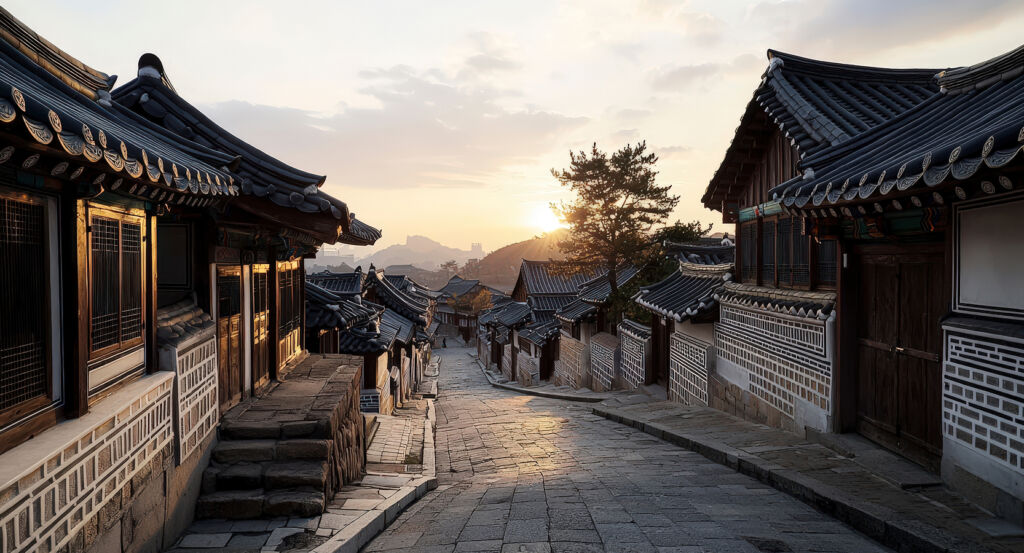
Why you should experience Gangseo-gu in Seoul, South Korea.
Gangseo-gu is Seoul's gateway to the world, a district where aviation, commerce, and urban expansion intersect on the western edge of the capital.
Airports, business parks, research centers, riverside greenways, residential communities, transportation infrastructure, and commercial districts define a part of Seoul built around movement and connectivity. For centuries, this area sat beyond the historic core of the city, serving agricultural communities along the Han River before becoming one of the most strategically important districts in modern Korea. As Seoul expanded westward, Gangseo-gu emerged as a critical transportation and logistics hub linking the capital to domestic and international destinations. Airlines, technology firms, logistics companies, researchers, entrepreneurs, and residents helped shape a district defined by access, mobility, and economic opportunity. Today, Gangseo-gu serves as one of the capital's primary gateways, connecting millions of travelers, workers, and businesses to the wider world. The district's character is inseparable from its role as Seoul's front door. To the south, Geumcheon-gu's celebrated technology corridors, business campuses, and innovation centers extend naturally from Gangseo-gu across one of western Seoul's most important economic zones, reinforcing the district's importance within the capital's modern growth story.
What you should know about Gangseo-gu.
Gangseo-gu is best known for being home to Gimpo International Airport, South Korea's primary international airport before the opening of Incheon International Airport and still one of the country's busiest aviation hubs.
Opened in 1939 and dramatically expanded during South Korea's modernization era, Gimpo Airport served as the nation's principal gateway to the world for decades. Generations of travelers experienced their first arrival in or departure from Korea through its terminals, making it among the country's most historically significant transportation facilities. Even after international traffic shifted to Incheon, Gimpo remained a critical hub for domestic routes and select international services connecting Seoul to major cities across East Asia. Its influence helped drive the economic development of western Seoul and permanently shaped the character of the surrounding district. Few places in the capital are as closely associated with mobility, connectivity, and modern Korean development.
How to fold Gangseo-gu into your trip.
Gangseo-gu is best experienced through the landmarks that reveal its role as a transportation hub, ecological destination, and center of western Seoul's growth.
Begin at Gimpo International Airport, where the district's defining connection to travel and global connectivity immediately comes into focus. Continue toward Seoul Botanic Park, where expansive gardens and contemporary design showcase the district's investment in public space and environmental stewardship. From there, make your way to Magok District, where research campuses, technology companies, and modern urban development provide a broader perspective on the innovation that continues to define Gangseo-gu today. Along the route, you'll encounter aviation infrastructure, botanical collections, business centers, public parks, research facilities, commercial districts, and emerging landmarks that reveal the district's distinctive character. The progression moves naturally from transportation gateway to civic landmark to innovation hub, illustrating the forces that continue to shape western Seoul.
Where your story begins.
Foresyte Travel reveals places that feel extraordinary long before you arrive.
Experience premium editorial crafted for luxury travelers.

















































































































