
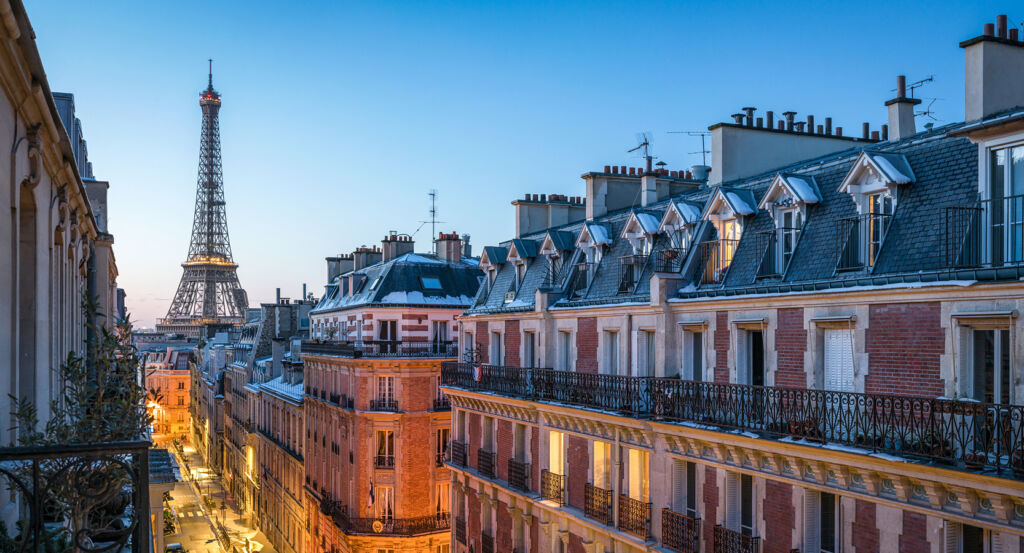
Why you should experience Grand Hôtel de Normandie in Paris, France.
Grand Hôtel de Normandie is a storied four-star hotel where Saint-Lazare's railway momentum, nineteenth-century metropolitan ambition, theatrical culture and perpetual choreography of arrivals remain embedded within a hotel that has occupied the station quarter since 1871.
Set along Rue d'Amsterdam near Rue Saint-Lazare and just steps from Gare Saint-Lazare, the hotel began at No. 4 inside a mid-nineteenth-century building that already contained furnished apartments before expanding into the neighboring corner property at No. 2. The latter occupied land once belonging to the majorat of Marie Napoléon Savary, second Duke of Rovigo and son of Napoleon's minister of police, adding an imperial thread to an address subsequently shaped by railway travel. The hotel's earliest history intersects dramatically with the Paris Commune through General Napoléon La Cécilia, commander of the Commune's Left Bank forces, who lodged here in 1871 while fighting on the barricades during Bloody Week. The result is a hotel where a surviving nineteenth-century building, Napoleonic inheritance and the violent final days of the Commune give Saint-Lazare's restless culture of movement an unexpectedly intimate historical witness.
What you should know about Grand Hôtel de Normandie.
Grand Hôtel de Normandie is best known for operating beside Saint-Lazare since 1871, when General Napoléon La Cécilia lodged in the original building at 4 Rue d'Amsterdam while commanding the Paris Commune's Left Bank army during Bloody Week, connecting the hotel's first documented year with one of the defining conflicts of nineteenth-century Paris. The No. 4 building dates to the middle of the nineteenth century, already contained furnished apartments during that period and has undergone no major structural alteration since, preserving the physical core from which Grand Hôtel de Normandie developed. The hotel later annexed the substantial neighboring building at No. 2, whose site had formed part of the majorat of Marie Napoléon Savary, second Duke of Rovigo and son of Anne Jean Marie René Savary, Napoleon's minister of police, before accommodating multiple businesses during the opening years of the twentieth century. Grand Hôtel de Normandie now contains 53 rooms ranging from 12-square-meter Singles and 14.5-to-17-square-meter Doubles to 23-to-33-square-meter Junior Suites for three or four occupants, with selected Superior rooms adding private balconies overlooking Paris.
Napoléon La Cécilia gives the property's 1871 chronology unusual historical weight because his residence coincided with the Commune's final military struggle, placing an active commander inside the hotel during the same year Grand Hôtel de Normandie establishes its presence beside Saint-Lazare. Marie Napoléon Savary introduces a second Napoleonic connection through the neighboring No. 2 parcel, where the Duke of Rovigo's former majorat preceded the commercial uses that eventually gave way to the hotel's expansion. Grand Hôtel de Normandie subsequently joined these two addresses into one property while the nineteenth-century fabric of No. 4 remained substantially intact, allowing the present 53-room operation to occupy buildings carrying separate strands of imperial, insurrectionary and hospitality history. Together, Napoléon La Cécilia, Marie Napoléon Savary, Rue d'Amsterdam and Grand Hôtel de Normandie compress the Second Empire's aftermath, the Paris Commune and more than 150 years of continuous hotel presence into an address whose historical intrigue extends considerably beyond its station-front convenience.
How to fold Grand Hôtel de Normandie into your trip.
Grand Hôtel de Normandie works as the anchor for an afternoon tracing the private artistic culture, royal memory and French perfume tradition that developed around the rapidly expanding nineteenth-century quarters north of Central Paris.
Begin at Musée de la Vie Romantique, where Ary Scheffer settled in an Italianate pavilion in 1830, added two north-lit studios and hosted Friday gatherings from 1831 to 1858 attended by Eugène Delacroix, Franz Liszt, Frédéric Chopin, Rossini, Charles Dickens and Alexis de Tocqueville. Continue to Chapelle Expiatoire, commissioned by Louis XVIII in 1815 and completed in 1826 on the former burial ground of Louis XVI and Marie-Antoinette, turning the Revolutionary deaths of the king and queen into one of the Bourbon Restoration's most charged works of memorial architecture. Conclude at Musée du Parfum Fragonard, where the family perfume house founded in 1926 opened its first Paris museum in 1983 and now traces fragrance from ancient Egypt through the twentieth century using kohl pots, pomanders, perfume burners, travel sets, precious flasks and the technical stages of distillation and formulation. The progression moves from Scheffer's intensely social Romantic atelier through Bourbon remembrance into Fragonard's preservation of French fragrance craftsmanship, revealing the artistic, political and luxury traditions layered around Grand Hôtel de Normandie.
Where your story begins.
Foresyte Travel reveals places that feel extraordinary long before you arrive.
Experience premium editorial crafted for luxury travelers.














































































































